

The crawling, itching, and tingling sensations that intensify at night during perimenopause have a name — formication — and three converging drivers. Reduced estrogen sensitizes spinal itch-processing neurons through the GRP/GRPR pathway, amplifying input that would normally be filtered out. Simultaneously, mast cells release more histamine as estrogen fluctuates, and histamine follows a circadian rhythm that rises through the evening and peaks in the early morning hours. The result: sensations that are tolerable during the day become intolerable at night, fragmenting sleep.
If you lie in bed feeling as though invisible insects are crawling on your skin — or scratching so hard you draw blood — you are not imagining it and you are not alone. Formication was documented at moderate-to-severe levels in 17.4% of estrogen-deficient women (Huang et al., 2021), and 78% of women in a menopause clinic survey reported skin itchiness as a leading complaint (Salih et al., 2025). The sensation is neurological and hormonal, not dermatological alone.
This article covers why formication and menopause-related itching happen, why they worsen at night, how they differ from dry skin and restless legs, and what the research says about management. It does not cover general dermatological conditions or pruritus from non-hormonal causes. Skin crawling and nighttime itching are one of several body-level sleep disruptors during the menopause transition. For the full overview, see Hormonal Sleep Disruption in Women.
What Is Formication and Why Does Perimenopause Cause It?
Formication is the medical term for the sensation of insects crawling on or under the skin when nothing is there. It is a recognized feature of perimenopause and menopause, documented in 17.4% of estrogen-deficient women at moderate-to-severe levels — comparable in prevalence to hot flashes (Huang et al., 2021). The mechanism is neurological: reduced estrogen amplifies itch processing in spinal cord neurons through the gastrin-releasing peptide receptor (GRPR) pathway.
Formication is a tactile hallucination — the perception of crawling, tingling, or prickling on the skin surface without any external stimulus. Many women going through it have no word for it. That gap between how common the sensation is and how rarely it is named contributes to the assumption that it is imagined or stress-related. It is neither.
In a cross-sectional study of 293 women with premature ovarian insufficiency (mean age 33.76), Huang et al. (2021) documented formication as a moderate-to-severe complaint in 17.4% of participants. That prevalence is comparable to hot flashes and sweating (17.1%) in the same cohort. The relatively young age of this population — where estrogen loss is premature rather than age-related — strengthens the link between estrogen deficiency and formication independent of aging.
Salih et al. (2025) surveyed 50 women attending a dedicated menopause clinic and found that 100% reported at least one skin-related complaint. Itchiness was reported by 78%, dry skin by 76%. Nearly half (46%) observed a pre-existing skin condition becoming more pronounced since menopause onset. And 48% had attempted to manage these changes without medical consultation, often not recognizing the connection to menopause.
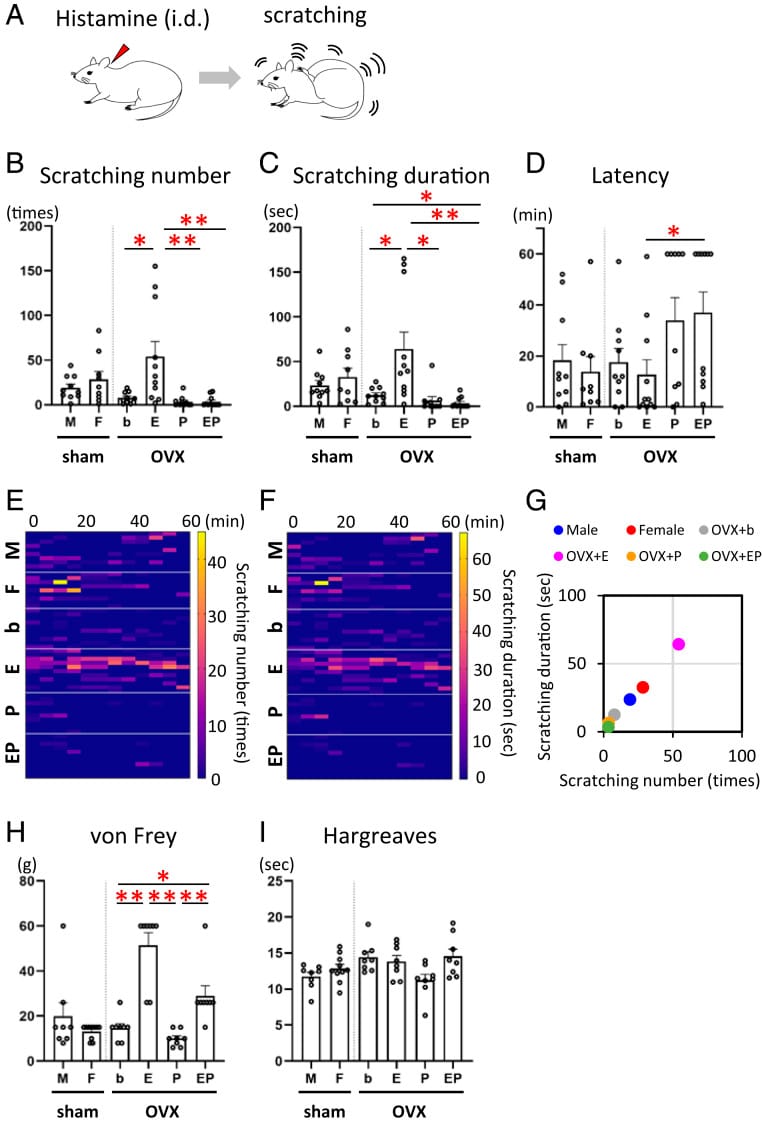
The neurological mechanism was characterized by Takanami et al. (2021) in a study that identified the spinal GRP/GRPR pathway as the mediator. Estradiol amplified histamine-evoked scratching behavior in female rats through increased expression of gastrin-releasing peptide (GRP) in the spinal dorsal horn. Electrophysiological recordings showed that estradiol increased both the firing frequency and response duration of GRPR-expressing neurons — meaning the same itch stimulus produced a louder, longer neural response. A GRPR blocker suppressed the estradiol-driven itch enhancement. The effect was selective for itch: pain thresholds were unaffected, while touch sensitivity was separately decreased — indicating that estradiol acts on distinct somatosensory circuits.
This means formication during perimenopause is not a psychological experience. It is a measurable change in spinal cord itch processing driven by estrogen fluctuation. Rimoin et al. (2013) noted that neuropathic itch in postmenopausal women is frequently misattributed to anxiety or psychosomatic origins rather than recognized as hormonal.
Why Is Menopause Itching and Skin Crawling Worse at Night?
Three processes converge at night to amplify skin crawling and itching. Histamine release from mast cells follows a circadian rhythm that rises through the evening and peaks in the early morning hours. Estrogen triggers mast cell degranulation through non-genomic estrogen receptor-alpha activation, releasing histamine even without a traditional allergic trigger (Zaitsu et al., 2007). And trans-epidermal water loss tends to be higher in the evening hours, weakening the skin barrier and exposing nerve endings.
Histamine is the brain’s primary wakefulness neurotransmitter — and it is also one of the primary mediators of itch. Mast cells, the immune cells that store and release histamine, follow their own internal molecular clock. Histamine output from mast cells rises in the evening and peaks in the early morning hours, independent of menopause. But menopause compounds this rhythm.
Zaitsu et al. (2007) demonstrated that physiological concentrations of estradiol alone can trigger mast cell degranulation — the release of histamine and leukotriene C4 — through membrane estrogen receptor-alpha. The mechanism is non-genomic: estradiol binds to the receptor, triggers calcium influx into the mast cell, and that calcium surge initiates mediator release. This occurred in mast cells that express estrogen receptor-alpha, and the effect was abolished in estrogen receptor-alpha knockout cells. Estrogen antagonists and calcium chelation both independently blocked the response.
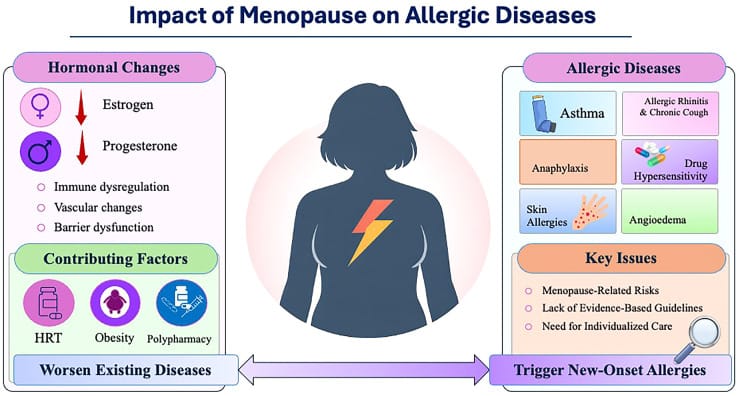
What this means for perimenopause: fluctuating estrogen repeatedly lowers the mast cell activation threshold. Each estrogen swing can trigger a round of histamine release — without any allergen, without any allergic reaction. The 2026 review by Valerieva et al. documented that reduced estrogen and progesterone modulate mast-cell activity and type 2 inflammation across the menopause transition, driving skin hypersensitivity.
The third contributor is the skin barrier itself. Trans-epidermal water loss — the rate at which moisture escapes through the skin — tends to be higher in the evening hours. As the barrier weakens overnight, pruritogens (itch-triggering compounds) gain easier access to the sensory nerve endings in the skin. During the day, an intact barrier and higher cortisol levels (cortisol is anti-inflammatory) help suppress itch perception. At night, both of those buffers diminish.
The compounding effect concentrates itch into the hours when you are trying to sleep. Circadian histamine peak plus estrogen-triggered mast cell degranulation plus overnight barrier weakening produces a window of maximum itch intensity that coincides with bedtime and the first hours of sleep. This is why so many women describe the same pattern: tolerable during the day, intolerable at night.
Histamine’s dual role matters here. In addition to driving itch peripherally, histamine is the brain’s primary arousal neurotransmitter — histaminergic neurons in the tuberomammillary nucleus fire during wakefulness and stop firing during sleep. When mast cell degranulation dumps histamine during the night, it both triggers itching on the skin and promotes wakefulness in the brain. For more on how histamine drives nocturnal waking, see Why Does Histamine Wake You Up at 3am?.
How Does Estrogen Loss Change Your Skin and Nerves?
Estrogen receptors are expressed on keratinocytes (skin cells), sensory nerve fibers, and mast cells. When estrogen declines, all three change simultaneously. Skin barrier integrity drops, sensory neurons become more responsive, and the alloknesis response — itch from normally non-itch stimuli like clothing contact or light touch — increases (Ichimasu et al., 2021).
Estrogen receptors on keratinocytes regulate skin hydration, collagen density, and glycosaminoglycan concentrations — the water-holding molecules that maintain barrier integrity. As estrogen declines, the skin becomes drier, thinner, and more permeable (Rimoin et al., 2013). These are measurable tissue changes.
Ichimasu et al. (2021) extended this picture. In ovariectomized mice (a surgical menopause model), alloknesis developed — itch responses to mechanical stimuli that are normally non-pruritic. This is directly analogous to the experience women describe: bedsheets, clothing seams, and air movement on skin triggering crawling or itching that the same stimuli did not produce before perimenopause.
The mechanism involves type 2 cytokines. Administration of antibodies blocking IL-4 and IL-13 suppressed alloknesis within 30 minutes in the ovariectomized mice. Measurable IL-4 levels were found primarily in the estrogen-deficient group, with levels at or below the measurement limit in the dry-skin comparison and control groups — indicating that estrogen deficiency drives a distinct immune signature in the skin, separate from barrier disruption alone. The estrogen-deficient mice had elevated eosinophil and basophil counts, supporting type 2 immune cells as the local source of itch-promoting cytokines.
Groene et al. (2026) characterized perimenopause as a phase of declining 17-beta-estradiol and DHEA alongside elevated cortisol, with loss of estrogen’s action on the dermal neurovascular network contributing to formication, tingling, and abnormal skin sensations linked to sleep disruption.
This broader nerve-skin picture explains why some women experience burning, pins-and-needles, or a sunburn-like tightness rather than crawling. Paresthesia (tingling, burning, numbness) and formication (crawling) are different presentations of the same underlying estrogen-nerve change. Both are nerve-mediated, both are estrogen-dependent, and both worsen at night. Burning feet at night is a common presentation that often goes unrecognized as hormone-related.
How Is Formication Different from Dry Skin Itching and Restless Legs?
Formication, dry-skin pruritus, and restless legs all intensify at night and all worsen during perimenopause — but they are different conditions with different mechanisms. Formication is nerve-driven crawling without visible skin changes. Dry-skin pruritus results from barrier breakdown with visible dryness. Restless legs is a dopamine-mediated movement urge. Misidentifying which one you have leads to the wrong management approach.
| Feature | Formication | Dry-Skin Pruritus | Restless Legs |
|—|—|—|—|
| Sensation | Crawling, tingling on skin | Itch with dry, flaking skin | Urge to move legs |
| Location | Variable — face, arms, scalp, legs | Wherever skin is driest | Primarily legs |
| Visible skin changes | None or minimal | Dryness, flaking, cracking | None |
| Relieved by | Not relieved by scratching (may worsen) | Partially by moisturizer | Movement |
| Worsened by | Stillness, nighttime | Low humidity, nighttime | Stillness, nighttime |
| Mechanism | Estrogen-nerve sensitization (GRP/GRPR) | Epidermal barrier breakdown, TEWL | Dopamine-iron pathway |
In the Salih et al. (2025) menopause clinic survey, itchiness (78%) and dry skin (76%) were the two leading skin complaints. But “itchiness” in survey data lumps together nerve-driven formication and barrier-driven itch — two conditions that look similar on a questionnaire but respond to different management.
Dry-skin pruritus improves with heavy emollients and barrier-repair products because the itch is driven by trans-epidermal water loss exposing nerve endings. Formication does not respond to moisturizer because the itch is generated in the spinal cord, not the skin surface. Restless legs are relieved by movement because the underlying dopamine-mediated urge dissipates with motor activity — neither moisturizer nor antihistamines address it.
Ichimasu et al. (2021) showed that alloknesis occurs in both estrogen-deficient and dry-skin models through similar downstream itch pathways, but the upstream drivers differ. Measurable IL-4 was found primarily in the estrogen-deficient group. A woman can have barrier-driven dry-skin itch AND nerve-driven formication simultaneously — the two are not mutually exclusive.
This matters for sleep because each condition has different management implications. If nighttime itching is barrier-driven, moisturizer before bed may help. If it is nerve-driven formication, antihistamines or gabapentin may be more relevant. If the urge is in the legs and relieved by movement, restless legs management is a separate pathway. For more on the restless legs connection, see Why Do You Wake Up at 3am During Menopause?.
Merzel Sabovic et al. (2024) noted in their narrative review that no approved therapies exist for estrogen-related skin changes — a gap that leaves women navigating these distinctions largely on their own.
Skin crawling, itching, and tingling at night can overlap with other hormonal sleep disruptors — from hot flashes and cortisol-driven 3am waking to restless legs and joint pain. Several of these can be active at the same time, and the combination determines which management approaches are relevant. Identifying which factors may be contributing to your sleep disruption pattern is a practical next step.
Find out which causes might be driving your 3am wakeups
Frequently Asked Questions
Can Hormones Cause Skin Crawling Sensations?
Yes. Estrogen modulates itch processing at the spinal cord level through the gastrin-releasing peptide receptor (GRPR) pathway. When estrogen fluctuates or declines during perimenopause, itch-processing neurons fire more frequently and for longer in response to the same stimuli (Takanami et al., 2021). Estrogen also triggers mast cell degranulation and histamine release through non-genomic receptor activation (Zaitsu et al., 2007).
The hormonal connection is direct, documented, and measurable. Takanami et al. (2021) showed that estradiol selectively amplifies itch processing — not pain; touch sensitivity was separately decreased — through increased GRP expression and GRPR neuron responsiveness in the spinal dorsal horn. Rimoin et al. (2013) noted that neuropathic itch in postmenopausal women is frequently attributed to psychosomatic origins rather than recognized as hormonal. The misattribution is common: women are often told the sensation is stress or anxiety when the mechanism is neurological.
Is Histamine Related to Menopause Itching?
Directly. Estrogen activates mast cells through membrane estrogen receptor-alpha, triggering calcium influx and release of histamine and leukotriene C4 — even without an allergic trigger (Zaitsu et al., 2007). During perimenopause, fluctuating estrogen repeatedly lowers the threshold for mast cell activation. Valerieva et al. (2026) documented that reduced estrogen and progesterone modulate mast-cell activity and type 2 inflammation across the menopause transition.
This explains why antihistamines help some women with nighttime itching — they block the downstream histamine that mast cells release. But antihistamines do not address the upstream estrogen fluctuation driving that release. Histamine also follows a circadian rhythm, with mast cell output rising through the evening and peaking in the early morning hours. The hormonal trigger and the circadian timing compound each other. For a deeper look at how histamine intolerance interacts with sleep, see Can Histamine Intolerance Cause Sleep Problems?.
Can Histamine Intolerance Cause Insomnia During Menopause?
Histamine is the brain’s primary wakefulness neurotransmitter — elevated histamine at night directly opposes sleep onset. When mast cell degranulation increases due to estrogen fluctuation and the circadian histamine peak arrives in the early morning hours, the combined effect can both trigger intense itching and independently promote wakefulness through histamine’s action on arousal circuits.
The itching-insomnia connection in menopause is not only about discomfort interrupting sleep. Histamine released from the tuberomammillary nucleus acts on H1 receptors in the cortex and other brain regions to maintain wakefulness. When nocturnal mast cell degranulation raises histamine levels, the brain receives a direct arousal input at the same time the skin is registering itch. Some women feel both wired and itchy at night — the same molecule drives both. Diamine oxidase (DAO), the enzyme that breaks down histamine in the gut and bloodstream, may have reduced capacity during menopause, contributing to slower removal of histamine from circulation. For the full histamine-wakefulness mechanism, see Why Does Histamine Wake You Up at 3am?.
Does Formication Go Away After Menopause?
For some women, formication improves as hormone levels stabilize in postmenopause. For others, the nerve sensitization and skin barrier changes persist. Salih et al. (2025) found 46% of women in a menopause clinic reported worsening of skin conditions since menopause onset, and 48% had attempted self-management without consultation — suggesting ongoing presentations that outlast the transition itself.
Whether formication resolves depends on the degree of nerve and skin changes that have developed. The underlying skin barrier thinning is progressive without targeted support. Merzel Sabovic et al. (2024) found that no approved therapies exist for estrogen-related skin changes, leaving a gap in evidence-based options. Hormone therapy may address the upstream estrogen deficiency, but the evidence base for skin-related endpoints remains limited. For more on what the research shows about hormone therapy and sleep, see Does HRT Help with Sleep in Menopause?.
Is Skin Crawling a Common Perimenopause Feature?
More common than many women or doctors recognize. Huang et al. (2021) documented formication in 17.4% of estrogen-deficient women at moderate-to-severe levels — comparable to hot flashes (17.1%). Salih et al. (2025) found 78% of women in a menopause clinic reported itchiness and 100% had at least one skin-related complaint.
The gap between prevalence and recognition is wide. Nearly half of women in the Salih survey did not connect their skin changes to menopause. Formication is documented in the medical literature but rarely discussed in menopause education materials. Women frequently assume the sensation is unique to them — when it is, in fact, one of the more common features of estrogen decline. The young age of the Huang et al. cohort (mean age 33.76 with premature ovarian insufficiency) reinforces that estrogen deficiency, not aging, drives this experience.
Is Paresthesia a Feature of Menopause?
Yes. Paresthesia — tingling, burning, pins-and-needles, or numbness in the skin — is a documented menopause presentation driven by the loss of estrogen’s neurovascular regulatory effects. Groene et al. (2026) identified formication and tingling as consequences of estrogen’s withdrawal from the dermal neurovascular network.
Groene et al. (2026) characterized perimenopause as a phase of declining 17-beta-estradiol and DHEA alongside elevated cortisol, with these hormonal changes producing the full spectrum of altered skin sensation — from crawling (formication) to burning and tingling (paresthesia) to numbness. These are different words for overlapping presentations, all driven by estrogen’s withdrawal from the nerve-skin interface. Burning feet at night, tingling in the hands, and “sunburn-like” skin tightness are all recognized presentations within this spectrum.
What Reduces Itching at Night During Menopause?
Management depends on which mechanism is driving the itch. For barrier-related dry-skin itch: heavy emollients before bed. For histamine-driven itch: evening antihistamines (cetirizine or loratadine) to reduce the circadian histamine peak. For nerve-driven formication: gabapentin or pregabalin may reduce nerve firing. Hormone therapy addresses the upstream estrogen deficiency but evidence for skin endpoints remains limited (Merzel Sabovic et al., 2024).
No single approach covers all three mechanisms, which is why the same remedy works for some women and not for others. Community reports align with this: antihistamines help some women, moisturizers help others, hormone therapy helps others — because they are each addressing a different upstream driver.
Avoiding hot showers before bed can reduce trans-epidermal water loss. Alcohol — wine in particular — can trigger mast cell degranulation and raise histamine levels, compounding the nighttime itch window. The gap in approved options is documented: Merzel Sabovic et al. (2024) found no approved therapies exist for estrogen-related skin changes, and the evidence base for hormone therapy’s effect on dermatological endpoints remains limited in quality and scope. For more on what the evidence shows about hormone therapy and sleep, see Does HRT Help with Sleep in Menopause?. For information about progesterone’s role, see Does Progesterone Help You Sleep?.
Related Reading
- Hormonal Women Sleep Disruption — Parent guide to how estrogen, progesterone, cortisol, temperature, melatonin, and cycle changes interact with sleep.
- Could Sleep Apnea Be Behind Your Menopause Insomnia? — How sleep apnea in women can present as insomnia, fatigue, morning headaches, and repeated awakenings around menopause.
- Why Does One Glass of Wine Ruin Your Sleep During Menopause? — Why alcohol can fragment REM sleep, increase cortisol rebound, and worsen night sweats during menopause.
- Why Does Perimenopause Give You Nightmares That Disrupt Your Sleep? — How REM fragmentation, awakenings, and estrogen-linked emotional reactivity can increase dream recall and nightmares in perimenopause.
- Why Do Restless Legs Get Worse in Perimenopause? — How estrogen, dopamine, iron status, and heavy bleeding connect to restless legs that disturb sleep in perimenopause.
- Why Does Menopause Make You Wake Up to Pee at Night? — How estrogen decline can affect bladder tissue, antidiuretic hormone rhythm, nighttime urine production, and sleep fragmentation.
- Why Does Menopause Joint Pain Get Worse at Night? — The sleep-pain relationship between estrogen decline, inflammation, collagen changes, nighttime pain, and fragmented sleep.
References
1. Groene, D., Fida, M., de Oliveira, G. V., & Kroumpouzos, G. (2026). Aesthetically relevant symptoms of menopause transition: Impact and approach to management. Clinics in Dermatology, 44(2), 348-355. https://pubmed.ncbi.nlm.nih.gov/41616835/
2. Huang, Y., Qi, T., Ma, L., Li, D., Li, C., Lan, Y., Chu, K., Chen, P., Xu, W., Cao, Y., Ying, Q., Xu, L., & Zhou, J. (2021). Menopausal symptoms in women with premature ovarian insufficiency: Prevalence, severity, and associated factors. Menopause, 28(5), 529-537. https://pubmed.ncbi.nlm.nih.gov/33470756/
3. Ichimasu, N., Chen, Y., Kobayashi, K., Suzuki, S., Chikazawa, S., Shimura, S., & Katagiri, K. (2021). Possible involvement of type 2 cytokines in alloknesis in mouse models of menopause and dry skin. Experimental Dermatology, 30(12), 1745-1753. https://pubmed.ncbi.nlm.nih.gov/34181782/
4. Merzel Sabovic, E. K., Kocjan, T., & Zalaudek, I. (2024). Treatment of menopausal skin — A narrative review of existing treatments, controversies, and future perspectives. Post Reproductive Health, 30(2), 85-94. https://pubmed.ncbi.nlm.nih.gov/38379168/
5. Rimoin, L. P., Kwatra, S. G., & Yosipovitch, G. (2013). Female-specific pruritus from childhood to postmenopause: Clinical features, hormonal factors, and treatment considerations. Dermatologic Therapy, 26(2), 157-167. https://pubmed.ncbi.nlm.nih.gov/23551372/
6. Roster, K., Fleshner, L., Karatas, T. B., Ecanow, A., Sayegh, A., Farabi, B., & Marmon, S. (2026). Menopause and Common Dermatoses: A Systematic Review. American Journal of Clinical Dermatology, 27(1), 67-84. https://pubmed.ncbi.nlm.nih.gov/41331233/
7. Salih, H., Schaedel, Z., Hum, O., & DeGiovanni, C. (2025). Results of a patient survey exploring skin symptoms in a menopause clinic. Post Reproductive Health, 31(3), 159-161. https://pubmed.ncbi.nlm.nih.gov/40172065/
8. Takanami, K., Uta, D., Matsuda, K. I., Kawata, M., Carstens, E., Sakamoto, T., & Sakamoto, H. (2021). Estrogens influence female itch sensitivity via the spinal gastrin-releasing peptide receptor neurons. Proceedings of the National Academy of Sciences, 118(31), e2103536118. https://pubmed.ncbi.nlm.nih.gov/34312228/
9. Valerieva, E., Vasileva, M., Baynova, K., Krusheva, B., Petkova, E., Nenova, M., Novakova, P., Staevska, M., Cimbollek, S., & Valerieva, A. (2026). Women hormones and hypersensitivity: Allergic diseases in menopause. Frontiers in Allergy, 7, 1777688. https://pubmed.ncbi.nlm.nih.gov/42027630/
10. Zaitsu, M., Narita, S., Lambert, K. C., Grady, J. J., Estes, D. M., Curran, E. M., Brooks, E. G., Watson, C. S., Goldblum, R. M., & Midoro-Horiuti, T. (2007). Estradiol activates mast cells via a non-genomic estrogen receptor-alpha and calcium influx. Molecular Immunology, 44(8), 1977-1985. https://pubmed.ncbi.nlm.nih.gov/17084457/
Written by Kat Fu, M.S., M.S. · Last reviewed: June 28, 2026 · 10 references cited