

Women cycling through supplements without guidance often spend months and hundreds of dollars with no improvement. The evidence quality behind these supplements varies enormously — from well-designed randomized controlled trials to uncontrolled surveys — and few roundups distinguish between them.
This article ranks supplements by evidence quality: RCTs in menopausal populations first, then RCTs in general populations, then lower-quality evidence. For the full overview of how reduced estrogen and progesterone disrupt sleep through six distinct mechanisms, see Hormonal Women Sleep Disruption.
Supplements address downstream effects. Understanding which hormonal cause is driving your sleep disruption helps determine which supplement — if any — matches the mechanism. Magnesium enhances GABA activity and melatonin production. Ashwagandha modulates the HPA axis and lowers cortisol. These are different pathways, and the one that matters depends on what is driving the insomnia.
Does Magnesium Help with Menopause Insomnia?
The Abbasi 2012 RCT randomized 46 elderly participants to receive 500 mg magnesium or placebo daily for 8 weeks. The magnesium group showed increased total sleep time (P = 0.002), improved sleep efficiency (P = 0.03), and reduced Insomnia Severity Index scores (P = 0.006). Sleep onset latency also decreased (P = 0.02).
What makes this trial relevant to menopause insomnia goes beyond the sleep metrics. Magnesium supplementation reduced serum cortisol (P = 0.008) and increased melatonin (P = 0.007). During menopause, HPA axis hyperarousal drives cortisol elevation, and estrogen decline impairs the serotonin-to-melatonin conversion pathway. A supplement that lowers cortisol and raises melatonin addresses two of the hormonal mechanisms that undermine sleep during this transition.
The Schuster 2025 RCT — the largest magnesium sleep trial to date — enrolled 155 healthy adults and tested magnesium bisglycinate (the glycinate chelate form) at 250 mg elemental magnesium daily. The Insomnia Severity Index declined by 3.9 points in the magnesium group versus 2.3 points for placebo (P = 0.049), though the effect size was small (Cohen’s d = 0.2). The more important finding was in the subgroup analysis: participants with lower baseline dietary magnesium intake showed notably greater improvements. This suggests the benefit is strongest when addressing a true deficiency rather than supplementing an adequate level.
Both groups improved within the first week, indicating a large placebo response — which means smaller, uncontrolled studies on magnesium may overestimate the effect.
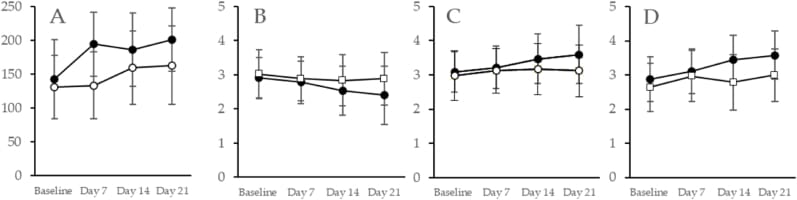
The Hausenblas 2024 RCT tested magnesium L-threonate (MgT) — a chelated form designed to cross the blood-brain barrier more efficiently — in 80 adults aged 35-55 with self-reported sleep difficulties, over 21 days. The MgT group showed improvements in deep sleep score, REM sleep score, and light sleep time, all measured by wearable device rather than self-report alone. Daytime functioning (energy, productivity, mood, mental alertness) also improved in the MgT group while the placebo group declined on those same measures over the study period.
Because the 35-55 age range in this trial overlaps with the perimenopause window, these findings are more directly applicable than trials conducted in younger or older populations.
Does Ashwagandha Help with Perimenopause Sleep and Anxiety?
The Gopal 2021 RCT enrolled 100 perimenopausal women and compared 300 mg ashwagandha root extract twice daily against placebo over 8 weeks. The Menopause Rating Scale total score improved in the ashwagandha group versus placebo (P < 0.0001), with all three domains reaching significance: psychological (P = 0.0003), somato-vegetative (P = 0.0152), and urogenital (P < 0.0001). Sleep quality falls within the psychological domain of the MRS.
This is the only supplement RCT conducted in perimenopausal women — which makes it the study with the strongest direct applicability to this article’s audience. On the hormonal side, serum estradiol increased (P < 0.0001) and FSH decreased (P < 0.0001), indicating measurable endocrine modulation alongside the improvements in sleep and quality of life.
The Lopresti 2019 RCT tested ashwagandha’s mechanism more directly. Over 60 days, 60 stressed but otherwise healthy adults received 240 mg of standardized ashwagandha extract (Shoden) or placebo. Morning serum cortisol fell more in the ashwagandha group compared to placebo (P < 0.001). The Hamilton Anxiety Rating Scale also showed a reduction in the ashwagandha group (P = 0.040). DHEA-S decreased (P = 0.004), indicating modulation of the hypothalamic-pituitary-adrenal (HPA) axis — the stress-response pathway.
Ashwagandha’s effects on sleep appear to work through HPA axis modulation — lowering cortisol and reducing the arousal drive — rather than through direct sedation. This is a different mechanism from magnesium’s GABA enhancement and melatonin support.
For women whose menopause insomnia is driven by cortisol amplification — the pattern described in What Causes the “Wired but Tired” Feeling in Menopause? — ashwagandha’s cortisol-lowering pathway is relevant. For women whose insomnia is driven by GABA decline or melatonin impairment, magnesium may be a better mechanistic match.
What Do Valerian, L-Theanine, and Other Supplements Show for Menopause Sleep?
Does Valerian Help with Menopause Insomnia?
The Taavoni 2011 triple-blind RCT enrolled 100 postmenopausal women aged 50-60 with insomnia and tested 530 mg concentrated valerian extract twice daily for 4 weeks. Sleep quality improved in 30% of the valerian group versus 4% of the placebo group (P < 0.001) — a nearly eightfold difference in responder rate.
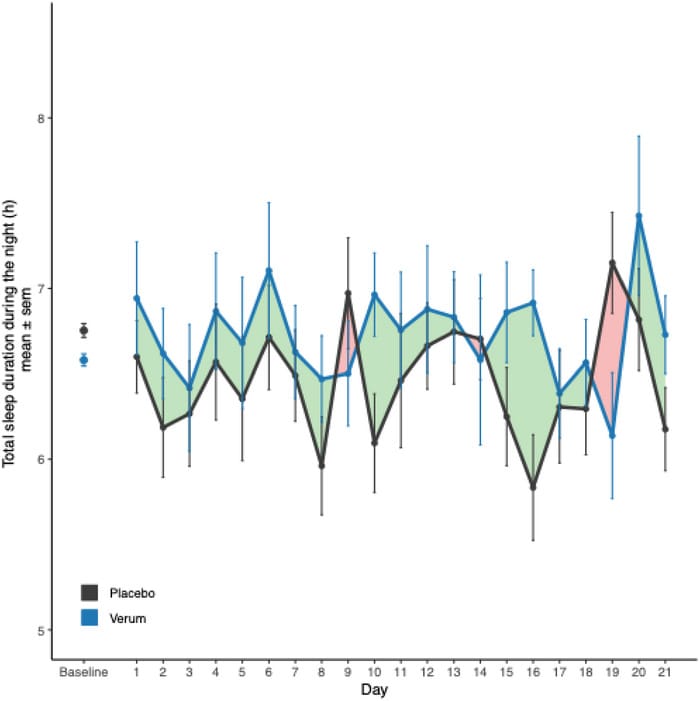
A second trial — Schicktanz 2025 — tested a valerian-hops extract combination in 41 randomized participants with occasional insomnia over 21 days, using Fitbit wearable tracking rather than self-report alone. Participants in the valerian-hops group gained a mean of 21.7 additional minutes of sleep per night versus placebo (P = 0.019). Their shortest sleep duration across the study period increased by 48.7 minutes — suggesting the combination may have the largest effect on the worst nights.
Does L-Theanine Help with Menopause Sleep?
The Bulman 2025 meta-analysis pooled 18 RCTs (897 participants) and found L-theanine improved subjective sleep onset latency (SMD = 0.15, P = 0.04) — a small but statistically reliable reduction in time to fall asleep. Daytime function improved more robustly (SMD = 0.33, P < 0.001). Overall subjective sleep quality improved (SMD = 0.43, P = 0.03), though the wide confidence interval reflects heterogeneity across studies.
Doses across the included trials ranged from 50-1000 mg/day, with a good safety profile. L-theanine modulates GABAergic activity — the same neurotransmitter pathway affected by progesterone decline during menopause.
No menopause-specific L-theanine trials exist. The evidence is from general-population RCTs.
Does Cannabidiol Have Evidence for Menopause Sleep?
The Ranum 2023 review analyzed 34 studies on cannabidiol and insomnia. Of 7 studies testing CBD-only formulations, 4 (57%) reported improved insomnia outcomes. Studies using a near-equal CBD-to-THC ratio showed a higher response rate (75% of 16 studies), suggesting THC may contribute to the effect in combined formulations.
Evidence limitations are notable: only 2 of the 34 studies recruited people with insomnia as the primary condition. Many enrolled populations with comorbid conditions (chronic pain, anxiety, PTSD) and used non-validated subjective measures without objective polysomnographic assessment. No menopause-specific controlled trials exist. CBD is not FDA regulated, meaning potency, purity, and consistency vary across products.
How Do These Supplements Compare Across the Broader Evidence Base?
The Polasek 2024 review examined 59 studies on nutritional approaches for menopausal sleep disturbances. Of those, 37 (63%) reported improvement in at least one aspect of sleep, while 22 (37%) observed no benefit. Improvements were predominantly in self-reported sleep measures rather than objective polysomnography. The majority of included studies were rated as low methodological quality — which underscores why evidence ranking matters more than supplement counting.
Many people have more than one cause contributing to their sleep disruption. The supplement that matches your situation depends on which hormonal, metabolic, or autonomic cause might be driving your insomnia. Identifying which causes might be involved is a useful next step.
Find out which causes might be driving your 3am wakeups →
Frequently Asked Questions
What Is the Best Form of Magnesium for Menopause Sleep?
Magnesium bisglycinate (glycinate) chelates magnesium to glycine — an amino acid that itself has calming properties. The Schuster 2025 RCT used this form and found a 3.9-point ISI reduction versus 2.3 for placebo. The subgroup analysis showed the greatest benefit in participants with lower baseline dietary magnesium intake — meaning the response depended on whether the person was deficient.
Magnesium L-threonate is a newer chelated form designed for blood-brain barrier permeability. The Hausenblas 2024 RCT found improvements in deep sleep, REM sleep, and daytime functioning at 1 g/day over 21 days. This is the only magnesium form with wearable-tracked sleep architecture data.
Magnesium oxide — used in the Abbasi 2012 trial at 500 mg daily — has the lowest bioavailability of the three but is the cheapest and widely available. It produced improvements in sleep time, cortisol, and melatonin in that trial, though the population was elderly and likely to have low magnesium status.
The evidence does not establish one form as definitively superior. Form selection depends on cost, availability, and whether the goal is broad GABA/melatonin support (glycinate), targeted central nervous support (L-threonate), or addressing a known deficiency inexpensively (oxide).
Does Magnesium Help with Hot Flashes?
All three magnesium RCTs discussed in this article measured sleep outcomes and neuroendocrine markers (cortisol, melatonin, GABA-related pathways). None measured hot flash frequency, severity, or thermoregulatory outcomes. The Abbasi 2012 trial showed cortisol reduction and melatonin increase — both relevant to sleep architecture — but did not assess vasomotor function.
Hot flashes are driven by KNDy neuron hyperactivation in the hypothalamus following estrogen withdrawal. Magnesium does not modulate this pathway. If vasomotor disruption is the primary cause of your sleep fragmentation, the evidence base points toward different approaches.
For more on how estrogen and progesterone affect sleep through different mechanisms, see Hormonal Women Sleep Disruption. For hormone-based approaches, see Does HRT Help with Sleep in Menopause? and Does Progesterone Help You Sleep?.
How Long Does It Take for Ashwagandha to Improve Sleep?
Ashwagandha’s mechanism — reducing cortisol output and modulating the HPA axis — takes time to produce measurable changes in sleep. The Lopresti 2019 RCT measured cortisol at 60 days; the Gopal 2021 RCT assessed perimenopause outcomes at 8 weeks. Neither study reported rapid-onset effects.
This distinguishes ashwagandha from magnesium, which has faster-acting GABA-enhancing and melatonin-supporting effects. In the Schuster 2025 magnesium trial, both groups showed improvement within the first week. Ashwagandha’s timeline is longer — and the expectation should match: weeks of consistent use before evaluating whether it is helping.
Is There Enough Evidence to Recommend Cannabidiol for Menopause Insomnia?
The Ranum 2023 review found that CBD sleep studies predominantly enrolled people with other primary conditions (pain, anxiety, PTSD) rather than primary insomnia. This makes it difficult to isolate CBD’s effect on sleep from its effect on the comorbid condition that was disrupting sleep.
CBD-only versus CBD+THC formulations also differ: the higher response rate in combined formulations (75% versus 57%) suggests THC may be contributing to the sleep effect — which raises different regulatory and safety considerations.
For context: magnesium has three RCTs, ashwagandha has two RCTs (one menopause-specific), and valerian has two RCTs in postmenopausal women. CBD’s evidence base has not reached this level. That does not mean CBD is ineffective — it means the evidence is at an earlier stage and the quality of available products is less standardized.
Can You Combine Supplements for Menopause Sleep?
The Schicktanz 2025 RCT is the only controlled trial testing a combination — valerian with hops — and it showed a 21.7-minute increase in sleep duration versus placebo. That is one tested combination, not a license to stack multiple supplements.
Mechanistically, pathway-diverse combinations have a stronger rationale than same-pathway stacking. Magnesium enhances GABA receptor activity and supports melatonin production. Ashwagandha reduces cortisol through HPA axis modulation. These are separate mechanisms. Combining them would, in principle, address two different contributors to menopause insomnia without redundant pathway loading.
By contrast, stacking magnesium + L-theanine + supplemental GABA concentrates three supplements on the same GABAergic pathway. No RCT has tested this combination, and the theoretical concern — excessive GABAergic sedation — has not been ruled out.
The broader question is whether supplements alone are sufficient. A 2024 review of 59 menopausal sleep studies found that 63% of nutritional approaches showed benefit — but in self-reported measures, not objective polysomnography. For the full picture of what drives menopause insomnia beyond what supplements can reach, see Why Do You Wake Up at 3am During Menopause?.
Related Reading
- Hormonal Women Sleep Disruption — Parent guide to how estrogen, progesterone, cortisol, temperature, melatonin, and cycle changes interact with sleep.
- Why Did You Become a Light Sleeper in Perimenopause? — Why progesterone and GABA decline can lower the arousal threshold during perimenopause.
- Can Insomnia Be the First Sign of Perimenopause, Even Without Hot Flashes? — How insomnia can appear before hot flashes or cycle changes when early perimenopause alters progesterone and sleep maintenance.
- Why Are Your Blood Tests Normal When Perimenopause Is Disrupting Your Sleep? — Why fluctuating FSH and estradiol can make perimenopause sleep disruption hard to capture with one blood draw.
- Why Did Your Sleep Medication Stop Working During Menopause? — Why sedating medication may stop matching the sleep-maintenance pattern common in menopause insomnia.
- How Long Does Menopause Insomnia Last? — Sleep disruption across perimenopause, menopause, and postmenopause, including stage-specific contributors.
References
1. Abbasi, B., Kimiagar, M., Sadeghniiat, K., Shirazi, M. M., Hedayati, M., & Rashidkhani, B. (2012). The effect of magnesium supplementation on primary insomnia in elderly: A double-blind placebo-controlled clinical trial. Journal of Research in Medical Sciences, 17(12), 1161-1169. https://pubmed.ncbi.nlm.nih.gov/23853635/
2. Bulman, A., D’Cunha, N. M., Marx, W., Turner, M., McKune, A., & Naumovski, N. (2025). The effects of L-theanine consumption on sleep outcomes: A systematic review and meta-analysis. Sleep Medicine Reviews, 81, 102076. https://pubmed.ncbi.nlm.nih.gov/40056718/
3. Gopal, S., Ajgaonkar, A., Kanchi, P., Kaundinya, A., Thakare, V., Chauhan, S., & Langade, D. (2021). Effect of an ashwagandha (Withania Somnifera) root extract on climacteric symptoms in women during perimenopause: A randomized, double-blind, placebo-controlled study. The Journal of Obstetrics and Gynaecology Research, 47(12), 4414-4425. https://pubmed.ncbi.nlm.nih.gov/34553463/
4. Hausenblas, H. A., Lynch, T., Hooper, S., Shrestha, A., Rosendale, D., & Gu, J. (2024). Magnesium-L-threonate improves sleep quality and daytime functioning in adults with self-reported sleep problems: A randomized controlled trial. Sleep Medicine: X, 8, 100121. https://pubmed.ncbi.nlm.nih.gov/39252819/
5. Lopresti, A. L., Smith, S. J., Malvi, H., & Kodgule, R. (2019). An investigation into the stress-relieving and pharmacological actions of an ashwagandha (Withania somnifera) extract: A randomized, double-blind, placebo-controlled study. Medicine, 98(37), e17186. https://pubmed.ncbi.nlm.nih.gov/31517876/
6. Polasek, D., Santhi, N., Alfonso-Miller, P., Walshe, I. H., Haskell-Ramsay, C. F., & Elder, G. J. (2024). Nutritional interventions in treating menopause-related sleep disturbances: A systematic review. Nutrition Reviews, 82(8), 1087-1110. https://pubmed.ncbi.nlm.nih.gov/37695299/
7. Ranum, R. M., Whipple, M. O., Croghan, I., Bauer, B., Toussaint, L. L., & Vincent, A. (2023). Use of cannabidiol in the management of insomnia: A systematic review. Cannabis and Cannabinoid Research, 8(2), 213-229. https://pubmed.ncbi.nlm.nih.gov/36149724/
8. Schicktanz, N., Gerhards, C., Schlitt, T., Aerni, A., Muggler, E., de Quervain, D., Papassotiropoulos, A., Boonen, G., Drewe, J., & Butterweck, V. (2025). Effects of a valerian-hops extract combination (Ze 91019) on sleep duration and daytime cognitive and psychological parameters in occasional insomnia: A randomized controlled feasibility trial. Brain and Behavior, 15(6), e70600. https://pubmed.ncbi.nlm.nih.gov/40462685/
9. Schuster, J., Cycelskij, I., Lopresti, A., & Hahn, A. (2025). Magnesium bisglycinate supplementation in healthy adults reporting poor sleep: A randomized, placebo-controlled trial. Nature and Science of Sleep, 17, 2027-2040. https://pubmed.ncbi.nlm.nih.gov/40918053/
10. Taavoni, S., Ekbatani, N., Kashaniyan, M., & Haghani, H. (2011). Effect of valerian on sleep quality in postmenopausal women: A randomized placebo-controlled clinical trial. Menopause, 18(9), 951-955. https://pubmed.ncbi.nlm.nih.gov/21775910/
Written by Kat Fu, M.S., M.S. · Last reviewed: May 10, 2026 · 10 references cited