

UV light ages the eye’s lens through two distinct mechanisms — and both disrupt your sleep.
UV-B radiation photooxidizes crystallin proteins at the lens periphery, producing cortical cataracts. Meanwhile, kynurenine metabolites accumulate in the lens nucleus throughout life, yellowing it progressively — a process UV-A radiation accelerates. Both types of damage filter out the 480 nm blue light your brain’s master clock needs to set melatonin timing. By age 80, the aging lens blocks 72% of the melanopic light that reaches the retina, and the pupil shrinks independently, compounding the loss. The result is a progressive circadian input deficit that fragments sleep, flattens melatonin rhythms, and contributes to the sleep deterioration that many people attribute to aging alone. Cataract surgery — replacing the yellowed lens with a synthetic one — measurably restores melatonin secretion and sleep quality, showing the lens is a direct bottleneck in the light-to-clock pathway.
UV light damages the eye’s lens through two separate mechanisms. UV-B radiation photooxidizes crystallin proteins at the lens periphery, causing cortical cataracts. UV-A radiation accelerates kynurenine-driven yellowing in the lens nucleus — a process that also happens spontaneously with aging. Both types of damage progressively filter out the 480 nm blue light that melanopsin-containing retinal ganglion cells need to synchronize the brain’s circadian clock, contributing to sleep disruption and melatonin decline.
UV eye damage is usually framed as a vision problem: cataracts, cloudiness, eventually surgery. That is half the picture. The same damage that opacifies and yellows your lens also blocks the light wavelength your brain needs to produce melatonin and maintain circadian timing.
This article covers the two mechanisms of UV-driven lens damage — cortical and nuclear — how each disrupts circadian entrainment, the quantified decline in melanopic light transmission with age, and whether cataract surgery can restore the circadian input your aging eyes have lost. Sunglasses timing and morning light safety are addressed in dedicated cluster articles.
UV-driven lens aging is one of several mechanisms that disrupt circadian rhythm. For the broader circadian picture, see Circadian Sleep Disruption.
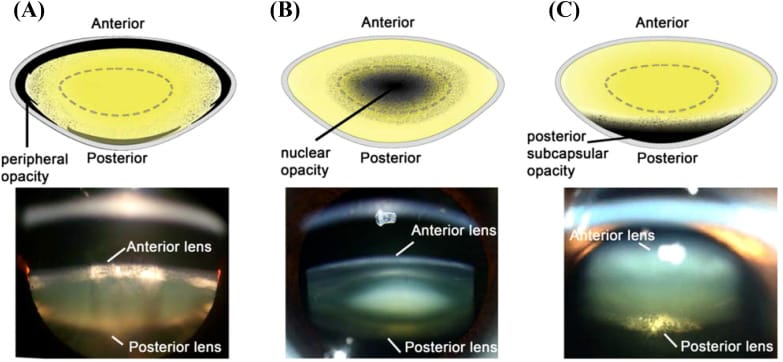
What Are the Two Structures in Your Lens — and Why Do They Matter for Your Sleep and Longevity?
Your eye’s lens has two distinct regions — the cortex (outer portion) and the nucleus (dense center) — both made of crystallin proteins that must stay transparent for vision. These same structures also transmit the 480 nm blue light that melanopsin-containing retinal ganglion cells need to synchronize your brain’s master circadian clock. When either region degrades, it filters out this light — disrupting melatonin timing, fragmenting sleep, and accelerating age-related decline.
What Is the Lens Cortex and What Does It Do?
The cortex is the outer portion of the lens, composed of younger crystallin protein fibers. It maintains transparency through an ordered protein arrangement and serves as the first crystallin structure that light passes through on its way to the retina.
The lens cortex sits between the outer capsule and the dense inner nucleus. Its transparency depends on the ordered arrangement of crystallin proteins — primarily alpha-crystallin, which doubles as a molecular chaperone preventing protein aggregation (Finley et al., 1997). In a healthy young lens, the cortex transmits broadly across the visible spectrum, including the 460-480 nm wavelengths needed for melanopsin activation. When cortical crystallins aggregate, the resulting opacities scatter incoming light, reducing both visual acuity and circadian input to the retina.
What Is the Lens Nucleus and What Does It Do?
The nucleus is the dense, compacted center of the lens, made of the oldest crystallin proteins in your body — fibers laid down before birth that must last a lifetime with no protein turnover. It determines the lens’s spectral filtering profile and progressively yellows with age, selectively blocking blue light.
The lens nucleus contains crystallin proteins synthesized during fetal development — never replaced, required to remain folded and soluble for 50 to 60 years (Hill et al., 2024). In youth, the nucleus is nearly transparent across the visible spectrum. With age, it yellows — absorbing short-wavelength blue and violet light while passing longer wavelengths.
This matters because intrinsically photosensitive retinal ganglion cells (ipRGCs) have peak sensitivity at approximately 480 nm (Turner & Mainster, 2008). These cells project directly to the suprachiasmatic nucleus (SCN) — the brain’s master circadian pacemaker — via the retinohypothalamic tract. The lens nucleus is the primary optical gate between environmental light and circadian entrainment (Turner & Mainster, 2008).
Both structures must remain transparent for the circadian light pathway to function. Morning light exposure — reaching the retina without sunglasses — is one of the strongest inputs for maintaining healthy sleep timing. But sunlight contains ultraviolet radiation. What does UV do to these two structures? The answer involves two different wavelengths, two different damage mechanisms, and two different locations in the lens.
How Does UV-B Radiation Damage the Outer Lens?
UV-B radiation (280-315 nm) is absorbed by tryptophan residues in crystallin proteins at the lens periphery. UV-B triggers backbone cleavage, side-chain oxidation, and covalent cross-linking of crystallins, producing insoluble protein aggregates that scatter light. The result is cortical cataracts — spoke-shaped opacities at the outer lens. This damage is cumulative over a lifetime and is the cataract type linked to sun exposure with the greatest consistency across epidemiological studies.
Gamma-D crystallin, one of the abundant lens proteins, contains four conserved tryptophan residues (Trp42, Trp65, Trp130, Trp156). These residues absorb UV energy and help maintain structural stability under UV stress. When any one is mutated in laboratory experiments, UV-B-induced protein aggregation accelerates — all four contribute to UV photoprotection (Borges-Rodriguez et al., 2025).
When UV-B overwhelms this defense, it oxidizes tryptophan and methionine residues on alpha-crystallin — the lens’s primary chaperone protein. The damaged regions include residues on alpha-crystallin identified by Finley et al. (1997), which may compromise the chaperone function that normally prevents other lens proteins from aggregating.
Sommerburg et al. (1998) showed why this damage is cumulative: UV-B and UV-A produce cross-linked protein aggregates that resist clearance by the 20S proteasome. Because environmental UV reaching the lens consists primarily of UV-A and long-wave UV-B, the lens accumulates insoluble aggregates rather than clearing them.
Epidemiological evidence is consistent. Of 15 occupational studies reviewed, 12 showed a positive association between solar UV exposure and cataract, with the strongest evidence for cortical and nuclear subtypes (Modenese & Gobba, 2018). In 1,801 adults across three cities, high cumulative UV exposure was associated with nuclear cataract (OR 5.35) and posterior subcapsular cataract (OR 1.87) (Miyashita et al., 2019). Yu (2025) established the first quantitative in vivo dose-response coefficient for UV-B-induced lens epithelial cell depletion in a rat model.
How Does UV-A Accelerate Lens Yellowing — and Why Does Aging Make It Worse?
The lens nucleus yellows because kynurenine metabolites — breakdown products of tryptophan — spontaneously bind to crystallin proteins throughout life, producing yellow-to-brown chromophores. This happens without any UV exposure. But UV-A radiation accelerates the damage: once kynurenine is protein-bound, UV-A excites it into a photosensitizer that generates cross-linking compounds. The older the lens, the more vulnerable it becomes.
Nuclear yellowing proceeds through two arms — understanding the distinction explains why it happens to everyone and why UV makes it worse.
Arm 1 — UV-independent yellowing. The lens produces its own UV filters: kynurenine metabolites derived from tryptophan via the enzyme indoleamine 2,3-dioxygenase (IDO). The primary one, 3-hydroxykynurenine O-beta-D-glucoside (3-OHKG), normally floats freely in the lens and absorbs UV. But 3-OHKG spontaneously deaminates over time, forming a reactive intermediate that covalently binds to crystallin residues, producing the yellow-brown chromophores that define nuclear sclerosis (Hood et al., 1999). This reaction does not require UV light — IDO activity has been documented in lenses aged 26 to 80 (Takikawa et al., 2001). A compounding factor: glutathione (GSH) declines substantially in the aging nucleus compared to the cortex. As GSH declines, spontaneous yellowing accelerates.
Arm 2 — UV-A-accelerated yellowing. Once kynurenine is covalently bound to crystallin proteins, its photochemistry changes. Protein-bound kynurenine absorbs UV-A radiation and acts as a photosensitizer that oxidizes nearby residues and cross-links crystallin proteins into large, insoluble aggregates (Parker et al., 2004).
The interaction between the two arms is what makes aging lenses increasingly vulnerable. Older lenses have more protein-bound kynurenine (Arm 1 has been running for decades) and less GSH. Older lenses are more vulnerable to UV-A damage than younger lenses (MacFarlane et al., 2024).
There is a paradox here. Kynurenine is the lens’s built-in UV filter — the molecule that protects the retina from UV radiation. But as it degrades and binds to proteins, it becomes the photosensitizer that accelerates the damage it was supposed to prevent. Hill et al. (2024) found that UV can also paradoxically reverse spontaneous cysteine oxidation on gamma-D crystallin, suggesting a dual damage/rescue role. On the prevention side, Cheng et al. (2025) demonstrated that lanosterol blocks UV-A-driven crystallin aggregation in mouse lens ex vivo models, though no human trials have been completed.
How Much Blue Light Do Your Aging Eyes Let Through to Your Brain Clock?
By age 80, the aging lens blocks 72% of the 480 nm blue light that reaches the retina — the wavelength melanopsin-containing retinal ganglion cells need to synchronize the brain’s master clock. Combined with senile miosis (age-related pupil shrinkage), a 95-year-old receives roughly one-tenth the circadian light input of a 10-year-old.
Kessel et al. (2010) measured 28 intact human donor lenses aged 18-76 and found that 480 nm transmission decreased by 72% between ages 10 and 80. Brondsted et al. (2013) calculated that the potential for melanopsin stimulation decreases by 0.6-0.7 percentage points per year.
Lens yellowing is one factor among several. Turner and Mainster (2008) showed that when you combine lens yellowing with senile miosis — progressive pupil shrinkage — a 10-year-old has circadian photoreception approximately 10-fold greater than a 95-year-old. By age 45, roughly 50% of maximal capacity has already been lost.
Kessel et al. (2011) studied 970 adults aged 30-60 and found that reduced blue light transmission was associated with increased sleep disturbance risk (p = 0.016 after adjusting for confounders), independent of age, sex, smoking, diabetes, and cardiovascular risk factors. Herljevic et al. (2005) showed the wavelength specificity: older women showed reduced melatonin suppression under 456 nm blue light — pointing to lens optical density as the primary cause.
Can the retina compensate? To a degree. Herbst et al. (2012) found that the post-illumination pupil response (PIPR) — a marker of ipRGC/melanopsin function — increased with age despite declining lens transmission, suggesting possible compensatory adaptation. But Esquiva et al. (2017) documented a 31% loss of melanopsin-containing retinal ganglion cell (mRGC) density after age 70, accompanied by dendritic atrophy. Eventually, the ganglion cells themselves degrade beyond compensation.
Chan et al. (2025) showed the functional consequence: in 48 older adults, weaker melanopsin-driven pupil responses correlated with lower circadian amplitude and decreased melatonin metabolite levels. Najjar et al. (2024) showed that older adults require combined melanopsin, S-cone, and M-cone input for melatonin suppression (peak sensitivity ~500 nm), while younger adults rely on melanopsin alone (peak 485 nm) — a change in circadian light processing with age.
Can Cataract Surgery Restore Your Body Clock?
Yes. Cataract surgery — replacing the yellowed lens with a synthetic intraocular lens — measurably increases melatonin secretion and improves sleep quality. In the largest randomized trial (169 adults over 60), urinary melatonin increased after surgery. Sleep quality improvements persist at 6-12 months. The choice of lens type matters: blue-blocking intraocular lenses may reduce the circadian benefit.
The Nishi et al. (2020) randomized trial (JAMA Ophthalmology, n=169, age 60+) provides the strongest evidence. Surgery with a UV-only blocking IOL increased urinary melatonin excretion by 0.212 log ng/mg compared to controls (p = .008). The yellow (blue-blocking) IOL group showed no statistically detectable melatonin increase (p = .33). Shenshen et al. (2016) found that salivary melatonin increased post-surgery (p < 0.001), sleep quality improved (p = 0.027), and daytime sleepiness decreased (p < 0.001).
Brondsted et al. (2015) measured ipRGC function directly: in a double-masked randomized trial (n=76), the post-illumination pupil response increased by 24% at three weeks, and circadian phase advanced by 22 minutes. At one-year follow-up, peak melatonin was 50% lower in the blue-blocking IOL group versus the neutral IOL group (Brondsted et al., 2017).
Chellappa et al. (2019) found that pseudophakic individuals with UV-only IOLs showed better sustained attention, more slow-wave sleep, and greater frontal sleep activity than those with blue-blocking IOLs. Desmettre et al. (2024) concluded that no macular protection benefit from blue-blocking IOLs has been demonstrated, while the blue light restriction compounds the circadian deficit.
One finding reframes the lens-melatonin relationship as bidirectional: a 2025 cohort study (n = 5,507 matched pairs) found melatonin use associated with ~26% lower cataract risk (Hung et al., 2025). Cataracts reduce melatonin by blocking blue light, and melatonin may protect against cataracts via antioxidant activity. This is observational evidence, but the feedback loop is biologically plausible.
Hung et al. (2025) compared melatonin users to propensity-matched benzodiazepine users (all aged 40+ with sleep disorders) and found a hazard ratio of 0.741 (95% CI: 0.681-0.807) for age-related cataract. The bidirectional concept matters — cataracts reduce melatonin by blocking blue light, and melatonin may protect against cataracts by reducing oxidative lens damage — but this remains a hypothesis supported by observational data.
How Does Lens Damage Accelerate Aging Beyond Your Eyes?
Lens damage does more than worsen vision — it reduces the light input your brain’s master clock needs to maintain circadian timing. The resulting melatonin decline and circadian flattening contribute to sleep fragmentation, early morning waking, and the phase advance that makes older adults sleepy in the early evening and awake before dawn. This circadian disruption is associated with cognitive decline, metabolic dysregulation, and reduced physical function.
The causal chain is direct: lens yellowing reduces 480 nm transmission, which weakens ipRGC input to the SCN, which flattens SCN output, which reduces melatonin amplitude, which fragments sleep.
Meng et al. (2025) established in an Annual Review synthesis that ipRGC circuits regulate sleep timing, mood, metabolic homeostasis, and cognitive function. Yuan et al. (2026) documented how cataract and glaucoma reduce melanopic illuminance, with downstream consequences including metabolic disease and mood disorders. Milligan Armstrong et al. (2025) found that melanopsin gene (OPN4) variants are associated with attention, processing speed, and ventricular volume in older adults — with additional sleep-interaction effects on language performance.
A 70-year-old in a normally lit room receives a fraction of the circadian light input that the same room provides to a 30-year-old. Indoor environments typically provide 20-300 lux — well below the 1,000+ melanopic lux needed for circadian entrainment in an eye with a yellowed lens and constricted pupil.
Lens yellowing is an optical change with a defined mechanism, a measurable circadian consequence, and a known corrective path (cataract surgery, light exposure optimization, lens protection). The sleep fragmentation and early waking that accompany aging are — at least in part — driven by a modifiable input.
The protection paradox remains: sunglasses protect the lens from UV damage but block the circadian light input that the aging eye needs. How to navigate that tradeoff is explored in the cluster articles on sunglasses timing and morning UV safety.
Lens aging is one of several mechanisms that can disrupt circadian rhythm and fragment sleep. It may compound with other circadian factors — like cortisol timing, social jetlag, or light exposure patterns — as well as autonomic, metabolic, inflammatory, or hormonal causes. Identifying which causes might be contributing is a useful next step.
Find out which causes might be driving your 3am wakeups ->
Frequently Asked Questions
Can You Reverse Lens Yellowing Without Surgery?
No proven method reverses established lens yellowing in humans. The kynurenine-crystallin bonds are covalent and irreversible under physiological conditions. Lanosterol eye drops have shown promise in animal models for reducing protein aggregation, but no human trial has established efficacy for nuclear sclerosis.
The kynurenine-crystallin bonds are permanent — stable covalent adducts that do not reverse under physiological conditions. Cheng et al. (2025) showed lanosterol can block UV-A-induced aggregation in mouse lens ex vivo models, but this prevents future damage rather than reversing established yellowing. No controlled trial has tested whether glutathione supplementation slows yellowing in humans.
Does Wearing Sunglasses Prevent Lens Yellowing?
Sunglasses protect against UV-B-driven cortical cataracts and reduce UV-A acceleration of nuclear yellowing, but they cannot prevent the spontaneous kynurenine-crystallin binding that drives age-related lens yellowing independently of UV exposure. Nuclear sclerosis happens with or without UV protection — UV makes it faster.
UV-blocking sunglasses reduce the cumulative UV-B dose reaching the lens, lowering cortical cataract risk (Modenese & Gobba, 2018), and slow the UV-A-accelerated arm of nuclear yellowing (Roberts, 2011). But the spontaneous arm — kynurenine deamination and crystallin binding — is UV-independent and runs continuously from early adulthood. Sunglasses are protective, but they do not eliminate lens yellowing. They slow it.
Is Lens Yellowing the Same as Having Cataracts?
Lens yellowing (nuclear sclerosis) and nuclear cataracts are the same process at different stages — yellowing is early, cataract is the advanced form. Cortical and posterior subcapsular cataracts are different: they are caused primarily by UV-B damage to the lens periphery, not by kynurenine accumulation in the nucleus. All three types filter out blue light and are addressed with the same surgery.
Nuclear sclerosis is a continuum — the mild yellowing at 50 is the same kynurenine-crystallin modification that produces dense opacity decades later (Hood et al., 1999). Cortical and posterior subcapsular cataracts are mechanistically distinct — driven by UV-B photooxidation — but all three types filter blue light and are addressed by replacing the lens with a synthetic IOL (MacFarlane et al., 2024).
Do Older Adults Need More Light to Maintain Their Circadian Rhythm?
Yes. Because the aging lens filters more blue light and the pupil shrinks, older adults need substantially more daytime light to achieve the same circadian input a younger person gets from the same environment. Indoor environments typically provide too little.
Turner and Mainster (2008) quantified this: a 95-year-old retains roughly one-tenth the circadian photoreception of a 10-year-old under identical lighting. Indoor environments typically provide 100-300 lux — well below the 1,000+ melanopic lux needed for robust circadian entrainment in an older eye. Institutional settings are often dimmer still (20-50 lux). Chan et al. (2025) showed that reduced melanopsin responsiveness correlates with lower circadian amplitude and reduced melatonin output. The recommendation from circadian research is more daytime light for older adults, not less.
Can Melatonin Supplements Protect Against Cataracts?
Emerging evidence suggests a bidirectional relationship. A 2025 retrospective cohort study of 5,507 melatonin users matched to 5,507 benzodiazepine users found melatonin use was associated with approximately 26% lower age-related cataract risk. The mechanism may involve melatonin’s antioxidant activity in the lens, but this is observational evidence — no randomized trial has tested melatonin supplementation for cataract prevention.
Hung et al. (2025) compared melatonin users to propensity-matched benzodiazepine users (all aged 40+ with sleep disorders) and found a hazard ratio of 0.741 (95% CI: 0.681-0.807) for age-related cataract. The bidirectional concept matters — cataracts reduce melatonin by blocking blue light, and melatonin may protect against cataracts by reducing oxidative lens damage — but this remains a hypothesis supported by observational data.
Related Reading
- Circadian Sleep Disruption: What Breaks Your Body Clock and Keeps You Awake – the full overview of circadian mechanisms that can fragment sleep
- Which Parts of Your Eye Age Permanently — and What Accelerates the Damage? – corneal endothelium, retinal pigment, and limbal stem cell aging
- Can Your Eye Exam Predict How Long You’ll Live? – retinal age gap as a longevity biomarker
- Why Do Your Eyes Get More Vulnerable to UV as You Age — Not Less? – why the same UV dose can do more damage with age
- What Happens to Your Circadian Clock Cells After 50? – melanopsin cell loss, Alzheimer’s connection, and pupillometry
- How Do You Protect Your Eyes From UV Without Blocking Your Body Clock? – practical UV protection without circadian cost
References
- Borges-Rodriguez, Y., Mata-Salgado, F., Morales-Cueto, R., Millan-Pacheco, C., Munoz-Garay, C., & Rivillas-Acevedo, L. (2025). Role of human gamma-D-crystallin tryptophans in the ultraviolet radiation response. Spectrochimica acta. Part A, Molecular and biomolecular spectroscopy, 338, 126197. https://pubmed.ncbi.nlm.nih.gov/40228334/
- Brondsted, A. E., Lundeman, J. H., & Kessel, L. (2013). Short wavelength light filtering by the natural human lens and IOLs — implications for entrainment of circadian rhythm. Acta ophthalmologica, 91(1), 52-57. https://pubmed.ncbi.nlm.nih.gov/22136468/
- Brondsted, A. E., Sander, B., Haargaard, B., Lund-Andersen, H., Jennum, P., Gammeltoft, S., & Kessel, L. (2015). The Effect of Cataract Surgery on Circadian Photoentrainment: A Randomized Trial of Blue-Blocking versus Neutral Intraocular Lenses. Ophthalmology, 122(10), 2115-2124. https://pubmed.ncbi.nlm.nih.gov/26233628/
- Brondsted, A. E., Haargaard, B., Sander, B., Lund-Andersen, H., Jennum, P., & Kessel, L. (2017). The effect of blue-blocking and neutral intraocular lenses on circadian photoentrainment and sleep one year after cataract surgery. Acta ophthalmologica, 95(4), 344-351. https://pubmed.ncbi.nlm.nih.gov/27966269/
- Chan, J. W. Y., Li, C. T., Chau, S. W. H., Chan, N. Y., Li, T. M. H., Huang, B., Tsoh, J., Li, S. X., Chong, K. K. L., Roecklein, K. A., & Wing, Y. K. (2025). Attenuated melanopsin-mediated post-illumination pupillary response is associated with reduced actigraphic amplitude and mesor in older adults. Sleep, 48(2). https://pubmed.ncbi.nlm.nih.gov/39383299/
- Chellappa, S. L., Bromundt, V., Frey, S., Steinemann, A., Schmidt, C., Schlote, T., Goldblum, D., & Cajochen, C. (2019). Association of Intraocular Cataract Lens Replacement With Circadian Rhythms, Cognitive Function, and Sleep in Older Adults. JAMA ophthalmology, 137(8), 878-885. https://pubmed.ncbi.nlm.nih.gov/31120477/
- Cheng, R., Hu, Z., Jiang, X., Qi, L., Pan, Y., & Zhao, Y. (2025). Molecular mechanism of lanosterol binding to alpha-B-crystallin for inhibition of UV-A induced aggregation. Spectrochimica acta. Part A, Molecular and biomolecular spectroscopy, 343, 126558. https://pubmed.ncbi.nlm.nih.gov/40516309/
- Desmettre, T., Baillif, S., Mathis, T., Gatinel, D., & Mainster, M. (2024). Blue light and intraocular lenses (IOLs): Beliefs and realities. Journal francais d’ophtalmologie, 47(2), 104043. https://pubmed.ncbi.nlm.nih.gov/38241770/
- Esquiva, G., Lax, P., Perez-Santonja, J. J., Garcia-Fernandez, J. M., & Cuenca, N. (2017). Loss of Melanopsin-Expressing Ganglion Cell Subtypes and Dendritic Degeneration in the Aging Human Retina. Frontiers in aging neuroscience, 9, 79. https://pubmed.ncbi.nlm.nih.gov/28420980/
- Finley, E. L., Busman, M., Dillon, J., Crouch, R. K., & Schey, K. L. (1997). Identification of photooxidation sites in bovine alpha-crystallin. Photochemistry and photobiology, 66(5), 635-641. https://pubmed.ncbi.nlm.nih.gov/9383987/
- Herbst, K., Sander, B., Lund-Andersen, H., Broendsted, A. E., Kessel, L., Hansen, M. S., & Kawasaki, A. (2012). Intrinsically photosensitive retinal ganglion cell function in relation to age: a pupillometric study in humans with special reference to the age-related optic properties of the lens. BMC ophthalmology, 12, 4. https://pubmed.ncbi.nlm.nih.gov/22471313/
- Herljevic, M., Middleton, B., Thapan, K., & Skene, D. J. (2005). Light-induced melatonin suppression: age-related reduction in response to short wavelength light. Experimental gerontology, 40(3), 237-242. https://pubmed.ncbi.nlm.nih.gov/15763401/
- Hill, J. A., Nyathi, Y., Horrell, S., von Stetten, D., Axford, D., Owen, R. L., Beddard, G. S., Pearson, A. R., Ginn, H. M., & Yorke, B. A. (2024). An ultraviolet-driven rescue pathway for oxidative stress to eye lens protein human gamma-D crystallin. Communications chemistry, 7(1), 81. https://pubmed.ncbi.nlm.nih.gov/38600176/
- Hood, B. D., Garner, B., & Truscott, R. J. (1999). Human lens coloration and aging. Evidence for crystallin modification by the major ultraviolet filter, 3-hydroxy-kynurenine O-beta-D-glucoside. The Journal of biological chemistry, 274(46), 32547-32550. https://pubmed.ncbi.nlm.nih.gov/10551806/
- Hung, C. H., Huang, J. Y., Hung, Y. C., Hsu, M. Y., & Wei, J. C. C. (2025). Association Between Melatonin Use and Cataract Risk: A Target Trial Emulation Retrospective Cohort Study. Antioxidants (Basel, Switzerland), 14(8). https://pubmed.ncbi.nlm.nih.gov/40867912/
- Kessel, L., Lundeman, J. H., Herbst, K., Andersen, T. V., & Larsen, M. (2010). Age-related changes in the transmission properties of the human lens and their relevance to circadian entrainment. Journal of cataract and refractive surgery, 36(2), 308-312. https://pubmed.ncbi.nlm.nih.gov/20152615/
- Kessel, L., Siganos, G., Jørgensen, T., & Larsen, M. (2011). Sleep disturbances are related to decreased transmission of blue light to the retina caused by lens yellowing. Sleep, 34(9), 1215-1219. https://pubmed.ncbi.nlm.nih.gov/21886359/
- MacFarlane, E. R., Donaldson, P. J., & Grey, A. C. (2024). UV light and the ocular lens: a review of exposure models and resulting biomolecular changes. Frontiers in ophthalmology, 4, 1414483. https://pubmed.ncbi.nlm.nih.gov/39301012/
- Meng, J., Huang, X., Ren, C., & Xue, T. (2025). Non-Image-Forming Functions of Intrinsically Photosensitive Retinal Ganglion Cells. Annual review of neuroscience, 48(1), 211-229. https://pubmed.ncbi.nlm.nih.gov/40053827/
- Milligan Armstrong, A., O’Brien, E., Porter, T., Dore, V., Bourgeat, P., Maruff, P., Rowe, C. C., Villemagne, V. L., Rainey-Smith, S. R., Laws, S. M., & AIBL Research Group (2025). Exploring the relationship between melanopsin gene variants, sleep, and markers of brain health. Alzheimer’s & dementia (Amsterdam, Netherlands), 17(1), e70056. https://pubmed.ncbi.nlm.nih.gov/39822292/
- Miyashita, H., Hatsusaka, N., Shibuya, E., Mita, N., Yamazaki, M., Shibata, T., Ishida, H., Ukai, Y., Kubo, E., & Sasaki, H. (2019). Association between ultraviolet radiation exposure dose and cataract in Han people living in China and Taiwan: A cross-sectional study. PloS one, 14(4), e0215338. https://pubmed.ncbi.nlm.nih.gov/31022200/
- Modenese, A., & Gobba, F. (2018). Cataract frequency and subtypes involved in workers assessed for their solar radiation exposure: a systematic review. Acta ophthalmologica, 96(8), 779-788. https://pubmed.ncbi.nlm.nih.gov/29682903/
- Najjar, R. P., Prayag, A. S., & Gronfier, C. (2024). Melatonin suppression by light involves different retinal photoreceptors in young and older adults. Journal of pineal research, 76(1), e12930. https://pubmed.ncbi.nlm.nih.gov/38241677/
- Nishi, T., Saeki, K., Miyata, K., Yoshikawa, T., Ueda, T., Kurumatani, N., Obayashi, K., & Ogata, N. (2020). Effects of Cataract Surgery on Melatonin Secretion in Adults 60 Years and Older: A Randomized Clinical Trial. JAMA ophthalmology, 138(4), 405-411. https://pubmed.ncbi.nlm.nih.gov/32134436/
- Parker, N. R., Jamie, J. F., Davies, M. J., & Truscott, R. J. W. (2004). Protein-bound kynurenine is a photosensitizer of oxidative damage. Free radical biology & medicine, 37(9), 1479-1489. https://pubmed.ncbi.nlm.nih.gov/15454288/
- Roberts, J. E. (2011). Ultraviolet radiation as a risk factor for cataract and macular degeneration. Eye & contact lens, 37(4), 246-249. https://pubmed.ncbi.nlm.nih.gov/21617534/
- Shenshen, Y., Minshu, W., Qing, Y., Yang, L., Suodi, Z., & Wei, W. (2016). The effect of cataract surgery on salivary melatonin and sleep quality in aging people. Chronobiology international, 33(8), 1064-1072. https://pubmed.ncbi.nlm.nih.gov/27384816/
- Sommerburg, O., Ullrich, O., Sitte, N., von Zglinicki, T., Siems, W., & Grune, T. (1998). Dose- and wavelength-dependent oxidation of crystallins by UV light–selective recognition and degradation by the 20S proteasome. Free radical biology & medicine, 24(9), 1369-1374. https://pubmed.ncbi.nlm.nih.gov/9641254/
- Takikawa, O., Littlejohn, T. K., & Truscott, R. J. W. (2001). Indoleamine 2,3-dioxygenase in the human lens, the first enzyme in the synthesis of UV filters. Experimental eye research, 72(3), 271-277. https://pubmed.ncbi.nlm.nih.gov/11180976/
- Turner, P. L., & Mainster, M. A. (2008). Circadian photoreception: ageing and the eye’s important role in systemic health. The British journal of ophthalmology, 92(11), 1439-1444. https://pubmed.ncbi.nlm.nih.gov/18757473/
- Yu, Z. (2025). In Vivo Dose-Response Effect of 300 nm UV Radiation on the Ocular Lens Epithelial Cells Count. Current eye research, 50(7), 730-735. https://pubmed.ncbi.nlm.nih.gov/40226868/
- Yuan, M., Liu, H., Zhu, R., Li, Y., Song, S., & Yang, A. (2026). Retinal light perception and biological rhythms: The role of light in sleep and mood from an ophthalmic perspective (Review). Molecular medicine reports, 33(1), 16. https://pubmed.ncbi.nlm.nih.gov/41170746/
Written by Kat Fu, M.S., M.S. · Last reviewed: May 11, 2026 · 32 references cited