

You are in your 40s. You are not sleeping. Your doctor orders blood work, the results come back “normal,” and the conversation ends — or turns to stress, anxiety, a recommendation for melatonin.
This is a common experience reported by women in the perimenopausal transition, and it has a concrete scientific explanation. Standard hormone panels were not designed to capture the kind of hormonal variability that defines perimenopause. The test is answering a question it was never built to answer.
This article covers why a single blood draw misses perimenopause, what major medical guidelines recommend instead, and why the gap between guideline recommendations and what happens in the exam room persists.
Hormonal changes are one of several causes of sleep disruption during this life stage. The parent pillar covers the broader picture, including how declining estrogen and progesterone disrupt sleep through multiple mechanisms.
Why Is a Single Blood Test Unreliable for Detecting Perimenopause?
The core problem is variability. Perimenopause is not a steady hormonal decline — it is a years-long period of erratic fluctuation, where estradiol and FSH swing unpredictably from week to week.
A landmark study by Henrich et al. (2006) analyzed data from 576 women aged 35-60 in the NHANES nationally representative survey and quantified how unreliable FSH is for staging the menopausal transition. FSH levels increased across reproductive stages — from a mean of 7.0 mIU/mL in reproductive-age women to 21.9 mIU/mL in the menopausal transition and 45.7 mIU/mL in postmenopause. But there was wide overlap between stages. At a proposed cutoff of 13 mIU/mL, sensitivity was only 67.4% and specificity was 88.1%. In practical terms: approximately one in three women who are in the menopausal transition would receive a “normal” result and be told nothing hormonal is happening.
At the higher threshold of 45 mIU/mL used to distinguish the transition from postmenopause, specificity dropped to 70.6% — meaning misclassification occurred in both directions. Only age and reproductive stage predicted FSH levels; no other demographic or health-related factor improved the test’s discriminatory power.
Santoro et al. (2021) screened 758 publications characterizing the perimenopause transition and found that it spans a decade or more of wide hormonal fluctuation. FSH thresholds are unreliable across this entire window. Accurate staging requires tracking what a woman is experiencing over time, not interpreting a single blood draw.
Here is where the paradox sharpens. Coborn et al. (2022) followed 45 perimenopausal women over 8 weeks with daily sleep diaries and weekly blood draws, and found that higher FSH levels were independently associated with more frequent nighttime awakenings (beta = 0.12; P = 0.02). Lower estradiol levels in the postmenopausal range predicted the same outcome (beta = 0.14; P = 0.007). Both associations held after adjusting for vasomotor events and depressive mood.
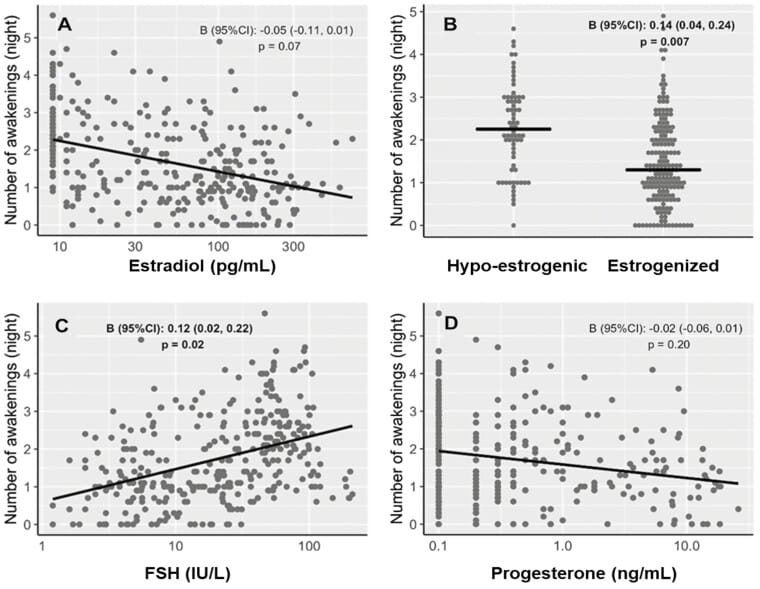
The FSH elevation that makes blood tests unreliable is the same FSH elevation that is mechanistically driving the insomnia. The hormone causing the problem is too unstable to measure reliably in a single blood draw — but it is stable enough, over time, to fragment sleep night after night.
What Do Medical Guidelines Recommend for Detecting Perimenopause?
The gap between what guidelines recommend and what happens in the exam room is wide.
Williams et al. (2016) documented a demand optimization initiative aligned with NICE guidelines, establishing that FSH testing is inappropriate for women aged 45 and over when evaluating for perimenopause. A single-point hormone measurement is rendered unreliable by the wide inter- and intra-individual variability characteristic of this transition. The study quantified the volume of FSH tests being ordered for menopause evaluation in this age group and found that many represented avoidable laboratory orders — adding cost without adding information. An educational effort resulted in a measurable and sustained reduction in inappropriate FSH ordering. The broader research literature notes that ovulatory cycles can still occur after a postmenopausal-range FSH reading — meaning even a “high” result does not rule out continued ovulation.
The European Society of Endocrinology’s 2025 guideline (Lumsden et al., 2025) provides one of the newer international evidence-based frameworks for evaluating perimenopause and menopause. The document addresses the scale of the problem: approximately one quarter of postmenopausal women experience debilitating effects, and that number does not account for the years of perimenopause preceding it. The guideline covers four distinct populations — midlife women in typical menopause, women with premature ovarian insufficiency, women with early menopause, and women for whom hormonal approaches are contraindicated — and emphasizes an experience-based approach across all groups.
But why, despite these guidelines, do doctors keep ordering blood tests?
Hemachandra et al. (2024) conducted a review of 26 menopause guidance documents published between 2015 and 2023 and found that only 6 met minimum quality standards on the AGREE II assessment tool. Perimenopause-specific guidance was largely absent from these documents. The scarcity of perimenopause-specific recommendations left a gap for women in the transition itself. This explains the disconnect: doctors order FSH tests because the guidance that says not to has not reached the point of care in a usable form. The evidence-to-practice pipeline is fractured at the guideline level.
Why Do Doctors Miss Perimenopause Insomnia?
This is not one doctor’s mistake. It is a structural knowledge gap.
O’Reilly et al. (2024) conducted a mixed-methods study with 436 Australian women, combining a structured survey (411 respondents) with 25 semi-structured interviews. Three themes emerged: increased anxiety and depression, a negative impact on emotions, and a negative impact on self-regard — all tied to the perimenopause transition. Women described their perimenopausal mental health changes as confusing, invalidating, and disconnected from any explanation they received from a healthcare provider. The study identified a dual knowledge gap: providers lack training in perimenopause-associated psychiatric and sleep presentations, and women themselves lack education about what perimenopause can look like beyond hot flashes. When insomnia presents without vasomotor episodes, it falls outside the pattern that training prepared providers to recognize.
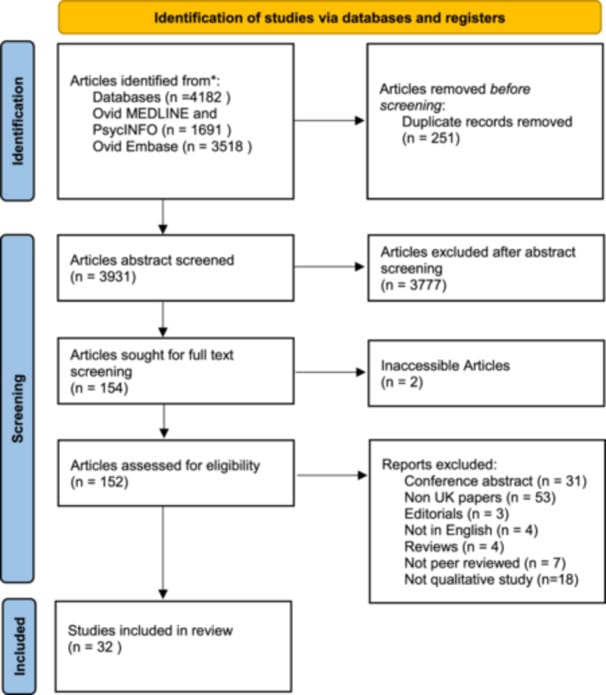
Anto et al. (2025) synthesized 32 qualitative studies encompassing 3,462 UK women and found a consistent pattern: women reported being told that what they were experiencing was “normal aging” rather than being attributed to the hormonal transition. The experience extends beyond physical effects — impairing professional functioning, relationships, and self-identity in ways that current evaluation frameworks do not capture. Women from minority ethnic backgrounds and those with limited healthcare access faced compounded barriers to recognition and appropriate care.
Proserpio et al. (2020) reviewed the biological mechanisms linking perimenopausal hormone fluctuation to insomnia using the predisposing-precipitating-perpetuating (3P) model, identifying hormonal fluctuations as the primary precipitating factor. Insomnia is one of the commonly reported complaints in the menopausal transition, yet it remains underrecognized and under-addressed — in part because it is attributed to aging rather than identified as a hormone-mediated, addressable condition that first emerges during perimenopause. When providers do not connect insomnia to the hormonal transition, they also do not refer for the approaches that have evidence behind them.
The result: women with perimenopause-driven insomnia are told their blood work is normal, told the problem is stress, and sent home without the connection being made.
Many people have more than one cause contributing to their sleep disruption. Hormonal changes that disrupt sleep may compound with autonomic, metabolic, inflammatory, or circadian factors — and a blood test will not detect any of them. Identifying which causes might be involved is a useful next step.
Find out which causes might be driving your 3am wakeups
Frequently Asked Questions
Can You Be Perimenopausal with Normal Follicle-Stimulating Hormone Levels?
The Henrich et al. (2006) data from 576 women showed that the proposed FSH threshold of 13 mIU/mL had a sensitivity of only 67.4% — meaning it correctly identified roughly two-thirds of women in the transition and missed the other third. These were not edge cases. The distributional overlap between reproductive-stage and transition-stage FSH values was large enough that a woman could test in the “normal” range one week and in the “menopausal” range the next, depending on where her hormones happened to be on the morning of the blood draw.
A normal FSH result during perimenopause reflects timing, not hormonal status.
Should You Push for Hormone Testing When Your Doctor Says You Are Too Young?
There is an important distinction here. Premature ovarian insufficiency (POI) — ovarian decline before age 40 — is a condition where FSH testing is appropriate and informative, because the hormonal picture is different from typical perimenopause. FSH tends to be more consistently elevated in POI, making a blood test more reliable in this population.
After age 40, the Santoro et al. (2021) review of 758 publications reinforces that the perimenopause transition is defined by non-linear hormonal fluctuation that can span a decade. In this age range, evaluating what you are experiencing over time is more informative than a single hormone measurement. Reframing the conversation with your doctor from “test my hormones” to “evaluate whether what I am experiencing matches a perimenopause pattern” aligns with what the evidence supports.
Why Does Your Doctor Say It Is Just Stress When You Cannot Sleep?
This is not about individual provider shortcomings — it is about what the training covers and what it does not. The O’Reilly et al. (2024) study documented that both providers and women themselves lack education about perimenopause presentations that go beyond hot flashes. When insomnia is the leading complaint and vasomotor episodes are absent, the perimenopause connection is not made. The default attribution — stress, anxiety, poor sleep hygiene — is not wrong in the sense that those factors can also disrupt sleep. It is incomplete because it does not account for the hormonal mechanism that may be precipitating or compounding the problem.
What Should You Track Before Your Next Doctor Appointment?
The Williams et al. (2016) NICE-aligned guidance makes the case that evaluation based on what you are experiencing and your menstrual history is the appropriate path for women 45 and over. What this means practically: bringing a documented pattern to your appointment gives your doctor the data that a blood test cannot provide.
A useful approach:
- Sleep timing: Record when you go to bed, when you fall asleep, when you wake, and when you get up in the morning — every day for 8 weeks minimum
- Cycle tracking: Note the start date of each period and any irregularity in cycle length
- Co-occurring changes: Document anything that appears in the same stretches as disrupted sleep — night sweats, mood changes, joint pain, heart palpitations, changes in energy
- Good-stretch/bad-stretch pattern: Note whether your sleep follows a cyclical pattern with predictable better and worse periods
This pattern-based data is what guidelines recommend for perimenopause evaluation — and it is more informative than a single hormone level.
Does Perimenopause Insomnia Respond to Approaches Even Without a Formal Label?
Troia et al. (2025) reviewed the evidence on sleep disruption in perimenopause and identified cognitive behavioral therapy for insomnia (CBT-I) as a first-line approach for perimenopausal insomnia. CBT-I does not require a hormonal label to be effective — it targets the sleep-maintenance and arousal-regulation patterns that perimenopause disrupts.
Proserpio et al. (2020) applied the 3P (predisposing-precipitating-perpetuating) model to menopausal insomnia and identified hormonal fluctuation as the primary precipitating factor. When vasomotor episodes are present, hormone therapy addresses both the vasomotor trigger and baseline sleep architecture. For women aged 55 and over, prolonged-release melatonin was endorsed as a preferred first-line pharmacological option based on its tolerability and effectiveness across multiple sleep measures.
For detailed coverage of hormone replacement and sleep outcomes, see Does HRT Help with Sleep in Menopause?. For the evidence on progesterone and GABA enhancement, see Does Progesterone Help You Sleep?.
Related Reading
- Hormonal Women Sleep Disruption — Parent guide to how estrogen, progesterone, cortisol, temperature, melatonin, and cycle changes interact with sleep.
- Why Did You Become a Light Sleeper in Perimenopause? — Why progesterone and GABA decline can lower the arousal threshold during perimenopause.
- Can Insomnia Be the First Sign of Perimenopause, Even Without Hot Flashes? — How insomnia can appear before hot flashes or cycle changes when early perimenopause alters progesterone and sleep maintenance.
- Why Did Your Sleep Medication Stop Working During Menopause? — Why sedating medication may stop matching the sleep-maintenance pattern common in menopause insomnia.
- How Long Does Menopause Insomnia Last? — Sleep disruption across perimenopause, menopause, and postmenopause, including stage-specific contributors.
- What Supplements Have Evidence for Menopause Insomnia? — Supplement options for menopause insomnia by evidence, mechanism, and limits.
References
1. Henrich, J. B., Hughes, J. P., Kaufman, S. C., Brody, D. J., & Curtin, L. R. (2006). Limitations of follicle-stimulating hormone in assessing menopause status: findings from the National Health and Nutrition Examination Survey (NHANES 1999-2000). Menopause, 13(2), 171-177. https://pubmed.ncbi.nlm.nih.gov/16645530/
2. Santoro, N., Roeca, C., Peters, B. A., & Neal-Perry, G. (2021). The Menopause Transition: Signs, Symptoms, and Management Options. The Journal of Clinical Endocrinology and Metabolism, 106(1), 1-15. https://pubmed.ncbi.nlm.nih.gov/33095879/
3. Coborn, J., de Wit, A., Crawford, S., Nathan, M., Rahman, S., Finkelstein, L., Wiley, A., & Joffe, H. (2022). Disruption of Sleep Continuity During the Perimenopause: Associations with Female Reproductive Hormone Profiles. The Journal of Clinical Endocrinology and Metabolism, 107(10), e4144-e4153. https://pubmed.ncbi.nlm.nih.gov/35878624/
4. Williams, J., Currie, H., Foster, A., & Anderson, J. (2016). Reducing inappropriate testing in the diagnosis of the menopause and peri-menopause. Post Reproductive Health, 22(3), 131-132. https://pubmed.ncbi.nlm.nih.gov/26951639/
5. Lumsden, M. A., Dekkers, O. M., Faubion, S. S., Linden Hirschberg, A., Jayasena, C. N., Lambrinoudaki, I., Louwers, Y., Pinkerton, J. V., Sojat, A. S., & van Hulsteijn, L. (2025). European Society of Endocrinology clinical practice guideline for evaluation and management of menopause and the perimenopause. European Journal of Endocrinology, 193(4), G49-G81. https://pubmed.ncbi.nlm.nih.gov/41082911/
6. Hemachandra, C., Taylor, S., Islam, R. M., Fooladi, E., & Davis, S. R. (2024). A systematic review and critical appraisal of menopause guidelines. BMJ Sexual & Reproductive Health, 50(2), 122-138. https://pubmed.ncbi.nlm.nih.gov/38336466/
7. O’Reilly, K., McDermid, F., McInnes, S., & Peters, K. (2024). “I was just a shell”: Mental health concerns for women in perimenopause and menopause. International Journal of Mental Health Nursing, 33(3), 693-702. https://pubmed.ncbi.nlm.nih.gov/38082463/
8. Anto, A., Basu, A., Selim, R., & Eisingerich, A. B. (2025). Women’s Menopausal Experiences in the UK: A Systemic Literature Review of Qualitative Studies. Health Expectations, 28(1), e70167. https://pubmed.ncbi.nlm.nih.gov/39888228/
9. Proserpio, P., Marra, S., Campana, C., Agostoni, E. C., Palagini, L., Nobili, L., & Nappi, R. E. (2020). Insomnia and menopause: a narrative review on mechanisms and treatments. Climacteric, 23(6), 539-549. https://pubmed.ncbi.nlm.nih.gov/32880197/
10. Troia, L., Garassino, M., Volpicelli, A. I., Fornara, A., Libretti, A., Surico, D., & Remorgida, V. (2025). Sleep Disturbance and Perimenopause: A Narrative Review. Journal of Clinical Medicine, 14(5), 1479. https://pubmed.ncbi.nlm.nih.gov/40094961/
Written by Kat Fu, M.S., M.S. — Last reviewed: April 18, 2026 — 10 references cited