

Adults over 50 commonly notice their sleep deteriorating – lighter sleep, more nighttime waking, less feeling rested. The common assumption is that this is an inevitable consequence of aging. Research now identifies inflammaging as one contributor: a chronic, low-grade inflammatory state driven by senescent cells, immune changes, and metabolic changes that can influence sleep-regulating brain circuits.
This article covers how inflammaging fragments sleep architecture, the bidirectional feedback loop between inflammation and poor sleep, CBT-I evidence for reducing inflammatory markers, and the connection between inflammaging-driven sleep loss and accelerated biological aging. It is gender-neutral and mechanism-focused. For the male-specific angle – how testosterone decline compounds inflammaging after 50 – see Why Do Men Sleep Worse After 50?. For the full map of inflammatory sleep disruption pathways, see the parent pillar: Inflammatory Sleep Disruption.
What Is Inflammaging and Why Does It Affect Sleep?
The term “inflammaging” was coined by Claudio Franceschi in 2000 and has since been refined into an immunometabolic framework – one that includes not just immune cell changes but also gut microbiome alterations, metabolic dysregulation, and SASP acting together to sustain the inflammatory state (Franceschi & Campisi, 2014; Franceschi et al., 2018).
SASP is one important driver. As cells become senescent – they stop dividing but do not die – they release dozens of pro-inflammatory cytokines, chemokines, and proteases into surrounding tissue. This secretion continuously activates the innate immune response even without infection. The result is sterile inflammation: no pathogen is present, the inflammatory state does not self-resolve, and it affects the whole body rather than one localized area.
IL-6 is the single consistently elevated cytokine in aging. Serum concentrations approximately double between age 30 and 80, and IL-6 elevation predicts disability, cognitive decline, and mortality independently of other risk factors (Ferrucci & Fabbri, 2018).
The connection to sleep is direct. IL-6 and its receptor are synthesized in the brain at high density in the hippocampus and hypothalamus – the primary regions governing sleep regulation. Dysregulated IL-6 impairs sleep-promoting pathways by altering monoaminergic transmission and desensitizing cytokine receptors within these circuits (Irwin & Opp, 2017). Rising IL-6 does not just correlate with worse sleep – it acts on the circuits that control sleep.
How Does Inflammaging Fragment Sleep Architecture?
N3 slow-wave sleep – the deepest, restorative stage – declines at approximately 2% per decade up to age 60, with continued decline thereafter. Adults over 60 spend 15-25% less total sleep time in N3 compared to younger adults, with a concurrent rise in lighter N1/N2 stages and increased nocturnal awakenings (Ohayon et al., 2004; Mander et al., 2017).
The inflammatory cytokines IL-1 beta and TNF-alpha are mechanistically involved in this decline. In acute models, exogenous IL-1 beta increases NREM sleep. But chronic low-level elevation – the pattern that defines inflammaging – biases sleep architecture toward fragmented, lighter sleep rather than consolidated deep sleep (Irwin & Opp, 2017). The distinction matters: acute inflammation makes you sleepy; chronic low-grade inflammation makes your sleep shallow.
A 2022 study by Piber and colleagues measured this in human participants. Older adults with poor sleep quality showed higher percentages of stimulated monocytes producing IL-6 and TNF-alpha. Transcriptional analysis revealed upregulated NF-kB and AP-1 activity – the molecular machinery that drives inflammatory gene expression (Piber et al., 2022).
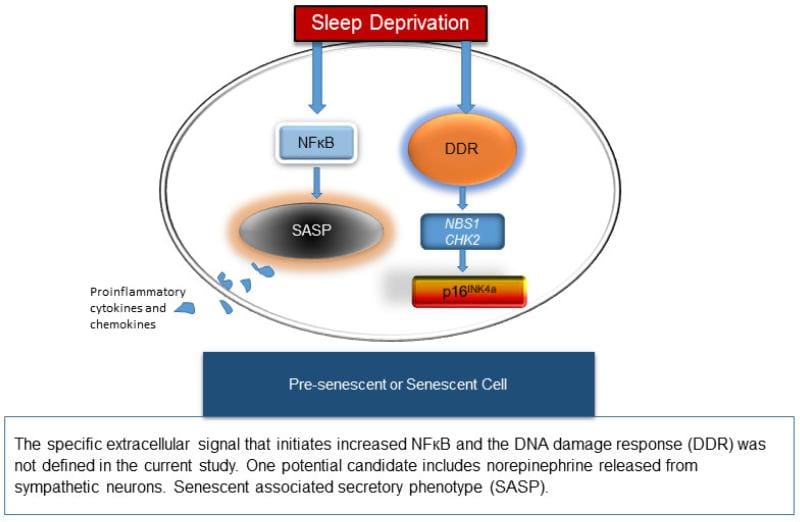
This creates a bidirectional loop. Inflammaging degrades sleep quality. Degraded sleep quality then activates further inflammatory output through the same NF-kB pathway, which increases cytokine production, which further degrades sleep. The inflammaging-sleep loop is self-reinforcing.
Sleep deprivation also accelerates immunosenescence – the age-related decline in immune function. It diminishes NK-cell cytotoxicity, weakens T-cell proliferation, and reduces vaccine antibody responses (Muller & Di Benedetto, 2025). Piber et al. (2022) found that insomnia is associated with accumulation of near-senescent T cells, further linking chronic sleep disruption to accelerated immunological aging.
Can CBT-I Reverse Inflammaging in Older Adults?
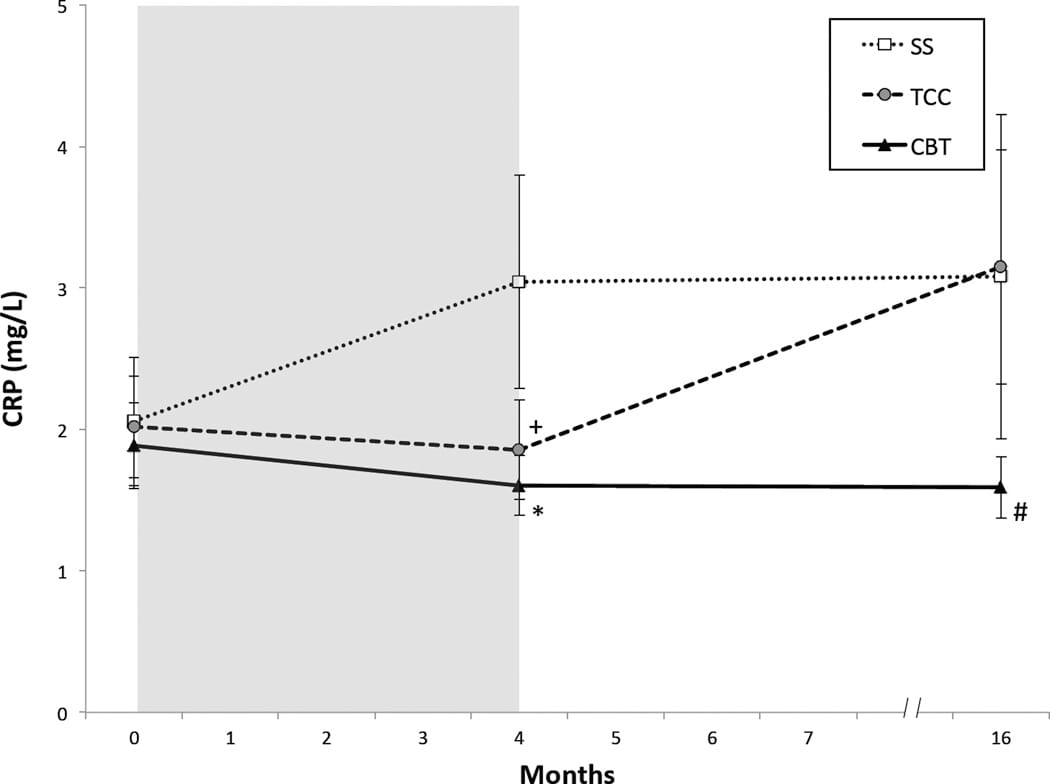
The strongest evidence comes from a UCLA trial that randomized 123 older adults with insomnia to cognitive behavioral therapy for insomnia (CBT-I), Tai Chi Chih (TCC), or a sleep seminar control. CBT-I reduced CRP at months 4 and 16 (P < 0.05), reduced monocyte pro-inflammatory cytokine production at month 2 only (P < 0.05), and reduced pro-inflammatory gene expression at month 4 (P < 0.01). TCC reduced monocyte pro-inflammatory cytokine production across months 2, 4, 7, and 16 (all P < 0.05) and reduced pro-inflammatory gene expression at month 4 (P < 0.001). TELIS promoter-based bioinformatics analysis confirmed reduced NF-kB and AP-1 activity in the CBT-I and TCC groups compared to controls (Irwin et al., 2015).
A separate secondary outcome analysis extended the CBT-I finding. Carroll et al. (2023) measured p16INK4a gene expression in peripheral blood mononuclear cells – a direct marker of cellular senescence. In the control group, p16INK4a expression increased over 24 months (P=0.03). In the CBT-I group, there was no change. Among participants who achieved sustained insomnia remission through CBT-I, p16INK4a expression declined by 24 months (P=0.02).
This connects insomnia resolution directly to the cellular machinery of aging. CBT-I improved sleep and prevented the accumulation of a senescence marker – and in remitters, reversed it.
Irwin et al. (2008) found that partial sleep deprivation increased NF-kB activation in peripheral blood mononuclear cells in healthy adults. The 2015 trial showed that CBT-I reduced pro-inflammatory gene expression and reduced NF-kB/AP-1 activity. Together, these studies support a practical mechanism: sleep disruption can activate inflammatory gene signaling, and successful insomnia treatment can reduce part of that inflammatory signal.
Does Poor Sleep Accelerate Biological Aging?
A 2025 study of 27,500 middle-aged and older adults from the UK Biobank used machine learning brain age estimation from over 1,000 MRI phenotypes. Compared with healthy sleep, poor sleep was associated with a higher brain-age gap (adjusted beta = 0.46 years). Low-grade inflammation, measured with the INFLA-score, mediated 10.42% of the association between poor sleep and higher brain-age gap. Glymphatic waste-clearance impairment and cardiovascular changes were identified as additional mechanistic candidates (Miao et al., 2025).
The epigenetic clock data is consistent with this. In a study of 63 older adults (33 with insomnia, 30 controls, all age 60+), the insomnia group showed GrimAge acceleration and reduced DNA methylation telomere length – two epigenetic markers of accelerated biological aging.
The cellular mechanism is direct. Carroll et al. (2015) found that partial sleep deprivation – not total deprivation, but the moderate sleep loss typical of aging – activated the DNA damage response and SASP in older adults. The same secretory phenotype that contributes to inflammaging can be activated after sleep loss, which supports a plausible pathway linking sleep disruption with cellular aging signals.
Telomere data adds further evidence. A systematic review reported associations between short sleep duration, insomnia, and shorter telomere length, with oxidative stress proposed as one possible mechanism (Sabot et al., 2023).
Downstream consequences extend beyond aging markers. Cho et al. (2025) found that lower slow-wave sleep was associated with smaller inferior parietal region volume, an Alzheimer’s-vulnerable region, after Bonferroni adjustment. A 2025 randomized clinical trial found that experimental inflammatory exposure produced a 3-fold greater increase in depressive mood symptoms in older adults with insomnia compared with those without insomnia (Irwin et al., 2025).
Inflammaging is one contributor to sleep disruption, but it rarely acts alone. Histamine overactivity, gut permeability, neuroinflammation, and circadian misalignment might all compound the effect. Identifying which causes might be involved is a practical next step.
Find out which causes might be driving your 3am wakeups ->
Additional Questions
Can You Reverse Inflammaging?
The CBT-I evidence from the Irwin (2015) and Carroll (2023) trials, covered above, is the strongest data for behaviorally reversing inflammaging markers.
A cross-sectional study of 957 subjects (median age 50) found that high Mediterranean diet adherence was associated with longer sleep duration and better sleep quality, with the strongest association in adults aged 65-75 (Godos et al., 2024). A 2025 meta-analysis of randomized controlled trials found that Mediterranean diet interventions reduced hs-CRP, IL-6, and IL-17 compared with control diets, while total CRP and TNF-alpha were not significantly reduced (Keshani et al., 2025). Exercise adds to this: combined Mediterranean diet and aerobic exercise programs achieved greater reduction of apnea-hypopnea index during REM sleep compared to diet alone (Scoditti et al., 2022).
Does Menopause Make Inflammaging Worse?
A 2025 Study of Women’s Health Across the Nation analysis followed women across the menopause transition for 21 years. Some women showed increases in hs-CRP and IL-6 beginning close to the final menstrual period, supporting a menopause-related contribution to circulating inflammation (El Khoudary et al., 2025).
The sleep data reflects this. In menopausal women, sleep efficiency below 65% is independently associated with elevated hs-CRP, IP-10, and IL-6 (Huang et al., 2017). Postmenopausal women with both poor sleep and high visceral adiposity show greater IL-6/IL-10 ratio increases in response to stress – meaning the anti-inflammatory response is blunted while the pro-inflammatory response is amplified (Prather et al., 2014).
Menopause can therefore be described as a transition that may contribute to circulating inflammation for some women, especially when sleep quality and visceral adiposity are also involved.
Does Poor Sleep Cause Brain Aging?
The eBioMedicine (2025) brain aging study identified three convergent pathways through which poor sleep may accelerate brain aging: circulating inflammation (quantified as a mediator in the study), glymphatic waste-clearance impairment (active during deep sleep), and downstream cardiovascular effects. For the full glymphatic mechanism, see How Does the Glymphatic System Work During Sleep?.
Cho et al. (2025) added sleep-architecture detail: lower slow-wave sleep was associated with smaller inferior parietal region volume, and lower REM sleep was associated with smaller inferior parietal and precuneus volumes. The implication is that inflammation-driven slow-wave sleep loss is not only a marker of neurodegeneration – it may contribute to it by reducing the time the brain spends in the sleep stage with the highest rate of waste clearance and memory consolidation.
What Is Immunosenescence?
Immunosenescence and inflammaging are two sides of the same age-related immune decline. As immune function deteriorates with age – through thymic shrinkage, reduced naive T-cell output, and accumulation of senescent immune cells – the body relies more heavily on innate immune activation. This innate activation produces the sustained IL-6, TNF-alpha, and IL-1 beta output that defines inflammaging (Muller & Di Benedetto, 2025).
Sleep deprivation accelerates immunosenescence by diminishing NK-cell cytotoxicity and weakening T-cell proliferation. Piber et al. (2022) found that insomnia is associated with accumulation of near-senescent T cells – immune cells that have lost proliferative capacity but remain metabolically active and pro-inflammatory. The convergence is tight: poor sleep accelerates immune aging, and immune aging drives the inflammation that fragments sleep.
Related Reading
- Inflammatory Sleep Disruption — the cause overview for cytokines, histamine, gut inflammation, neuroinflammation, and circadian immune timing
- CRP and Sleep Quality — how inflammatory markers relate to sleep continuity and restriction
- Why Do Men Sleep Worse After 50? — how aging, inflammation, and hormonal change can converge in men
- What Is Autoimmune Insomnia? — how autoimmune cytokine activity can disrupt sleep independently of pain
- Why Does Inflammation Make You Exhausted But Unable to Sleep? — how cytokine signaling can create fatigue without stable sleep
- Does an Anti-Inflammatory Diet Improve Sleep? — how dietary inflammatory load connects gut, immune, and sleep pathways
- NLRP3 Inflammasome and Sleep — how inflammasome signaling intersects with sleep regulation
- Prostaglandins and Sleep — how inflammatory lipid mediators can affect sleep pressure and continuity
References
1. Carroll, J. E., Olmstead, R., Cole, S. W., Breen, E. C., Arevalo, J. M., & Irwin, M. R. (2023). Remission of insomnia in older adults treated with cognitive behavioral therapy for insomnia (CBT-I) reduces p16INK4a gene expression in peripheral blood: Secondary outcome analysis from a randomized clinical trial. GeroScience, 45(4), 2325-2335. https://pubmed.ncbi.nlm.nih.gov/36849678/
2. Carroll, J. E., Cole, S. W., Seeman, T. E., Breen, E. C., Witarama, T., Arevalo, J. M. G., Ma, J., & Irwin, M. R. (2016). Partial sleep deprivation activates the DNA damage response (DDR) and the senescence-associated secretory phenotype (SASP) in aged adult humans. Brain, Behavior, and Immunity, 51, 223-229. https://pubmed.ncbi.nlm.nih.gov/26336034/
3. Cho, G., Mecca, A. P., Buxton, O. M., Liu, X., & Miner, B. (2025). Lower slow wave sleep and rapid eye movement sleep are associated with brain atrophy of Alzheimer’s disease-vulnerable regions. Journal of Clinical Sleep Medicine, 21(7), 1165-1173. https://pubmed.ncbi.nlm.nih.gov/40110600/
4. El Khoudary, S. R., Chen, X., Qi, M., Matthews, K. A., Karlamangla, A. S., Gold, E. B., Harlow, S. D., Thurston, R. C., Joffe, H., Pavlovic, J., & Greendale, G. A. (2025). The relation between systemic inflammation and the menopause transition: The Study of Women’s Health Across the Nation. The Journal of Clinical Endocrinology and Metabolism, 110(11), e3566-e3576. https://pubmed.ncbi.nlm.nih.gov/40123296/
5. Ferrucci, L., & Fabbri, E. (2018). Inflammageing: Chronic inflammation in ageing, cardiovascular disease, and frailty. Nature Reviews Cardiology, 15(9), 505-522. https://pubmed.ncbi.nlm.nih.gov/30065258/
6. Franceschi, C., & Campisi, J. (2014). Chronic inflammation (inflammaging) and its potential contribution to age-associated diseases. The Journals of Gerontology. Series A, Biological Sciences and Medical Sciences, 69(Suppl 1), S4-S9. https://pubmed.ncbi.nlm.nih.gov/24833586/
7. Franceschi, C., Garagnani, P., Parini, P., Giuliani, C., & Santoro, A. (2018). Inflammaging: A new immune-metabolic viewpoint for age-related diseases. Nature Reviews Endocrinology, 14(10), 576-590. https://pubmed.ncbi.nlm.nih.gov/30046148/
8. Godos, J., Ferri, R., Lanza, G., Caraci, F., Vistorte, A. O. R., Yelamos Torres, V., Grosso, G., & Castellano, S. (2024). Mediterranean diet and sleep features: A systematic review of current evidence. Nutrients, 16(2), 282. https://pubmed.ncbi.nlm.nih.gov/38257175/
9. Huang, W. Y., Huang, C. C., Chang, C. C., Kor, C. T., Chen, T. Y., & Wu, H. M. (2017). Associations of self-reported sleep quality with circulating interferon gamma-inducible protein 10, interleukin 6, and high-sensitivity C-reactive protein in healthy menopausal women. PLOS ONE, 12(1), e0169216. https://pubmed.ncbi.nlm.nih.gov/28060925/
10. Irwin, M. R., Wang, M., Ribeiro, D., Cho, H. J., Olmstead, R., Breen, E. C., Martinez-Maza, O., & Cole, S. (2008). Sleep loss activates cellular inflammatory signaling. Biological Psychiatry, 64(6), 538-540. https://pubmed.ncbi.nlm.nih.gov/18561896/
11. Irwin, M. R., Olmstead, R., Breen, E. C., Witarama, T., Carrillo, C., Sadeghi, N., Arevalo, J. M., Ma, J., Nicassio, P., Bootzin, R., & Cole, S. (2015). Cognitive behavioral therapy and tai chi reverse cellular and genomic markers of inflammation in late-life insomnia: A randomized controlled trial. Biological Psychiatry, 78(10), 721-729. https://pubmed.ncbi.nlm.nih.gov/25748580/
12. Irwin, M. R., & Opp, M. R. (2017). Sleep health: Reciprocal regulation of sleep and innate immunity. Neuropsychopharmacology, 42(1), 129-155. https://pubmed.ncbi.nlm.nih.gov/27510422/
13. Irwin, M. R., Boyle, C. C., Cho, J. H., Piber, D., Sadeghi, N., Castillo, D., Smith, M. T., Eisenberger, N. I., & Olmstead, R. (2025). Inflammatory exposure and depression in older adults with insomnia: A randomized clinical trial. JAMA Psychiatry, 82(9), 859-867. https://pubmed.ncbi.nlm.nih.gov/40668551/
14. Keshani, M., Rafiee, S., Heidari, H., Rouhani, M. H., Sharma, M., & Bagherniya, M. (2025). Mediterranean diet reduces inflammation in adults: A systematic review and meta-analysis of randomized controlled trials. Nutrition Reviews, nuaf213. https://pubmed.ncbi.nlm.nih.gov/41211687/
15. Mander, B. A., Winer, J. R., & Walker, M. P. (2017). Sleep and human aging. Neuron, 94(1), 19-36. https://pubmed.ncbi.nlm.nih.gov/28384471/
16. Miao, Y., Wang, J., Li, X., Guo, J., Ekblom, M. M., Sindi, S., Zhang, Q., & Dove, A. (2025). Poor sleep health is associated with older brain age: The role of systemic inflammation. EBioMedicine, 120, 105941. https://pubmed.ncbi.nlm.nih.gov/41033940/
17. Müller, L., & Di Benedetto, S. (2025). Immunosenescence and inflammaging: Mechanisms and modulation through diet and lifestyle. Frontiers in Immunology, 16, 1708280. https://pubmed.ncbi.nlm.nih.gov/41425546/
18. Ohayon, M. M., Carskadon, M. A., Guilleminault, C., & Vitiello, M. V. (2004). Meta-analysis of quantitative sleep parameters from childhood to old age in healthy individuals: Developing normative sleep values across the human lifespan. Sleep, 27(7), 1255-1273. https://pubmed.ncbi.nlm.nih.gov/15586779/
19. Piber, D., Cho, J. H., Lee, O., Lamkin, D. M., Olmstead, R., & Irwin, M. R. (2022). Sleep disturbance and activation of cellular and transcriptional mechanisms of inflammation in older adults. Brain, Behavior, and Immunity, 106, 67-75. https://pubmed.ncbi.nlm.nih.gov/35953022/
20. Prather, A. A., Puterman, E., Epel, E. S., & Dhabhar, F. S. (2014). Poor sleep quality potentiates stress-induced cytokine reactivity in postmenopausal women with high visceral abdominal adiposity. Brain, Behavior, and Immunity, 35, 155-162. https://pubmed.ncbi.nlm.nih.gov/24060585/
21. Rivero-Segura, N. A., Cuartas, J. D. R., Garcia-delaTorre, P., Sanchez-Garcia, S., Ramirez-Aldana, R., & Gomez-Verjan, J. C. (2025). Insomnia accelerates the epigenetic clocks in older adults. GeroScience, 47(6), 6777-6788. https://pubmed.ncbi.nlm.nih.gov/40100530/
22. Sabot, D., Lovegrove, R., & Stapleton, P. (2023). The association between sleep quality and telomere length: A systematic literature review. Brain, Behavior, & Immunity – Health, 28, 100577. https://pubmed.ncbi.nlm.nih.gov/36691437/
23. Scoditti, E., Tumolo, M. R., & Garbarino, S. (2022). Mediterranean diet on sleep: A health alliance. Nutrients, 14(14), 2998. https://pubmed.ncbi.nlm.nih.gov/35889954/
Written by Kat Fu, M.S., M.S. ? Last reviewed: May 25, 2026 ? 23 references cited