

Perimenopause worsens restless legs through two converging pathways. Declining and unstable estrogen disrupts dopamine regulation in the substantia nigra and thalamus — brain regions that control movement and sensory processing. Simultaneously, heavy perimenopause bleeding depletes iron stores, and the brain needs iron to produce dopamine. When estrogen instability and iron depletion hit at the same time, the dopaminergic pathway loses regulation on both fronts. This is why restless legs often appear or intensify during the menopause transition.
Women are twice as likely as men to develop restless legs syndrome, and midlife is when prevalence peaks (Wesstrom et al., 2008). Many women experience RLS for the first time during perimenopause, or find that mild sensations become unbearable. The feeling ranges from deep crawling to what women describe as electric ants under the skin. It is not a quirk. It is a neurological condition with a hormonal driver.
This article covers the three-part mechanism connecting perimenopause to restless legs — estrogen instability disrupting dopamine, iron depletion from heavy bleeding, and the circadian pattern that concentrates sensations at night. For the full hormonal sleep disruption landscape, see Hormonal Sleep Disruption in Women. Restless legs are one of several sleep disruptors that intensify during the menopause transition. Others — nightmares, nocturia, skin crawling, joint pain — involve different mechanisms and may co-occur independently.
What Hormonal Imbalance Causes Restless Legs in Women?
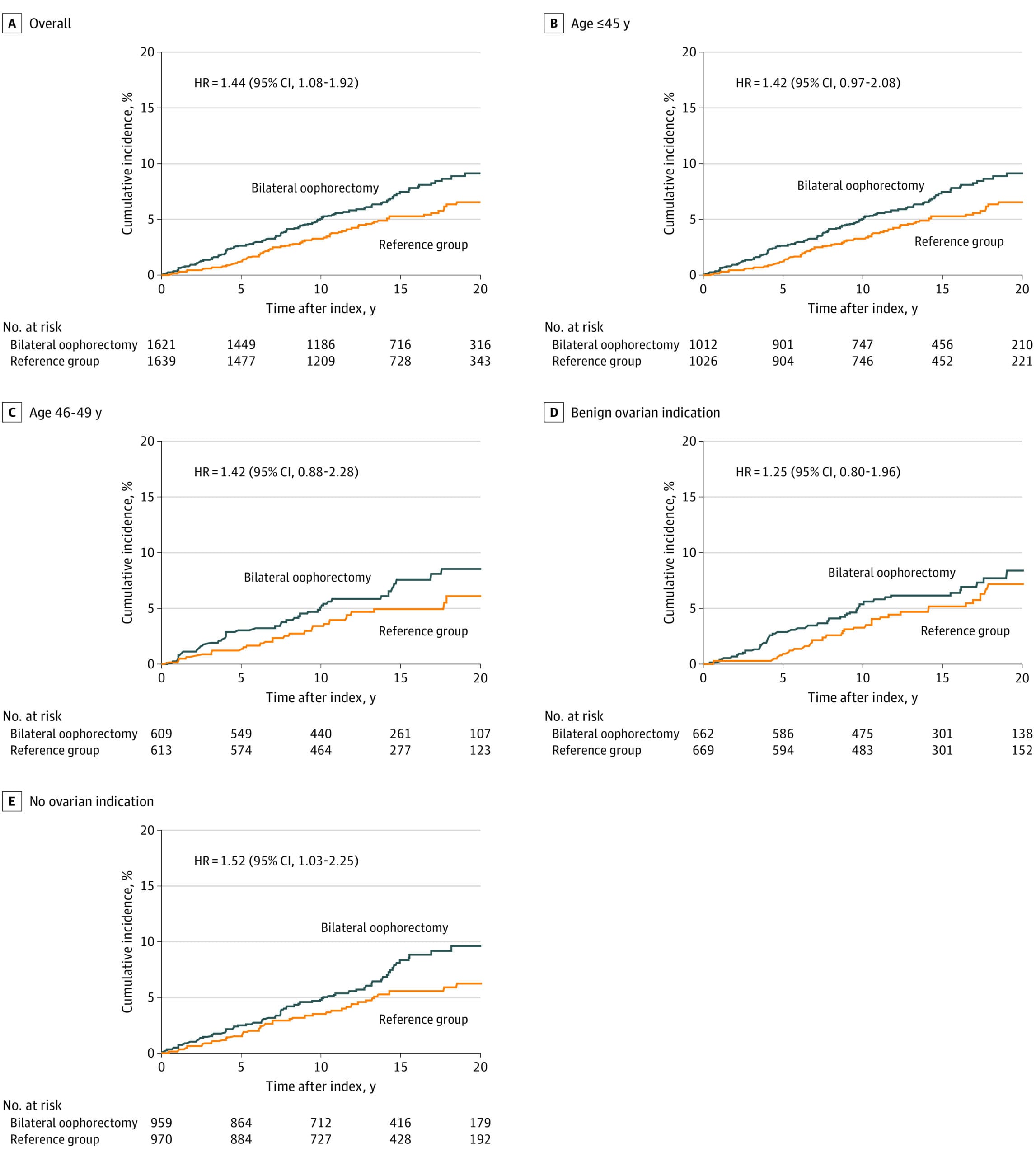
Fluctuating estrogen during perimenopause disrupts dopamine regulation in the substantia nigra — the brain region controlling movement. A JAMA study found that women who lost ovarian estrogen through surgical removal of both ovaries had a 44% higher risk of developing restless legs (Huo et al., 2021). It is estrogen instability rather than absolute estrogen level that appears to trigger the condition, which explains why both pregnancy (high estrogen) and menopause (low estrogen) can worsen restless legs.
The strongest causal evidence for estrogen’s role comes from a JAMA cohort study that tracked 1,653 women who underwent bilateral oophorectomy (surgical removal of both ovaries) before age 50 and compared them to 1,653 matched controls. Women who lost ovarian estrogen production abruptly had a 44% higher risk of developing restless legs (adjusted hazard ratio 1.44, 95% CI 1.08-1.92). Among women without preexisting ovarian conditions, the risk was even higher — HR 1.52 (Huo et al., 2021).
What makes this more than a low-estrogen story is the paradox that both high and low estrogen states can worsen restless legs. Seeman (2020) addressed this directly: “changes rather than absolute levels of estrogen may be responsible for the initiation of RLS features.” During perimenopause, estrogen does not decline in a straight line — it swings between high and low values, sometimes within a single cycle. That instability destabilizes dopamine receptor availability and synaptic dopamine turnover in the substantia nigra and thalamus. When estrogen is stable — whether high or low — the dopaminergic pathway adapts. When estrogen oscillates erratically, dopamine regulation cannot keep pace (Khan et al., 2017).
The European RLS Study Group showed the 2:1 female-to-male ratio across all severity levels and identified increasing parity as a cumulative risk factor — each pregnancy adds hormonal fluctuation and iron depletion. Menopause does not reduce RLS incidence, and HRT does not increase it, making the hormonal picture in post-reproductive life complex (Manconi et al., 2012). Wesstrom et al. (2008) added a further distinction: in their 5,000-woman population study, it was vasomotor instability (hot flashes, night sweats) — not postmenopausal status alone — that was associated with restless legs.
How Does Low Iron During Perimenopause Cause Restless Legs?
Brain iron deficiency disrupts dopamine production in the substantia nigra — the same region destabilized by estrogen fluctuation. During perimenopause, heavy and irregular bleeding can drain ferritin stores below the threshold needed for healthy dopaminergic function. Standard blood tests flag anemia below ferritin 12-15, but restless legs research identifies a threshold of 75 — and some specialists target 100.
Brain tissue studies and MRI data in people with RLS show decreased iron in the substantia nigra and thalamus, co-occurring with relative dopamine excess in those same regions. Brain iron deficiency disinhibits the dopaminergic pathway, producing excessive nighttime dopamine swings that manifest as the sensorimotor urge to move. Genetic variants in BTBD9 are associated with both reduced serum ferritin and higher RLS severity, bridging genetic susceptibility with iron status (Khan et al., 2017).
Perimenopause creates an iron-loss pathway that general RLS information rarely addresses. Erratic menstrual cycles often include flooding episodes — unexpectedly heavy bleeding that can last days longer than a normal period. Each heavy cycle drains ferritin stores.
Seeman (2020) found that each additional pregnancy increases the risk of RLS later in life, strongly suggesting that pregnancy is a specific risk factor for developing the condition. The same logic applies to perimenopause bleeding: cumulative iron loss from years of heavy, erratic cycles depletes ferritin in a way that may not register on standard bloodwork as “anemia” but is below the threshold where the brain’s dopaminergic pathway functions well.
The gap between laboratory ranges and RLS research: standard reference ranges flag ferritin as “low” only below 12-15 ng/mL. A woman with ferritin of 30 — depleted enough to worsen restless legs — will be told her iron is “normal.” Sleep medicine specialists recommend a minimum ferritin of 75 for restless legs management, and some target 100. Intravenous iron has become a first-line approach for people with RLS and ferritin below 75, because oral supplementation is slow and often insufficient for women with ongoing heavy bleeding (Xu et al., 2025).
Why Are Restless Legs Worse at Night During Menopause?
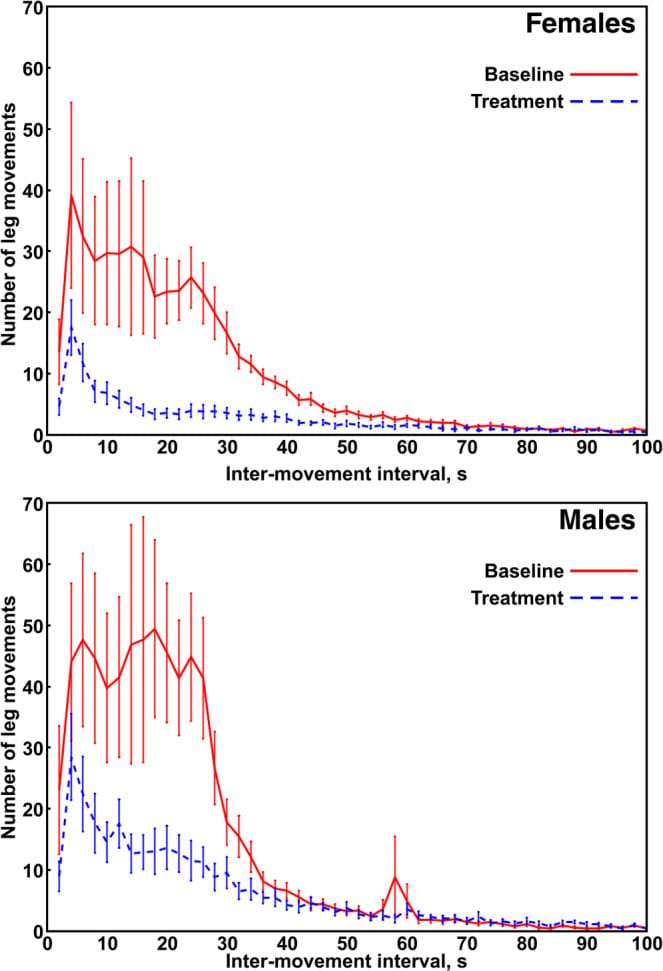
Restless legs follow a circadian pattern that concentrates sensations in the evening and nighttime hours. Dopamine levels naturally drop at night, and in women whose dopaminergic pathway is already destabilized by estrogen fluctuation and iron depletion, this nighttime trough pushes sensations past the threshold. Polysomnographic studies show that post-menopausal women show increased periodic leg movement periodicity compared to age-matched men.
Dopamine follows a circadian rhythm — levels are highest during the day and lowest in the late evening. For many people, this trough is imperceptible. For someone whose dopaminergic pathway is already running with reduced regulation due to estrogen instability and low brain iron, the nighttime dopamine drop is enough to trigger the restless legs urge (Khan et al., 2017).
A 2024 polysomnographic study provided direct evidence that menopause worsens the objective leg movement pattern. Men showed no statistically meaningful differences in periodic leg movement structure between younger and older age groups. Post-menopausal women showed a measurable increase in what researchers call the Periodicity Index — leg movements became more structured and rhythmically periodic after menopause, particularly in the 16-22 second inter-movement interval range. The researchers interpreted these sex-dependent changes as connected to menopause rather than aging alone, because the same aging process produced no equivalent change in men (Mogavero et al., 2024).
Wesstrom et al. (2008) documented the downstream consequences: women with restless legs reported sleep disturbances and depressed mood more often than controls. Restless legs prevent sleep onset. Fragmented sleep worsens fatigue. Fatigue lowers the threshold for pain and sensory distress. Sleep fragmentation, depressed mood, and sensory distress reinforce each other — concentrating their worst effects when the body needs recovery.
Does Hormone Replacement Therapy Help Restless Legs Syndrome?
The relationship between hormone replacement therapy and restless legs is more complex than “take HRT, fix RLS.” The JAMA oophorectomy study found that estrogen therapy after surgical menopause did not statistically prevent subsequent restless legs (Huo et al., 2021). Current management guidelines prioritize two other approaches: iron repletion targeting ferritin above 75, and alpha-2-delta ligands (gabapentin, pregabalin) which have replaced dopamine agonists as first-line agents.
While surgical estrogen loss raised restless legs risk by 44%, estrogen therapy initiated after surgery did not show a statistically protective effect against developing RLS (Huo et al., 2021). Epidemiological data from the European RLS Study Group also found that HRT use was not protective (Manconi et al., 2012). Stabilizing erratic estrogen may reduce the hormonal contribution to dopaminergic instability, but HRT alone is unlikely to be sufficient if iron stores are depleted or if the dopaminergic pathway has been destabilized over years of fluctuation.
As of 2025, management guidelines have moved away from dopamine agonists (pramipexole, ropinirole) as first-line agents, because long-term use carries a risk of augmentation — a phenomenon where the medication eventually worsens the condition it was prescribed to manage. The current management priority looks like this (Xu et al., 2025):
1. Iron repletion — ferritin target of 75-100. Intravenous iron for people with ferritin below 75, particularly when ongoing bleeding makes oral supplementation insufficient.
2. Alpha-2-delta ligands — gabapentin or pregabalin as first-line pharmacological agents.
3. Low-dose dopamine agonists — with awareness of augmentation risk and with sex-based dosing considerations.
4. HRT — addresses the upstream hormonal environment but is not sufficient alone for restless legs.
A 2025 polysomnographic trial found that females showed higher acute responsiveness to dopamine agonist dosing than males — lower periodic leg movement indices after a single dose. The researchers propose that differential dopamine D3 receptor expression by sex underlies this difference, suggesting sex-based dosing may reduce augmentation risk in women (Mogavero et al., 2025).
Community reports of HRT resolving restless legs may reflect the combined effect of hormonal stabilization plus iron repletion — many women beginning HRT also address iron status simultaneously. For women whose restless legs are primarily driven by iron depletion, iron repletion alone can produce improvement regardless of menopausal stage.
Restless legs during perimenopause involve at least two converging mechanisms — hormonal instability disrupting dopamine and iron depletion from heavy bleeding. But these are rarely the only contributors to disrupted sleep. Hot flashes, cortisol disruption, circadian misalignment, and pain can each independently fragment sleep and may be compounding what restless legs are already doing to your nights.
Find out which causes might be driving your 3am wakeups
Frequently Asked Questions
Does Estrogen Affect Dopamine and Restless Legs?
Estrogen modulates dopamine receptor availability and synaptic dopamine turnover in the substantia nigra and thalamus — the brain regions controlling movement and sensory processing. When estrogen fluctuates during perimenopause, dopamine regulation becomes unstable, producing the sensorimotor urge characteristic of restless legs. Dopamine is the primary neurotransmitter implicated in RLS, and estrogen is one of its regulators in the female brain.
Estrogen influences how many dopamine receptors are available in the substantia nigra and how quickly dopamine is cleared from the synapse. When estrogen oscillates — as it does during perimenopause — dopamine regulation cannot calibrate (Seeman, 2020). One counterintuitive point: restless legs involves dopamine instability and excess, not dopamine deficiency the way Parkinson’s disease does. The sensorimotor urge comes from dopaminergic disinhibition — the pathway overshooting because its regulation is compromised by iron deficiency and hormonal instability (Khan et al., 2017).
What Ferritin Level Is Needed for Restless Legs Syndrome?
Sleep medicine specialists recommend a ferritin target of at least 75 ng/mL for restless legs management, and some target 100. Standard laboratory reference ranges flag ferritin as “low” only below 12-15, which means a woman with ferritin of 30 — depleted enough to worsen restless legs — will be told her iron is “normal.” Requesting a ferritin test and knowing the RLS threshold is important.
General blood panels may show ferritin as “within normal range” at levels below what the brain needs for healthy dopamine production. For women with ferritin below 75, current guidelines favor intravenous iron over oral supplementation — oral iron is slow and absorption is limited, particularly with ongoing heavy perimenopause bleeding (Xu et al., 2025; Khan et al., 2017).
Does Heavy Bleeding Cause Restless Legs in Perimenopause?
Heavy and irregular bleeding is one of the hallmark features of perimenopause, and it creates a direct pathway to restless legs through iron depletion. Each heavy cycle drains ferritin stores. When bleeding is erratic — flooding one month, absent the next — iron stores cannot recover between episodes. This makes perimenopause a uniquely high-risk period for iron-driven restless legs.
During perimenopause, cycles become unpredictable — flooding one month, absent the next — preventing iron recovery between episodes. Seeman (2020) identified cumulative parity as an RLS risk factor because each pregnancy depletes iron and fluctuates hormones. Perimenopause extends this logic: years of heavy, irregular bleeding impose cumulative iron loss on top of an already destabilized hormonal environment (Manconi et al., 2012).
What Is the Best Supplement for Restless Legs During Menopause?
Iron supplementation is the best-supported approach when ferritin is below 75, though oral iron is slow and poorly tolerated for many women. Beyond iron, magnesium is commonly recommended though large-scale RLS trials are limited. The 2025 consensus in RLS management prioritizes iron repletion and alpha-2-delta ligands (prescription gabapentin or pregabalin) over supplements, and cautions against long-term dopamine agonist use due to augmentation risk.
For iron, form matters. Oral iron bisglycinate tends to be better tolerated than ferrous sulfate. Taking iron with vitamin C and away from calcium, tea, and coffee improves absorption. For women with ferritin below 75 and ongoing heavy bleeding, intravenous iron can raise ferritin in a single infusion (Xu et al., 2025). Magnesium glycinate is widely used in the restless legs community for nighttime sensations, though large-scale RLS-focused trials are limited. Alpha-2-delta ligands (gabapentin, pregabalin) are now first-line prescription agents for RLS, having replaced dopamine agonists in management guidelines due to lower augmentation risk.
Can Menopause Restless Legs Go Away?
Restless legs that appear or worsen during perimenopause can improve after the menopause transition completes, because estrogen levels stabilize at their new baseline — it is the fluctuation that drives the condition. However, if iron stores remain depleted or genetic predisposition is strong, sensations may persist. Women with iron-driven restless legs often see improvement once ferritin is repleted above 75, regardless of menopausal stage.
It depends on which mechanism is dominant. Estrogen-instability-driven restless legs have a natural resolution point — once estrogen stabilizes at its post-menopausal baseline, the dopaminergic pathway can recalibrate (Wesstrom et al., 2008). Iron-deficiency-driven restless legs can resolve at any stage once ferritin is adequately repleted. For women with strong genetic predisposition (BTBD9 and MEIS1 variants), restless legs may persist but can be managed with alpha-2-delta ligands and iron maintenance (Xu et al., 2025). Addressing restless legs during perimenopause — rather than waiting for the transition to end — can prevent the cascading effects of years of fragmented sleep on mood and overall health.
Related Reading
- Hormonal Women Sleep Disruption — Parent guide to how estrogen, progesterone, cortisol, temperature, melatonin, and cycle changes interact with sleep.
- Could Sleep Apnea Be Behind Your Menopause Insomnia? — How sleep apnea in women can present as insomnia, fatigue, morning headaches, and repeated awakenings around menopause.
- Why Does One Glass of Wine Ruin Your Sleep During Menopause? — Why alcohol can fragment REM sleep, increase cortisol rebound, and worsen night sweats during menopause.
- Why Does Perimenopause Give You Nightmares That Disrupt Your Sleep? — How REM fragmentation, awakenings, and estrogen-linked emotional reactivity can increase dream recall and nightmares in perimenopause.
- Why Does Menopause Make You Wake Up to Pee at Night? — How estrogen decline can affect bladder tissue, antidiuretic hormone rhythm, nighttime urine production, and sleep fragmentation.
- Why Does Menopause Joint Pain Get Worse at Night? — The sleep-pain relationship between estrogen decline, inflammation, collagen changes, nighttime pain, and fragmented sleep.
- Why Does Your Skin Crawl at Night During Perimenopause? — Formication, itching, histamine timing, skin-barrier changes, and sensory nerve changes that can disturb sleep.
References
Huo, N., Smith, C. Y., Gazzuola Rocca, L., Rocca, W. A., & Mielke, M. M. (2021). Association of Premenopausal Bilateral Oophorectomy With Restless Legs Syndrome. JAMA Network Open, 4(2), e2036058. https://pubmed.ncbi.nlm.nih.gov/33523190/
Khan, F. H., Ahlberg, C. D., Chow, C. A., Shah, D. R., & Koo, B. B. (2017). Iron, dopamine, genetics, and hormones in the pathophysiology of restless legs syndrome. Journal of Neurology, 264(8), 1634-1641. https://pubmed.ncbi.nlm.nih.gov/28236139/
Manconi, M., Ulfberg, J., Berger, K., Ghorayeb, I., Wesström, J., Fulda, S., Allen, R. P., & Pollmächer, T. (2012). When gender matters: restless legs syndrome. Report of the “RLS and woman” workshop endorsed by the European RLS Study Group. Sleep Medicine Reviews, 16(4), 297-307. https://pubmed.ncbi.nlm.nih.gov/22075215/
Mogavero, M. P., Antelmi, E., Lanza, G., Marelli, S., Castelnuovo, A., Tinazzi, M., DelRosso, L. M., Silvestri, R., Ferri, R., & Ferini Strambi, L. (2025). Sex-based disparities in dopamine agonist response in patients with restless legs syndrome. Journal of Sleep Research, 34(2), e14311. https://pubmed.ncbi.nlm.nih.gov/39160111/
Mogavero, M. P., DelRosso, L. M., Lanza, G., Lanuzza, B., Bruni, O., Ferini Strambi, L., & Ferri, R. (2024). Changes in time structure of periodic leg movements during sleep in restless legs syndrome: Effects of sex and age. Sleep Medicine, 115, 137-144. https://pubmed.ncbi.nlm.nih.gov/38359593/
Seeman, M. V. (2020). Why Are Women Prone to Restless Legs Syndrome?. International Journal of Environmental Research and Public Health, 17(1), 368. https://pubmed.ncbi.nlm.nih.gov/31935805/
Wesstrom, J., Nilsson, S., Sundstrom-Poromaa, I., & Ulfberg, J. (2008). Restless legs syndrome among women: prevalence, co-morbidity and possible relationship to menopause. Climacteric, 11(5), 422-428. https://pubmed.ncbi.nlm.nih.gov/18781488/
Xu, Y., Guan, Y., & Lang, B. (2025). Unraveling Restless Legs Syndrome: A Comprehensive Review of Current Research and Future Directions. International Journal of General Medicine, 18, 4041-4055. https://pubmed.ncbi.nlm.nih.gov/40717821/
Written by Kat Fu, M.S., M.S. · Last reviewed: June 18, 2026 · 7 references cited