

Nocturia affects up to 25% of early postmenopausal women at a disruptive level — two or more voids per night — and genitourinary changes from estrogen loss are present in nearly 90% of postmenopausal women (Pauwaert et al., 2021). Each bathroom trip triggers a full cortical arousal, and many women then struggle to fall back asleep. An additional source of confusion runs through community discussions: women cannot tell whether the bladder woke them or they noticed the bladder because something else woke them first.
This article covers the three mechanisms that connect estrogen loss to nocturia and how nocturia fragments sleep. It does not cover general incontinence management or surgical options. Nocturia is one of several hormonal pathways that fragment sleep during menopause. For the full overview of how estrogen and progesterone loss disrupt sleep architecture, see Hormonal Sleep Disruption in Women: What It Is, How It Fragments Sleep, and How to Recognize It.
Why Does Your Bladder Wake You Up at Night After Menopause?
Three mechanisms work together to drive nighttime urination after menopause. Understanding all three matters because each one responds to different approaches.
Tissue atrophy reduces bladder capacity. Estrogen receptors line the bladder epithelium, urethra, and pelvic floor muscles. When estrogen declines, these tissues undergo mucosal thinning, reduced urethral closure pressure, and detrusor instability — the bladder muscle contracts more readily at lower volumes (Allafi et al., 2024). A 2024 review of 11 trials covering 8,547 postmenopausal women found urinary incontinence and related changes present in 63.1% of participants, with nocturia embedded within the broader genitourinary changes of menopause (Allafi et al., 2024). The common description — “it’s like my bladder has shrunk” — is partially correct. Functional capacity is reduced. But that is only one-third of the picture.
The kidneys overproduce urine at night. Estrogen loss disrupts the antidiuretic hormone (ADH) rhythm that normally slows urine production during sleep. This produces nocturnal polyuria — urine overproduction during sleeping hours. Bower et al. (2022) measured nocturnal urine volumes directly: women with frequent nocturia produced a median of 736 ml overnight compared to 517 ml in the low-frequency group (p<0.001). Both increased production and reduced capacity are present at the same time.
Lighter sleep lowers the waking threshold. Hormonal sleep fragmentation from hot flashes, cortisol changes, and progesterone loss produces more time in lighter sleep stages, where bladder cues that would previously go unnoticed now trigger a full awakening.
A 2024 cross-sectional study of 3,469 women found a dose-response relationship between menopausal stage and nocturia: the prevalence of two or more nightly voids increased progressively from pre- to postmenopause (p<0.001), with nocturia emerging as an early indicator of hormonal change before full overactive bladder develops (Park et al., 2024). Pauwaert et al. (2024) showed that estrogen depletion simultaneously causes vaginal and urethral atrophy, reduces functional bladder capacity, and disrupts ADH circadian rhythm -- establishing all three mechanisms as concurrent rather than competing explanations.
Does Your Body Produce More Urine at Night After Menopause?
Consumer health content about nighttime urination focuses on the bladder. The renal half of the equation — why you are producing so much urine in the first place — gets almost no coverage. This is the mechanism that explains the “I’m filling up faster than I can sleep through it” experience women describe.
Normal nighttime kidney function depends on ADH. During healthy sleep, the brain increases secretion of arginine vasopressin (AVP), also called antidiuretic hormone. This nocturnal AVP rise tells the kidneys to reabsorb more water and produce concentrated, low-volume urine. You produce less urine overnight than during the day, and what you produce is more concentrated. That is normal physiology.
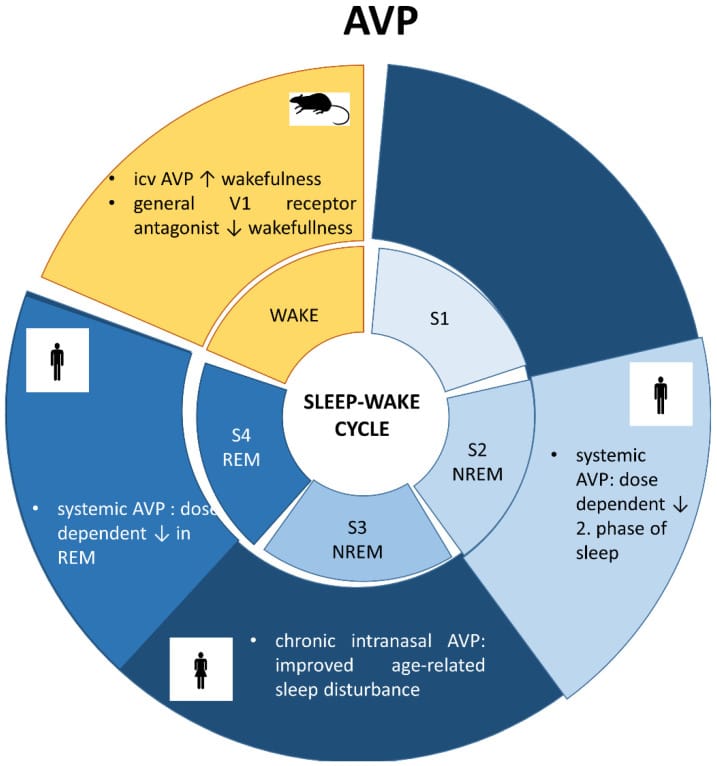
Estrogen loss flattens this rhythm. Van Kerrebroeck et al. (2010) established in a review that nocturnal polyuria — not reduced bladder capacity — is the dominant cause of nocturia in the majority of affected individuals. This reframed the understanding away from a bladder-only model. Pauwaert et al. (2024) linked perimenopausal estrogen loss directly to disrupted ADH circadian rhythm, producing free water-predominant nocturnal diuresis — the kidneys do not concentrate urine at night because the hormonal cue telling them to do so has weakened.
A second renal mechanism runs in parallel. Diminished renin-angiotensin-aldosterone (RAAS) activation after menopause reduces the kidneys’ ability to retain sodium at night, producing a salt-predominant diuresis alongside the free-water diuresis from ADH disruption (Pauwaert et al., 2021; Pauwaert et al., 2024). Two independent renal mechanisms, both estrogen-dependent, both increasing urine production during sleep.
Bower et al. (2022) showed this volumetrically: the median nocturnal urine volume in the high-frequency nocturia group was 736 ml — over 40% more than the 517 ml in the low-frequency group. That volume difference is not a bladder problem. It is a kidney-output problem.
One additional finding: women demonstrate greater sensitivity to synthetic ADH (desmopressin) than men, attributed to the X-chromosome location of the vasopressin V2 receptor gene (van Kerrebroeck et al., 2010).
Are You Waking Up Because You Need to Pee — or Peeing Because You Woke Up?
This is the question that runs through community discussions: “I can’t tell if I’m waking up because of my bladder or waking up and then noticing my bladder.” The answer, based on current evidence, is that both directions run simultaneously in menopause — and the interaction between them makes each one worse.
Insomnia increases nocturia. Verbakel et al. (2025) conducted a meta-analysis of 5,396 adults and found a pooled odds ratio of 1.958 (95% CI: 1.609-2.384) for nocturia among people with insomnia. People with insomnia face nearly double the odds of nocturia. Wake after sleep onset (WASO) was longer and sleep efficiency was lower in those experiencing both conditions simultaneously, quantifying the compounding burden.
Nocturia worsens insomnia in a dose-dependent pattern. Pauwaert et al. (2021) studied 210 postmenopausal women and found insomnia present in 1.6% of women with no nocturia, 22.7% of those with one nightly void, and 53.8% of those with two or more voids (p<0.001). Each additional bathroom trip escalates sleep disruption.
Hot flashes create a separate arousal pathway. Troia et al. (2025) reviewed evidence that vasomotor episodes — hot flashes and night sweats — produce recurrent nocturnal arousals that can lower the waking threshold. These arousals lower the threshold at which women perceive and respond to bladder filling during sleep. A bladder cue that would not have woken you from consolidated deep sleep now wakes you from the lighter sleep that follows a hot flash.
Waking to urinate once or twice overnight falls within the range of normal kidney physiology. The International Continence Society defines nocturia as one or more voids per night that wake you from sleep. Two or more voids is the threshold for disruptive nocturia. Reports of three to four or more per night are common in community discussions during the menopausal transition and are useful to evaluate — not because the number alone defines severity, but because bother and sleep impact are the measures that matter.
Can Estrogen Therapy Help with Nocturia After Menopause?
The two types of estrogen therapy target different parts of the nocturia equation. Knowing which mechanism is dominant — bladder-driven urgency or sleep-fragmentation-driven awareness — shapes which approach is more relevant.
Vaginal estrogen restores local tissue. Vaginal estrogen (estriol cream, estradiol tablets) works directly on estrogen receptors in the bladder and urethral lining, reversing mucosal thinning and improving tissue integrity. This targets the bladder-capacity half of the equation: reduced urgency, fewer involuntary contractions, improved functional capacity. Community discussions around Vagifem and estriol cream reflect lived experience — women are reporting improvement because vaginal estrogen addresses the tissue atrophy driving their urgency (Pauwaert et al., 2024).
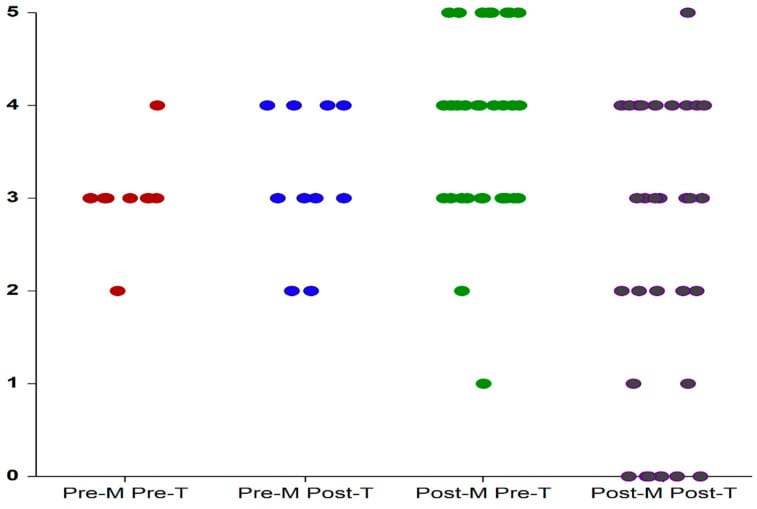
Estrogen-based hormone therapy improves nocturia through sleep. Pauwaert et al. (2021) conducted a pilot trial of 245 postmenopausal women across four arms: estrogen plus progesterone (E+P), estrogen-only, tissue-selective estrogen complex (TSEC), and untreated controls. Both E+P and TSEC arms showed reductions in nocturia (p=0.018 for both). Sleep disorder scores improved in the E+P group (p<0.001) and the TSEC group (p=0.013). Estrogen-only therapy reduced urgency (p=0.039). The mechanistic finding: estrogen-based hormone therapy reduced nocturia primarily by improving sleep quality rather than by altering kidney water handling directly. Fewer arousals meant fewer opportunities to notice and respond to the bladder.
Behavioral approaches as first-line management. Pauwaert et al. (2024) recommended behavioral approaches before pharmacological or hormonal options: timed fluid restriction (reducing intake 2-3 hours before bed), bladder training (gradually increasing intervals between voids), and pelvic floor exercises. Bower et al. (2022) found that 150 minutes per week of physical activity was protective against nocturnal polyuria. Verbakel et al. (2025) found that melatonin, dietary modifications, and behavioral sleep approaches all reduced nocturnal voiding frequency in included studies.
When to seek evaluation. Consistently waking three or more times per night, blood in urine, sudden onset of nocturia, or pain during urination all call for evaluation. A frequency-volume chart — tracking when and how much you urinate for two to three days — gives a doctor the information needed to distinguish between bladder-driven and urine-production-driven nocturia, because the two require different approaches (van Kerrebroeck et al., 2010).
Hormonal changes are one of several causes that can contribute to nighttime waking. Nocturia from estrogen decline may compound with cortisol disruption, temperature dysregulation, or metabolic changes — and each combination requires a different approach. Identifying which causes might be involved is a useful next step.
Find out which causes might be driving your 3am wakeups →
Frequently Asked Questions
How Many Times Is It Normal to Pee at Night During Menopause?
The International Continence Society defines nocturia as one or more voids that wake you from sleep. But the threshold for disruptive nocturia — the level that measurably degrades sleep quality — is two or more. Pauwaert et al. (2021) found nocturia present in 24.8% of early postmenopausal women in a Belgian cohort, with urgency and sleep disturbance escalating as nocturia frequency increased. Frequency alone does not determine severity. The measures that matter are bother (how much it affects your quality of life) and sleep impact (how much it fragments your sleep and impairs daytime functioning).
Can Overactive Bladder Be Caused by Menopause?
Park et al. (2024) documented this dose-response across menopausal stages in 3,469 women: prevalence ratios for two or more nightly voids increased progressively from premenopause through postmenopause (p<0.001). Nocturia showed a stronger menopausal-stage association than the overall overactive bladder composite score, supporting the idea that nocturia is an early hormonal indicator before full overactive bladder develops. Overactive-bladder-driven nocturia (from bladder contractions at low volumes) and polyuria-driven nocturia (from kidney overproduction) are distinct mechanisms with different approaches -- a distinction that matters for getting the right support. Some women also do not connect vaginal atrophy to bladder urgency, but they share the same estrogen-dependent tissue changes.
Does Vaginal Estrogen Help with Overactive Bladder?
The distinction between local and estrogen-based hormone therapy is more than a delivery method difference — it reflects two different targets. Vaginal estrogen addresses the bladder-capacity half of the nocturia equation by restoring urogenital tissue that has thinned from estrogen loss (Pauwaert et al., 2024). Estrogen-based hormone therapy targets the sleep-quality half by reducing arousals. Vaginal estrogen also carries a different risk profile from estrogen-based hormone therapy, which is part of why estriol cream and estradiol vaginal tablets are commonly discussed in community forums as an accessible first step. For women whose nocturia is driven primarily by urgency and reduced capacity rather than nocturnal polyuria, vaginal estrogen targets the mechanism directly.
Does Antidiuretic Hormone Decrease During Menopause?
During healthy sleep, the brain’s suprachiasmatic nucleus drives a nocturnal rise in arginine vasopressin (AVP), concentrating urine and reducing overnight volume. Estrogen supports this circadian rhythm. Pauwaert et al. (2024) and Pauwaert et al. (2021) both document that estrogen loss during menopause flattens the nocturnal ADH surge, removing the cue that tells kidneys to slow down. Van Kerrebroeck et al. (2010) established that this ADH disruption — not reduced bladder capacity — is the dominant cause of nocturia in the majority of affected individuals. This remains the least-covered mechanism in consumer-facing nocturia content: the problem is not always that your bladder is too small, but that your kidneys are producing too much urine at the wrong time.
When Should You See a Doctor About Peeing at Night During Menopause?
The frequency-volume chart is a two- to three-day log of when you urinate, how much volume each void produces, and when you sleep. It allows a doctor to calculate whether the primary driver is nocturnal polyuria (too much urine produced at night) or reduced bladder capacity (too-frequent voiding at normal volumes), because the approaches differ (van Kerrebroeck et al., 2010). Nocturia is part of the genitourinary changes of menopause and may co-occur with other urogenital changes — vaginal dryness, urgency, and recurrent urinary tract infections share the same estrogen-dependent tissue pathway. Sudden onset, blood in urine, and pain are indicators that call for evaluation independent of frequency.
What Causes Nocturnal Polyuria in Menopause?
These are two independent kidney-level mechanisms, both estrogen-dependent, both increasing urine production during sleep hours. The ADH pathway produces free-water diuresis (dilute, high-volume urine). The RAAS pathway produces salt-predominant diuresis (sodium loss that pulls water with it). They run in parallel and are independent of bladder capacity (Pauwaert et al., 2021; Pauwaert et al., 2024). Bower et al. (2022) showed the volumetric impact: women with frequent nocturia produced a median of 736 ml overnight, compared to 517 ml in the low-frequency group. That 42% volume difference explains the experience women describe — “I’m producing so much urine at night” — and shows it is not a perception issue. It is a measurable change in kidney output.
Related Reading
- Hormonal Women Sleep Disruption — Parent guide to how estrogen, progesterone, cortisol, temperature, melatonin, and cycle changes interact with sleep.
- Could Sleep Apnea Be Behind Your Menopause Insomnia? — How sleep apnea in women can present as insomnia, fatigue, morning headaches, and repeated awakenings around menopause.
- Why Does One Glass of Wine Ruin Your Sleep During Menopause? — Why alcohol can fragment REM sleep, increase cortisol rebound, and worsen night sweats during menopause.
- Why Does Perimenopause Give You Nightmares That Disrupt Your Sleep? — How REM fragmentation, awakenings, and estrogen-linked emotional reactivity can increase dream recall and nightmares in perimenopause.
- Why Do Restless Legs Get Worse in Perimenopause? — How estrogen, dopamine, iron status, and heavy bleeding connect to restless legs that disturb sleep in perimenopause.
- Why Does Menopause Joint Pain Get Worse at Night? — The sleep-pain relationship between estrogen decline, inflammation, collagen changes, nighttime pain, and fragmented sleep.
- Why Does Your Skin Crawl at Night During Perimenopause? — Formication, itching, histamine timing, skin-barrier changes, and sensory nerve changes that can disturb sleep.
References
Allafi, A. H., Al-Johani, A. S., Babukur, R. M., Fikri, J., Alanazi, R. R., Ali, S. D. M. H., Alkathiry, A., Alfozan, A. M., Mayoof, K. I. A. A. H., & Abualhamael, M. A. (2024). The link between menopause and urinary incontinence: A systematic review. Cureus, 16(10), e71260. https://pubmed.ncbi.nlm.nih.gov/39525118/
Baruch, Y., Torella, M., De Bastiani, S., Meschia, M., Candiani, M., Colacurci, N., & Salvatore, S. (2023). Pre- versus post-menopausal onset of overactive bladder and the response to vaginal estrogen therapy: A prospective study. Medicina, 59(2), 245. https://pubmed.ncbi.nlm.nih.gov/36837446/
Bower, W. F., Rose, G. E., Whishaw, D. M., Ervin, C. F., Wang, A. C., & Moore, K. H. (2022). The association between nocturia, hormonal symptoms and bladder parameters in women: An observational study. BJOG: An International Journal of Obstetrics and Gynaecology, 129(5), 812-819. https://pubmed.ncbi.nlm.nih.gov/34028168/
Park, J., Chang, Y., Kim, J. H., Choi, H. R., Kwon, R., Lim, G. Y., Ahn, J., Kim, K. H., Kim, H., Hong, Y. S., Zhao, D., Cho, J., Guallar, E., Park, H. Y., & Ryu, S. (2024). Menopausal stages and overactive bladder symptoms in middle-aged women: A cross-sectional study. BJOG: An International Journal of Obstetrics and Gynaecology, 131(13), 1805-1814. https://pubmed.ncbi.nlm.nih.gov/38992913/
Pauwaert, K., Goessaert, A. S., Ghijselings, L., Bower, W., Depypere, H., & Everaert, K. (2021). Characterizing nocturia among Belgian healthy postmenopausal women: Prevalence, degree of bother, etiology and risk factors for nocturia. Maturitas, 143, 41-46. https://pubmed.ncbi.nlm.nih.gov/33308635/
Pauwaert, K., Goessaert, A. S., Ghijselings, L., Bower, W., Mariman, A., Vogelaers, D., Depypere, H., & Everaert, K. (2021). Hormone therapy as a possible solution for postmenopausal women with nocturia: Results of a pilot trial. Menopause, 28(5), 502-510. https://pubmed.ncbi.nlm.nih.gov/33739310/
Pauwaert, K., Goessaert, A. S., Ghijselings, L., Monaghan, T. F., Depypere, H., & Everaert, K. (2021). Nocturia through the menopausal transition and beyond: A narrative review. International Urogynecology Journal, 32(5), 1097-1106. https://pubmed.ncbi.nlm.nih.gov/33439278/
Pauwaert, K., Goessaert, A. S., Robinson, D., Cardozo, L., Bower, W., Calders, P., Mariman, A., Abrams, P., Tubaro, A., Dmochowski, R., Weiss, J. P., Herve, F., Depypere, H., & Everaert, K. (2024). Nocturia in menopausal women: The link between two common problems of the middle age. International Urogynecology Journal, 35(5), 935-946. https://pubmed.ncbi.nlm.nih.gov/38436669/
Torok, B., Varga, J., & Zelena, D. (2022). Vasopressin as a possible link between sleep-disturbances and memory problems. International Journal of Molecular Sciences, 23(24), 15467. https://pubmed.ncbi.nlm.nih.gov/36555107/
Troia, L., Garassino, M., Volpicelli, A. I., Fornara, A., Libretti, A., Surico, D., & Remorgida, V. (2025). Sleep disturbance and perimenopause: A narrative review. Journal of Clinical Medicine, 14(5), 1479. https://pubmed.ncbi.nlm.nih.gov/40094961/
van Kerrebroeck, P., Hashim, H., Holm-Larsen, T., Robinson, D., & Stanley, N. (2010). Thinking beyond the bladder: Antidiuretic treatment of nocturia. International Journal of Clinical Practice, 64(6), 807-816. https://pubmed.ncbi.nlm.nih.gov/20337753/
Verbakel, I., Boukheir, G., Bliwise, D., Vogelaers, D., Herve, F., Weiss, J., Mariman, A., & Everaert, K. (2025). From nocturnal awakenings to nocturnal voiding: The relationship between insomnia and nocturia — a systematic review. Minerva Urology and Nephrology, 77(2), 181-191. https://pubmed.ncbi.nlm.nih.gov/37955855/
Written by Kat Fu, M.S., M.S. · Last reviewed: June 23, 2026 · 12 references cited