

Poor sleep is not the problem—it’s what persists when the root cause hasn’t been found. Two types of sleepers are contrasted here: Person A, who follows strict sleep rituals and gets inconsistent results, and Person B, who keeps a sensible rhythm and sleeps 7-9 hours. Moving from A to B requires identifying what is driving the poor sleep—not adding more tips to an already-long list.
- Poor sleep is not the problem itself—it’s like lower back pain, which can come from a tight muscle or a herniated disc; the same stretch helps one and worsens the other
- Person A follows strict rituals (no caffeine after 11, dark room, blue-light blockers, magnesium, breathwork) and gets inconsistent results; Person B keeps a sensible rhythm, sleeps 7-9 hours, and falls back asleep within seconds after waking
- Kat describes experiencing this pattern herself for decades; she states becoming Person B is achievable for almost everyone, at any life stage
- Clients tend to reach Person B status once their root cause(s) are identified and addressed
- The next step isn’t another herbal tea—it’s asking the right questions to find your specific starting point
Why Is Poor Sleep Not the Problem Itself?
Most people are stuck as Person A.
My goal is to get you to Person B:
Person A: “I do everything right for sleep—no caffeine after 11, dark room, blue-light blockers, magnesium, breathwork, all of it. It’s helped somewhat… or a little… sometimes.”
vs.
Person B: “I’m generally not strict about it. I keep a sensible rhythm, but I don’t overthink it. I don’t need rituals to fall asleep. I sleep 7–9 hours, wake up once to pee, and fall back asleep within seconds.”
The Person A scenario is what I most often hear (& what I experienced myself for decades).
What I am now is Person B, as are most of my clients once we’ve identified and addressed their root cause(s).
The great news is that Person B is achievable for almost everyone, at any life stage.
What Is the Difference Between Someone Who Sleeps Well and Someone Who Doesn’t?
The problem is that most individuals think sleep itself is the issue.
It isn’t.
Poor sleep is just a symptom, like lower back pain.
Trying to fix sleep directly with another tip is like stretching for back pain without knowing its cause.
If the cause is a tight muscle, it might provide relief. But if the problem is a herniated disc, that same stretch could be make the problem worse.
The lower back pain (your poor sleep) keeps returning because the source—the actual problem—hasn’t been identified or addressed in a targeted way.
To become Person B, you have to stop solving for the wrong problem.
The next essential step isn’t another herbal tea; it’s asking the right questions.
That’s what I’m here to help you with.
Your Personalized Sleep Recovery Path Is Here:
You’ve spent enough time on tips that only help “somewhat, a little, sometimes.”
Your path to becoming “Person B” starts by addressing the source(s) of your sleep disruption that is true for you.
So, let’s find your starting point:
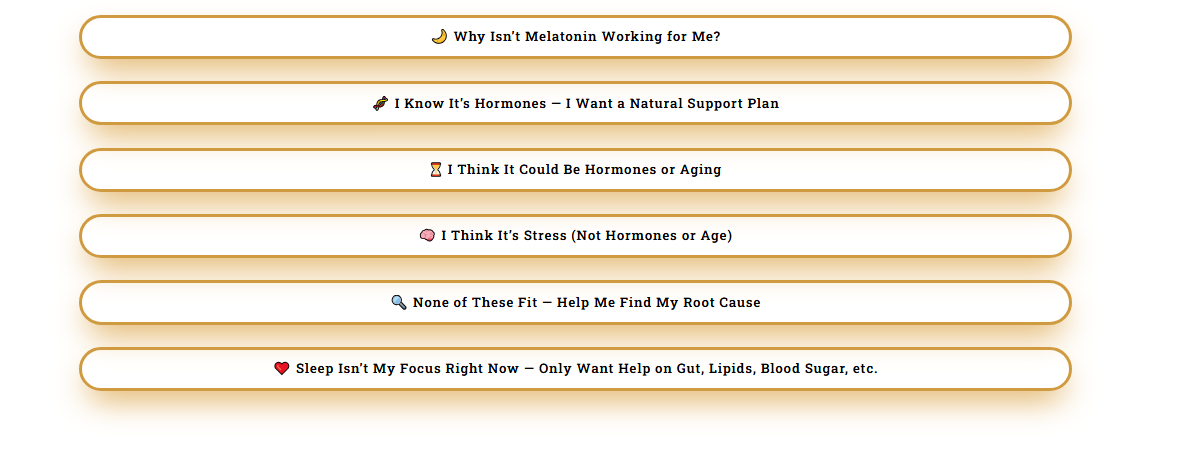
Select what feels most relevant below to access the personalized resources I’ve built for your recovery path—so you can begin your journey to move from Person A to Person B (even if you’ve tried dozens of supplements and habits without lasting results):
- I Am Not Sure – Help Me Identify The Causes Of My Sleep Issues ➜
- Is Stress The Reason I Can’t Stay Asleep? ➜
- Why Isn’t Melatonin Helping? ➜
- Are My Hormones Affecting My Sleep? ➜
- Sleep Isn’t My Focus Right Now ➜
- How Can I Naturally Support Hormone Function? ➜
Warmly,
—Kat
Frequently Asked Questions
Why doesn’t sleep hygiene work for me?
Sleep hygiene tips—like avoiding caffeine, blocking blue light, or taking magnesium—address what you’re experiencing rather than its source. Poor sleep tends to return when the underlying cause hasn’t been identified. Without knowing your root cause, what works for someone else may not help you at all.
What’s the difference between a Person A and Person B sleeper?
Person A follows strict rituals—no caffeine after 11, dark room, blue-light blockers, magnesium, breathwork—but gets inconsistent results. Person B keeps a sensible rhythm without overthinking it, sleeps 7-9 hours, may wake once to pee, and falls back asleep within seconds. The difference tends to come down to whether the root cause(s) of poor sleep have been identified and addressed.
Is poor sleep the problem, or is something else causing it?
Poor sleep is not the problem—it persists when the underlying cause hasn’t been found. The lower back pain analogy applies here: the same stretch relieves tight muscles but can worsen a herniated disc. Without knowing the cause, applying the wrong fix tends to produce the same results.
Can anyone become a consistently good sleeper without strict rituals?
Becoming Person B—someone who sleeps 7-9 hours and falls back asleep easily after waking—is achievable for almost everyone, at any life stage. The path there involves identifying the root cause(s) of sleep disruption specific to you, rather than adding more tips. Clients tend to reach this state once their root causes are identified and addressed.