

Visceral fat—the fat that wraps around internal organs—can accumulate in people who appear lean and have a normal BMI. A 2024 study (Zhang X, et al.) found that higher IL-6 levels were associated with greater visceral fat mass, even after adjusting for BMI, blood pressure, blood sugar, and lipids, suggesting IL-6 may play an active role in driving fat accumulation rather than just accompanying it. The mechanism involves IL-6 suppressing the PKA/HSL pathway—the body’s key fat-breakdown process—making visceral fat harder to mobilize over time.
Key topics covered in this article:
- Visceral fat is metabolically active and acts more like an inflammatory organ than stored calories—it interferes with insulin processing, releases inflammatory molecules, and promotes fat accumulation
- A 2024 study found higher IL-6 levels associated with greater visceral fat mass, independent of BMI, blood pressure, blood sugar, and lipids
- In aged mice, genetic removal of IL-6 produced noticeably smaller visceral fat cells compared to normal mice, while brown and subcutaneous fat remained largely unaffected
- IL-6 tends to rise before CRP, making it a more sensitive early indicator of immune activation than standard inflammation tests
- A four-marker panel—IL-6, WBC, ESR, and CRP—offers a broader picture of inflammation-driven fat retention than CRP alone
If you’ve ever struggled with visceral fat that refused to budge — even when your diet and training were solid — you’re not imagining it.
Visceral fat isn’t just padding under the skin. It’s the fat that wraps around your internal organs.
You can have significant visceral fat even if you look slim, have a normal BMI, or seem healthy by traditional measures.
Why?
“Because visceral fat isn’t just about how much you weigh. It’s about how your body stores and manages fat internally.”
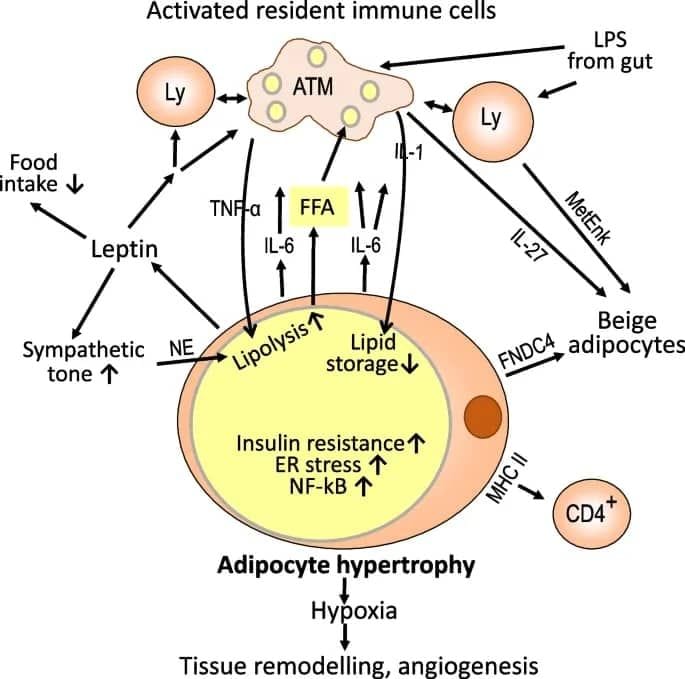
Why Visceral Fat Acts Like an Inflammatory Organ, Not Just Stored Calories
Unlike subcutaneous fat (the fat under your skin), visceral fat acts more like an inflammatory organ. It’s metabolically active — and it:
- Interferes with insulin signaling
- Secretes inflammatory molecules
- Disrupts fat breakdown
- Promotes fat accumulation
One of the central players in this process is interleukin-6 (IL-6) — a cytokine that rises with age and drives “inflammaging.”
Get Weekly Insights to Personalize Your Own Longevity Roadmap
A 2024 study found that IL-6 doesn’t just accompany visceral fat accumulation — it appears to actively promote it.
In a cohort of adults, higher IL-6 levels were significantly associated with greater visceral fat mass — this is even after adjusting for BMI, blood pressure, blood sugar, and lipids.
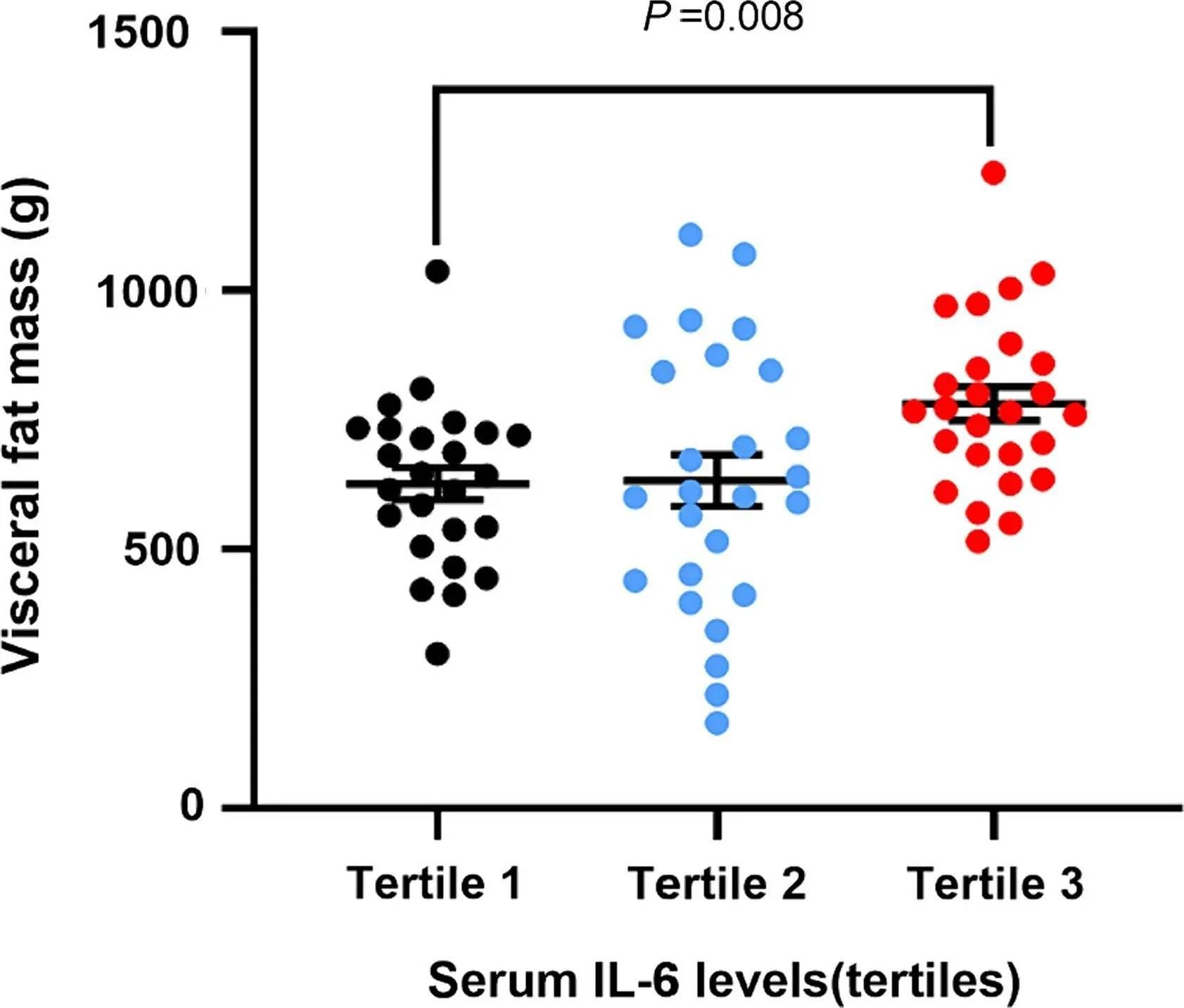
This association — independent of weight or metabolic status — suggested that IL-6 might not simply be a marker of existing fat, but could be involved in the biological processes that encourage fat buildup over time.
How Elevated IL-6 Leads to Visceral Fat Gain—Even in Lean Bodies
Additional experiments helped support this idea:
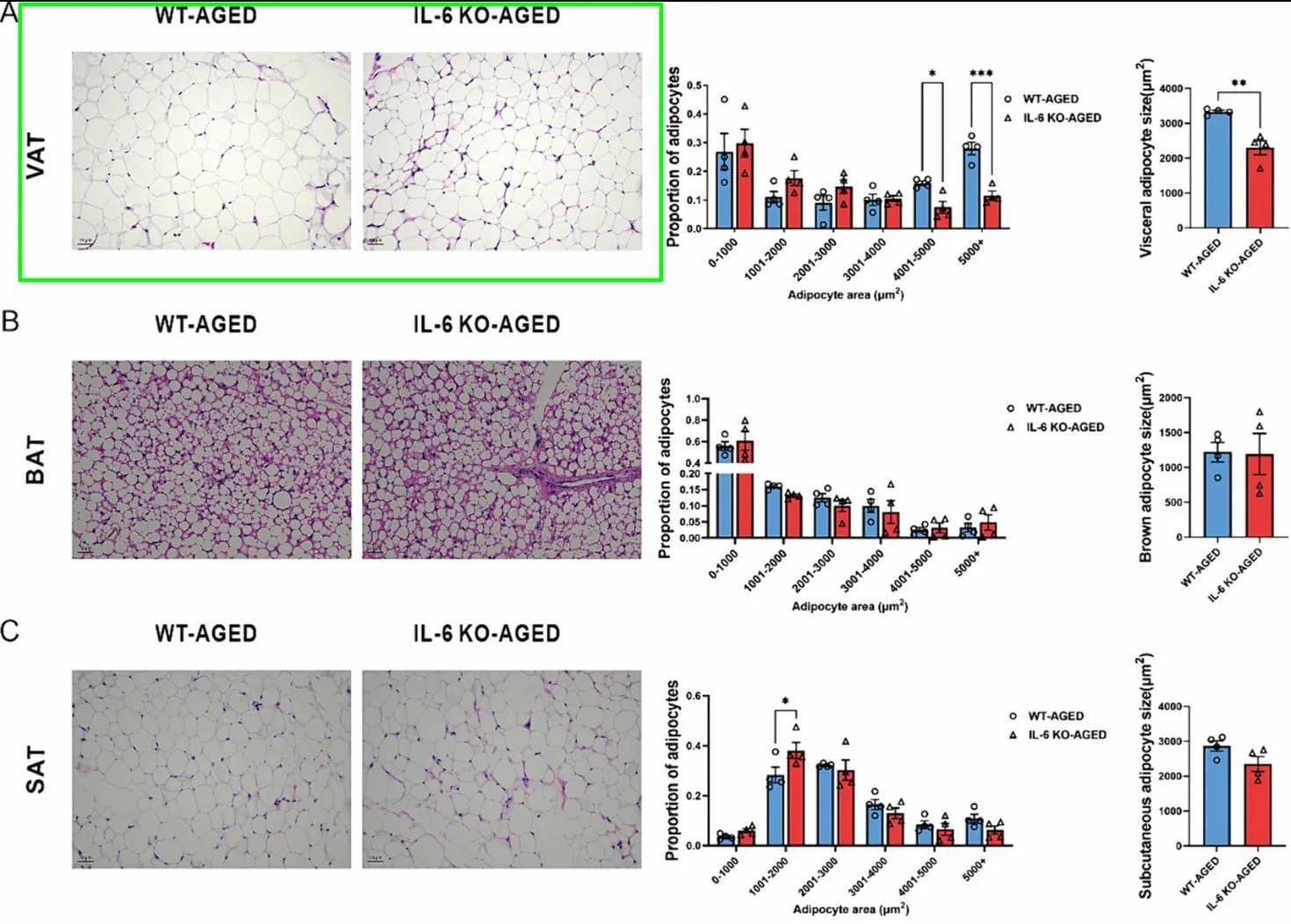
In aged mice, removing IL-6 through genetic deletion led to noticeably smaller visceral fat cells compared to normal mice (with IL-6) — despite similar overall body weights.
Brown fat and subcutaneous fat were largely unaffected, pointing to a specific role for IL-6 in promoting visceral fat expansion.
Comparison of fat cell size between normal mice and IL-6 knockout mice: Visceral adipose tissue (VAT) (A), brown adipose tissue (BAT) (B) subcutaneous adipose tissue (SAT) (C)
How IL-6 Blocks Fat Burning to Contribute to Visceral Fat Gain: The PKA/HSL Pathway Disruption Explained
Mechanistically, IL-6 disrupts one of the body’s key fat-regulation systems: the PKA/HSL signaling axis, which normally promotes fat breakdown (lipolysis).
When IL-6 rises, this pathway is suppressed — this makes visceral fat harder to mobilize and easier to accumulate over time.
Taken together, the human and animal data illustrate this:
Visceral fat stubbornness isn’t just about calories — it’s about disrupted cellular communication at the metabolic level.
The bottom line:
If visceral fat feels “stubborn,” there may be more at work than calories in versus calories out. Chronic inflammation could be tipping the balance.
That’s why IL-6 testing is more than a metabolic curiosity.
It’s a smart next step—especially if you’re building a personalized longevity roadmap, not just chasing weight loss.
What That Means for You: Subtle Signs IL-6 Might Be Fueling Your Stubborn Belly Fat
The stubbornness of visceral fat could reflect deeper, chronic inflammation. And inflammation doesn’t always scream—it whispers.
Subtle signs that inflammation might be active in the background include:
➔ Low energy, even with good sleep
➔ Joint stiffness or aches
➔ Digestive bloating or discomfort
➔ Mild skin issues (acne, rashes)
➔ Mood shifts or brain fog
No single symptom gives the full picture. But when patterns persist, it’s worth exploring.
Especially with overlooked biomarkers like IL-6.
Get Weekly Insights to Personalize Your Own Longevity Roadmap
CRP Isn’t Enough: The 4 Blood Markers That Reveal Chronic Inflammation
CRP is often the default test for inflammation—but relying on it alone can miss what’s already unfolding beneath the surface.
To truly understand what’s driving visceral fat retention, you need a broader panel:
➔ IL-6 signals early-stage immune activation—often rising before CRP. It’s tightly linked to visceral fat expansion and metabolic slowdown.
➔ WBC (white blood cell count) tracks immune system overactivity. Elevated levels can hint at chronic, subclinical stress your body’s fighting off daily.
➔ ESR (erythrocyte sedimentation rate) reflects slow-burning, systemic inflammation—not always caught by faster-moving markers.
➔ CRP is still useful—but mostly once inflammation has already escalated.
These four together offer a layered snapshot: short-term flare-ups, long-term trends, and the specific inflammatory signals most tied to fat metabolism.
When you track what actually drives fat retention and aging, you stop guessing—and start building a personalized longevity roadmap that lasts
Struggling To Lose Belly Fat? It Could Be Inflammation
Visceral fat wraps around your organs and drives inflammation, hormonal shifts, and aging. And IL-6 is the biomarker that can reveal it.
If you’ve been doing everything “right” and still can’t drop the belly fat, it’s time to test what your CRP can’t.
What an IL-6 Test Can Tell You That Standard Labs Miss
Most routine panels focus on damage already done—blood sugar, cholesterol, liver enzymes.
But IL-6 speaks to something different: the state of your immune environment, right now.
Elevated IL-6 can suggest that your body is locked in a low-grade inflammatory loop—one that promotes fat storage, impairs recovery, and accelerates aging even when outward markers look “normal.”
This isn’t about chasing one number.
It’s about spotting early shifts—before symptoms become setbacks.
Think of IL-6 as a metabolic smoke alarm: quiet, but incredibly telling if you know where to listen.
It’s also a foundational tool for building your personalized longevity roadmap—a clearer view of what’s going on under the surface, and where to intervene early.
Explore the IL-6 Testing Guide → “How To Use The Interleukin 6 Test For Early Inflammation Detection And Longevity”
Want to Go Deeper on IL-6?
Visceral fat is only part of the picture.
IL-6 is also tightly linked to brain aging, neuroinflammation, and longevity decline.
If you’re curious how one immune signal could impact both your metabolism and your mental clarity, this is the next place to look:
Explore How IL-6 Connects Inflammation, Brain Aging, and Longevity
Frequently Asked Questions
Why do lean, fit people still accumulate visceral fat?
Visceral fat wraps around internal organs and can be substantial even in people with a normal BMI or slim appearance. Unlike subcutaneous fat, it behaves more like an inflammatory organ—interfering with insulin processing, releasing inflammatory molecules, and promoting fat accumulation. How a body stores fat internally doesn’t correlate reliably with outward body composition.
How does IL-6 contribute to visceral fat accumulation?
IL-6 disrupts the PKA/HSL pathway, which normally promotes fat breakdown (lipolysis). When IL-6 rises, this pathway is suppressed—making visceral fat harder to mobilize and easier to accumulate over time. A 2024 study found this association held even after adjusting for BMI, blood pressure, blood sugar, and lipid levels.
Which blood tests reveal chronic inflammation beyond CRP?
A broader panel includes IL-6, WBC (white blood cell count), ESR (erythrocyte sedimentation rate), and CRP. IL-6 tends to rise before CRP and is tightly linked to visceral fat expansion. ESR captures slow-burning inflammation that faster markers can miss, and WBC tracks immune overactivity—together, these four offer a more complete picture than CRP alone.
Can IL-6 be elevated even when standard lab results appear normal?
Yes. IL-6 can indicate a low-grade inflammatory loop—one that promotes fat accumulation and accelerates aging—even when blood sugar, cholesterol, and liver enzymes appear unremarkable. It tends to rise before CRP, making it a useful early indicator of immune activation that routine panels don’t capture.
References
- Zhang X, et al. Interleukin-6 promotes visceral adipose tissue accumulation during aging via inhibiting fat lipolysis. Int Immunopharmacol. 2024 May 10;132:111906. doi: 10.1016/j.intimp.2024.111906. Epub 2024 Apr 8. PMID: 38593501.
- El-Mikkawy, et al. Circulating level of interleukin-6 in relation to body mass indices and lipid profile in Egyptian adults with overweight and obesity. Egypt Rheumatol Rehabil47, 7 (2020). https://doi.org/10.1186/s43166-020-00003-8
- Wedell-Neergaard AS, et al.,. Exercise-Induced Changes in Visceral Adipose Tissue Mass Are Regulated by IL-6 Signaling: A Randomized Controlled Trial. Cell Metab. 2019 Apr 2;29(4):844-855.e3. doi: 10.1016/j.cmet.2018.12.007. Epub 2018 Dec 27. PMID: 30595477.
- Bawadi H, et al. Abdominal Fat Is Directly Associated With Inflammation In Persons With Type-2 Diabetes Regardless Of Glycemic Control – A Jordanian Study. Diabetes Metab Syndr Obes. 2019 Nov 22;12:2411-2417. doi: 10.2147/DMSO.S214426. PMID: 31819567; PMCID: PMC6878926.
- Kolb, H. Obese visceral fat tissue inflammation: from protective to detrimental?. BMC Med20, 494 (2022). https://doi.org/10.1186/s12916-022-02672-y