
Seafood carries contaminants that accumulate through continuous water contact, food, and sediment exposure — not just what fish eat, but what they breathe. A 2021 Scandinavian study published in *Environment International* (Nøstbakken et al.) found that a single 200g weekly serving of Atlantic mackerel or herring could exceed the European Food Safety Authority’s tolerable weekly intake for dioxins and dioxin-like compounds — reaching 110% for herring and 104% for mackerel — in a region with some of the world’s strictest seafood safety standards.
- Contamination spans the entire food chain. Heavy metals (mercury, lead, cadmium, arsenic), industrial chemicals (PCBs, dioxins, PBDEs), microplastics, BPA, and agricultural runoff are found across both ocean and freshwater species.
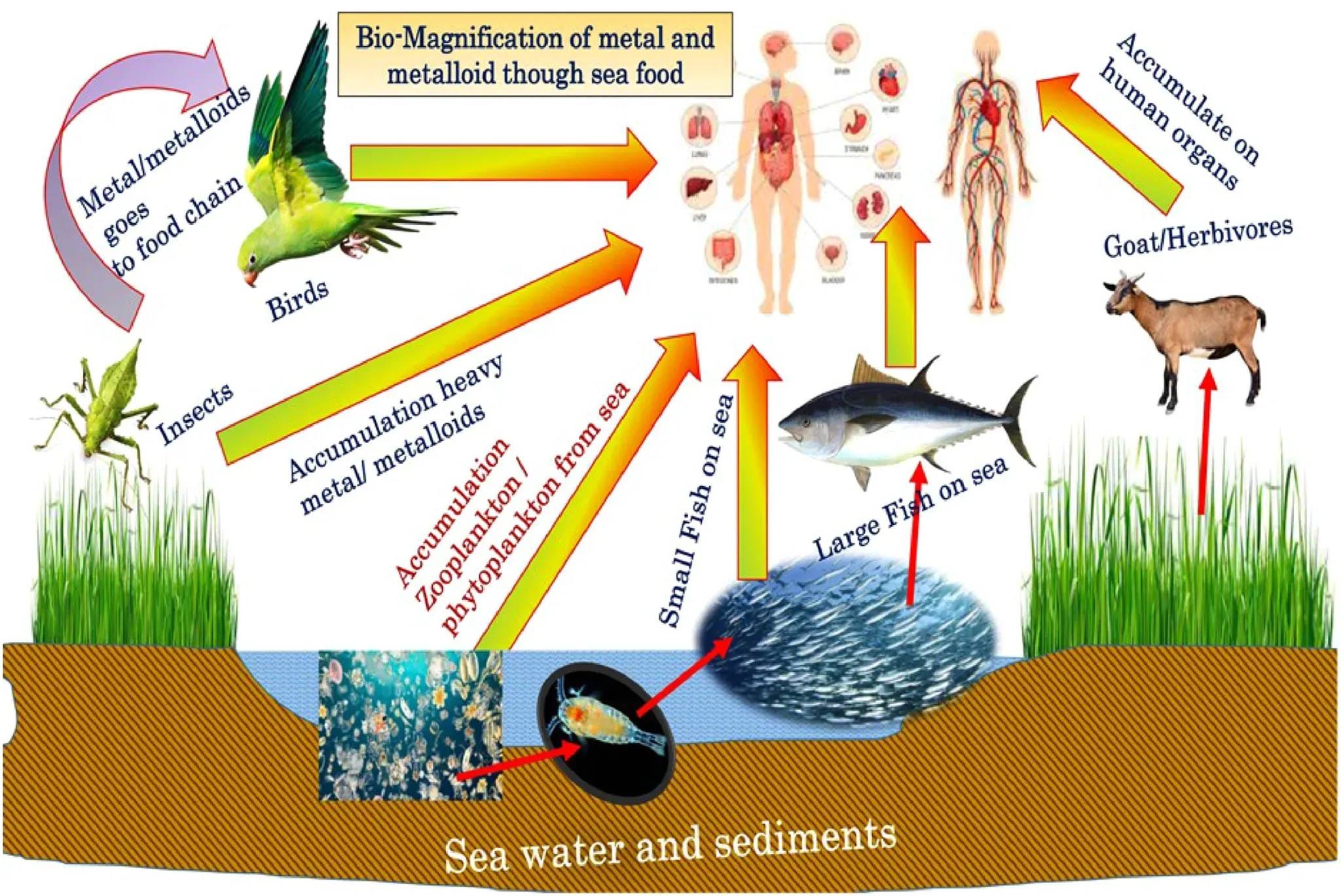
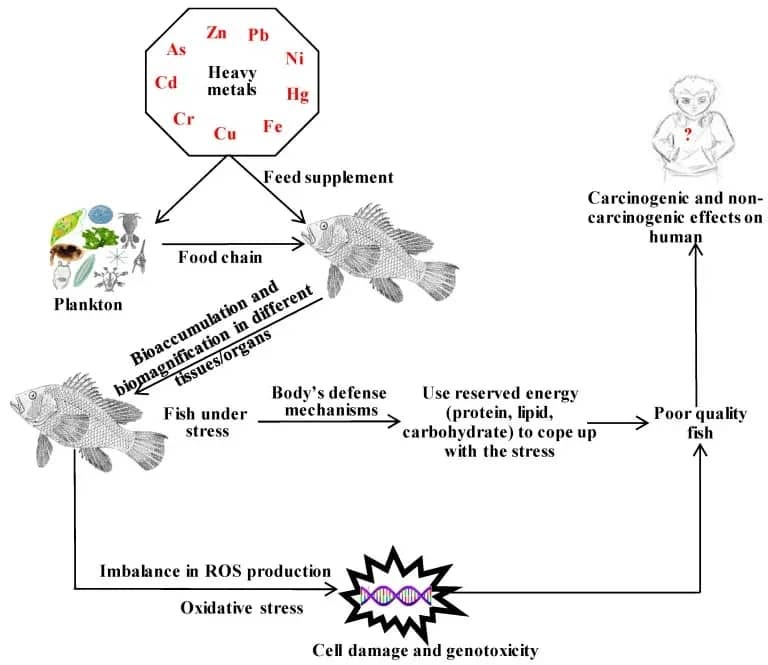
- Bioaccumulation and biomagnification are constant. Fish absorb toxins directly from water through their gills around the clock. Shellfish filter contaminants continuously through their bodies. Larger predators concentrate every toxin from the smaller fish they’ve consumed.
- Small fish are not exempt from contamination. Sardines and anchovies absorb contaminants through water, food, and sediment — with no protective barrier — and are commonly consumed in tinned, processed form, which can introduce additional chemical exposures.
- Government limits don’t account for combined toxin effects. Safety thresholds are set based on economic feasibility and calibrated for average populations, not for optimal cellular health or longevity.
- Omega-3s can be sourced without seafood. Chia, hemp, and flax provide omega-3s; algae-sourced DHA/EPA delivers long-chain fatty acids without the contaminant burden; lab-grown chlorella is an uncontaminated alternative to wild-harvested sea vegetables.
Is Seafood Still Healthy in 2025? What Longevity Science Reveals
One of the more controversial stances I’ve taken in the longevity world is this: I haven’t consumed anything from the ocean or freshwater sources in ~6 years.
And it’s one of the decisions I believe is adding years to my life — despite what many people still believe about “healthy” fish.
Every week, someone asks me about the “essential” omega-3s they’re getting from seafood.
But what if those “healthy” fish are packed with compounds that accelerate aging and disease?
Digging into the real data changed my mind — and permanently changed the way I eat.
Most people think I’m crazy when they first hear this.
But the evidence tells a different story.
A 2021 Scandinavian study — conducted in a region with some of the world’s strictest seafood safety standards — found that eating just 1 weekly serving (200g) of Atlantic mackerel or herring could exceed the European Food Safety Authority’s limit for dioxins and dioxin-like compounds.
Subscribe for more free longevity content like this. Upgrade for personalized roadmaps—systematic implementation frameworks you can personalize to your specific biomarkers and risk factors.
Upgrade for personalized roadmaps—systematic implementation frameworks you can personalize to your specific biomarkers and risk factors.
Specifically:
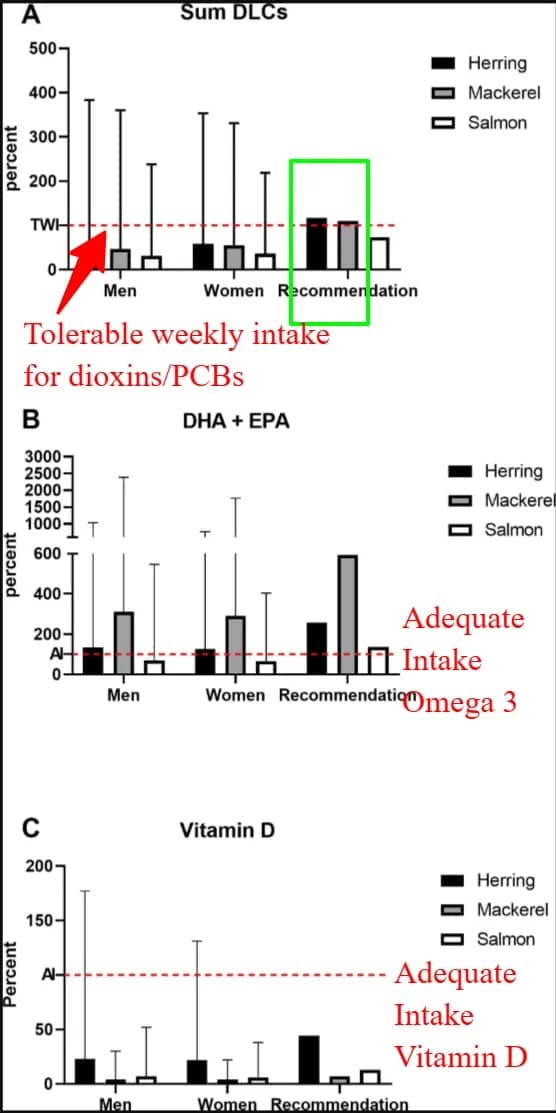
The recommended intake of 200 g oily fish would lead to a slight exceedance of the TWI (tolerable weekly intake) for DLCs in the case of herring (110% of the TWI) and mackerel (104% of the TWI), whereas consumption of 200 g salmon would contribute to 73% of the TWI.
— O.J. Nøstbakken, et al. Environment International Volume 147, February 2021, 106322
The researchers also measured the levels of beneficial nutrients like omega-3 fatty acids (DHA and EPA) and vitamin D.
While these fish do provide omega-3s, the toxic burden they carry raises concerns — especially when safer alternatives for getting these nutrients exist.
The figure below shows how quickly seafood consumption can push toxin exposure above safety thresholds, even at typical eating levels.
Is Seafood Still Healthy? The Unfortunate Reality of Modern Seafood
Our oceans and freshwater sources have become chemical cocktails. Modern seafood contains a wide array of toxins that accumulate in marine life:
- Heavy Metals: Mercury, lead, cadmium, arsenic, etc.
- Industrial Chemicals: PCBs, dioxins, and flame retardants (PBDEs)
- Modern Contaminants: Microplastics, BPA, and phthalates
- Agricultural Runoff: Pesticides, herbicides, and fertilizers
- Processing Chemicals: Sodium tripolyphosphate, sulfites, and preservatives
What makes seafood particularly problematic is bioaccumulation.
Unlike land animals, fish and shellfish absorb toxins not just from their food but directly from the water — 24 hours a day.
Fish breathe it through their gills. Shellfish filter it through their bodies as they feed. There’s no escape from constant exposure.
Because of this constant contact, seafood often shows much higher concentrations of persistent metals compared to land-based foods like beef, chicken, or vegetables.
And while many people assume tuna is the main concern, contamination affects the entire food chain:
- Sardines, herring, cod, trout, and shellfish are repeatedly exposed 24/7 by living in contaminated waters.
- Larger fish concentrate even more toxins & metals by eating contaminated smaller fish (biomagnification).
Why “Smaller” Fish Aren’t Safe
People often ask if eating small fish is a safer choice. While that may have been true 20 years ago, today’s waters tell a different story.
Sardines, anchovies, and other small fish absorb the same contaminants as larger predators — through water, food, and sediment. There’s no barrier protecting them.
The problem isn’t a single exposure — it’s the steady daily accumulation.
And while sardines are often marketed as a “health food,” it’s worth remembering how most people consume them: tinned and processed, often sitting in packaging that can introduce additional chemical exposures.
Heavy Metals In Seafood
It’s not just industrial chemicals and microplastics we have to worry about.
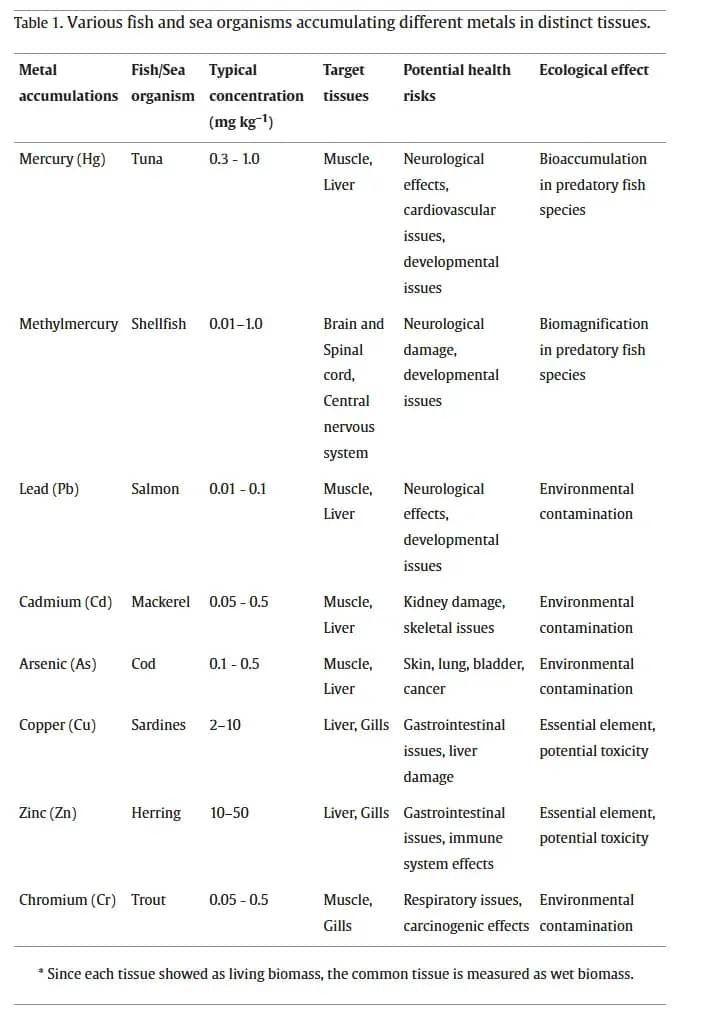
Heavy metals like mercury, cadmium, lead, and arsenic are now widespread across nearly all seafood species.
For example:
- Tuna: High mercury levels linked to neurological and cardiovascular damage.
- Shellfish: Often contaminated with methylmercury affecting the brain and nervous system.
- Salmon and Trout: Traceable lead & chromium accumulation.
- Cod and Mackerel: Significant arsenic and cadmium levels.
- Sardines and Herring: While often praised for omega-3s, they can also accumulate copper, zinc, and other metals at concerning levels.
Shellfish are particularly vulnerable. As filter feeders, they continuously pull metals, chemicals, and microplastics directly from the water — concentrating toxins in their tissues.
Unlike some environmental toxins that break down or are quickly secreted, once heavy metals like mercury, cadmium, and arsenic enter the human body, they stay for years.
✅ So, What’s My Personal Approach for Seafood & Marine Sourced Food?
Once I understood how persistent these toxins are — and how they build up over time — I knew I had to make some changes.
Today, I avoid:
- All seafood — including both freshwater and saltwater fish
- Shellfish and crustaceans — which accumulate contaminants as filter feeders
- Sea vegetables, algae, and kelp — which can absorb heavy metals directly from polluted waters
When it comes to supplements, I make specific choices:
- Chlorella is only sourced fromlab-grown cultivation, not wild-harvested from natural waters
- Iodine is supplemented through synthetic forms, rather than relying on sea vegetables
- Fish Oil — i don’t take this. Chia, hemp and flax are my main sources of Omega 3 and I occasionally supplement with an algae-sourced DHA/EPA
I’ve also replaced marine-derived collagen in my routine:
- Marine collagen has been swapped out for bovine and porcine collagen sources.
And importantly:
This is something where I make no exceptions — not even for “special occasions” or social events.
If I’m at a seafood restaurant, you’ll find me ordering a steak and enjoying the conversation that often follows.
Why Government Standards Aren’t Enough
You might think, “But don’t regulatory agencies monitor these issues?” They do, but here’s the problem:
- Different countries have vastly different standards
- Monitoring focuses on individual toxins, not their combined effects
- “Acceptable levels” are based on economic feasibility, not optimal health
- Testing is sporadic and often inadequate
- Standards are set for average populations, not optimal longevity
If we actually set toxin thresholds at levels aligned with true cellular health — where the only acceptable exposure was zero — the entire seafood industry would collapse.
No government is willing to face those economic consequences.
What Years of Research (and Testing) Taught Me
Choosing to eliminate seafood and marine-sourced foods wasn’t a decision I made overnight. It evolved over several years of research, learning, and gradual adaptation.
I started by cutting out marine seafood — after seeing the data on heavy metals and industrial contaminants.
Later, I extended the decision to include freshwater fish, once I understood how industrial runoff and environmental pollution affect all water sources.
Smaller shifts followed naturally: Replacing marine collagen, sourcing chlorella only from lab-grown cultivation, and choosing synthetic iodine instead of sea vegetables.
Each adjustment built on what I learned — step by step, not all at once.
One of the turning points in this journey was testing my own toxin load: Several years ago, I ran a comprehensive environmental panel — screening for heavy metals, persistent organic pollutants, and other contaminants.
Seeing data from my own body reinforced why I needed to take these exposures seriously — and fueled my deeper research into how modern environments shape aging. That experience shaped one of my core beliefs about aging:
Environmental toxins are not a side note. They are a pillar of longevity — as important to address as nutrition, exercise, and sleep.
But you don’t have to change everything overnight. Start with one step — and let the data guide your next move.
Next Steps: Your Seafood and Toxin Exposure Checklist
If you’ve learned something but are wondering how to make a change, here’s how you can start:
✅ Cut back seafood gradually
- Start by removing one seafood meal per week.
- Then, work toward reducing seafood to once a month — or once a quarter, eventually, when you dine out or are at a dinner party.
✅ Audit your supplements
- Check your current supplements for marine-sourced ingredients like marine collagen, seaweed, kelp, algae oils, and fish oils.
- If found, consider swapping to lab-grown or non-marine alternatives.
✅ Test your heavy metals load
- If you’ve eaten seafood regularly, heavy metals like mercury, arsenic, cadmium, and lead can accumulate in your body — sometimes with little sign, sometimes contributing to issues like brain fog, fatigue, or immune dysfunction.
- A heavy metals urine test shows you your current burden and gives you a foundation for smarter, targeted action
If you’re in the U.S. and looking for reliable testing options but don’t currently have access, our nationwide partnership with labs allows us to offer you a range of simple, at-home testing options — so you can get data without the usual obstacles.
You can choose from:
- Urine testing to measure your body’s current excretion of toxic metals (screening up to 21 metals, including mercury, arsenic, lead, and cadmium)
- Hair analysis to detect long-term metal accumulation stored in tissues
- Blood testing to check if critical metals are actively circulating
Explore Heavy Metals Testing Options
Small steps add up.
Testing, removing exposures, and upgrading your environment aren’t just tasks — they are investments in the decades ahead.
Optimal longevity requires optimal choices — even when those choices go against popular belief.
Upgrade for personalized roadmaps—systematic implementation frameworks you can personalize to your specific biomarkers and risk factors.
Frequently Asked Questions
Is it safe to eat fish once a week?
A 2021 Scandinavian study published in *Environment International* (Nøstbakken et al.) found that a single 200g weekly serving of Atlantic mackerel or herring could push dioxin and dioxin-like compound intake to 110% and 104% of the European Food Safety Authority’s tolerable weekly intake, respectively. This was observed in a region with some of the world’s strictest seafood safety standards. Salmon at the same serving size contributed 73% of that limit.
Are small fish like sardines safer than larger fish?
Sardines, anchovies, and other small fish absorb contaminants through water, food, and sediment continuously — with no protective barrier. The problem is steady daily accumulation, not a single exposure event. Sardines are also commonly consumed tinned and processed, in packaging that can introduce additional chemical exposures.
How can I get omega-3s without eating fish?
Chia, hemp, and flax provide omega-3s without the contaminant burden of wild-caught seafood. Algae-sourced DHA/EPA is an option for long-chain omega-3s specifically — the same fatty acids (DHA and EPA) found in fish, derived from an uncontaminated source. The article notes that beneficial nutrients from seafood can be obtained through safer alternatives.
Do government seafood safety standards protect against long-term toxin exposure?
Regulatory monitoring focuses on individual toxins rather than their combined effects, and acceptable levels are based on economic feasibility rather than optimal health. Testing is sporadic and often inadequate, and standards are calibrated for average populations rather than people prioritizing longevity. Different countries also apply vastly different monitoring thresholds.
References
- Nøstbakken OJ, Rasinger JD, Hannisdal R, Sanden M, Frøyland L, Duinker A, Frantzen S, Dahl LM, Lundebye AK, Madsen L. Levels of omega 3 fatty acids, vitamin D, dioxins, and dioxin-like PCBs in oily fish; a new perspective on the reporting of nutrient and contaminant data for risk-benefit assessments of oily seafood. Environ Int. 2021 Feb;147:106322.
- Barone G, Storelli A, Busco A, Mallamaci R, Storelli MM. Polychlorinated dioxins, furans (PCDD/Fs), and dioxin-like polychlorinated biphenyls (dl-PCBs) in food from Italy: Estimates of dietary intake and assessment. J Food Sci. 2021 Oct;86(10):4741-4753.
- Arvanitoyannis IS, Kotsanopoulos KV, Papadopoulou A. Rapid detection of chemical hazards (toxins, dioxins, and PCBs) in seafood. Crit Rev Food Sci Nutr. 2014;54(11):1473-528.
- Blanco L, Martínez A, Ferreira M, Vieites J, Cabado A. Polychlorinated dibenzo-p-dioxins and dibenzofurans (PCDD/Fs) and dioxin-like polychlorinated biphenyls (dl-PCBs) in fish, seafood products, and fish oil in Spain. Food Addit Contam Part B Surveill. 2013;6(3):218-30.
- Bernard A. La contamination alimentaire par les PCBs/dioxines en Belgique: analyse d’un accident aux conséquences sanitaires improbables [Food contamination by PCBs/dioxins in Belgium: analysis of an accident with improbable health consequences]. Bull Mem Acad R Med Belg. 2000;155(3-4):195-201; discussion 201-4. French.
- “Dioxins and dioxin-like polychlorinated biphenyls in seafood: dietary exposure amongst Malaysian adult populations and its association with sociodemographic factors.” (2017).
- Loutfy N, Fuerhacker M, Tundo P, Raccanelli S, El Dien AG, Ahmed MT. Dietary intake of dioxins and dioxin-like PCBs, due to the consumption of dairy products, fish/seafood, and meat from Ismailia city, Egypt. Sci Total Environ. 2006 Oct 15;370(1):1-8.
- Matthews, Veronica et al. “DIOXINS & DIOXIN-LIKE PCBS IN SEAFOOD SPECIES FROM MORETON BAY, QUEENSLAND, AUSTRALIA.” (2007).
- Sibat M, Mai T, Tanniou S, Biegala I, Hess P, Jauffrais T. Seasonal Single-Site Sampling Reveals Large Diversity of Marine Algal Toxins in Coastal Waters and Shellfish of New Caledonia (Southwestern Pacific). Toxins (Basel). 2023 Nov 3;15(11):642.
- Shartau RB, Turcotte LDM, Bradshaw JC, Ross ARS, Surridge BD, Nemcek N, Johnson SC. Dissolved Algal Toxins along the Southern Coast of British Columbia Canada. Toxins (Basel). 2023 Jun 13;15(6):395.
- Lad A, Breidenbach JD, Su RC, Murray J, Kuang R, Mascarenhas A, Najjar J, Patel S, Hegde P, Youssef M, Breuler J, Kleinhenz AL, Ault AP, Westrick JA, Modyanov NN, Kennedy DJ, Haller ST. As We Drink and Breathe: Adverse Health Effects of Microcystins and Other Harmful Algal Bloom Toxins in the Liver, Gut, Lungs and Beyond. Life (Basel). 2022 Mar 14;12(3):418.
- Lee S, Choi B, Kim SJ, Kim J, Kang D, Lee J. Relationship between freshwater harmful algal blooms and neurodegenerative disease incidence rates in South Korea. Environ Health. 2022 Nov 26;21(1):116.
- Baki MA, Hossain MM, Akter J, Quraishi SB, Haque Shojib MF, Atique Ullah AKM, Khan MF. Concentration of heavy metals in seafood (fishes, shrimp, lobster and crabs) and human health assessment in Saint Martin Island, Bangladesh. Ecotoxicol Environ Saf. 2018 Sep 15;159:153-163. doi: 10.1016/j.ecoenv.2018.04.035. Epub 2018 May 7. PMID: 29747150.
- Jamil Emon F, Rohani MF, Sumaiya N, Tuj Jannat MF, Akter Y, Shahjahan M, Abdul Kari Z, Tahiluddin AB, Goh KW. Bioaccumulation and Bioremediation of Heavy Metals in Fishes-A Review. Toxics. 2023 Jun 6;11(6):510. doi: 10.3390/toxics11060510. PMID: 37368610; PMCID: PMC10302055.
- Dey, Sukhendu & Rajak, Prem & Sen, Kamalesh. (2024). Bioaccumulation of metals and metalloids in seafood: A comprehensive overview of mobilization, interactive effects in eutrophic environments, and implications for public health risks. Journal of Trace Elements and Minerals. 8. 100141. 10.1016/j.jtemin.2024.100141.