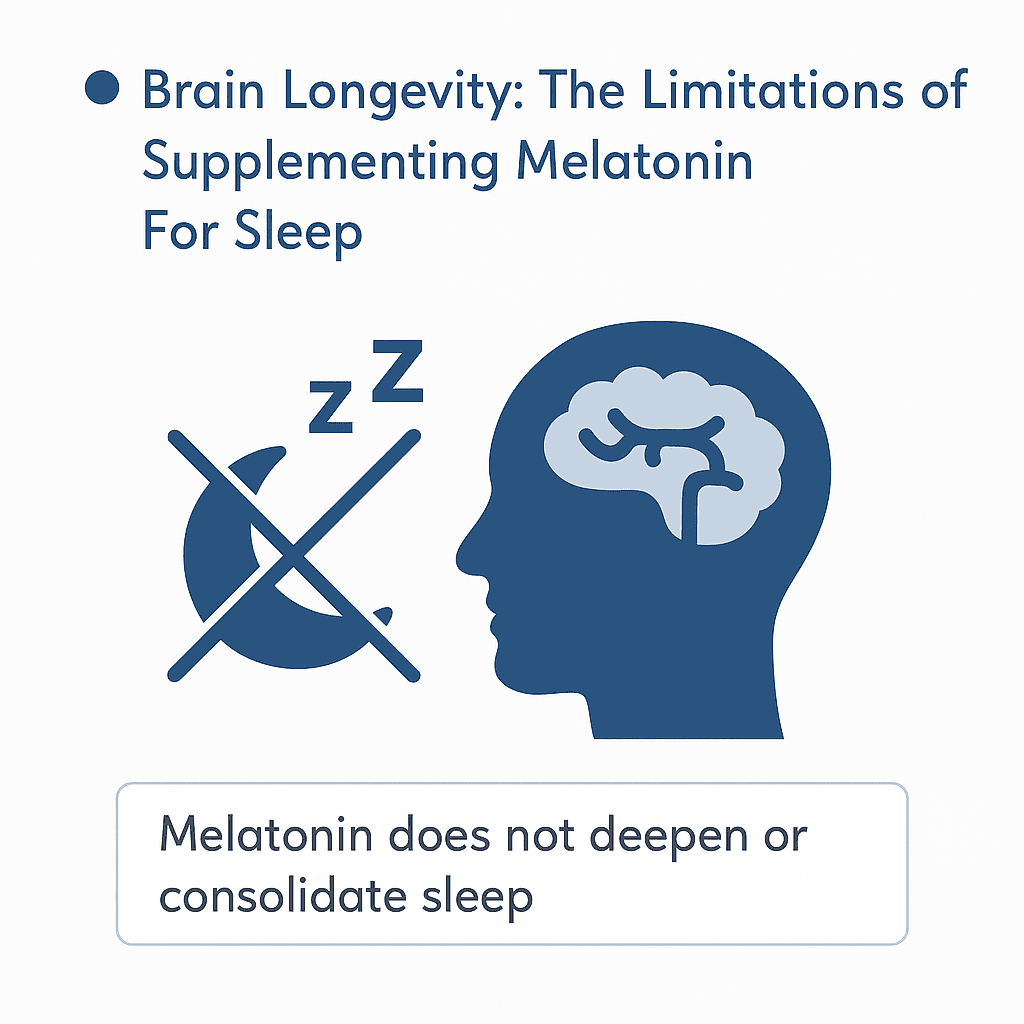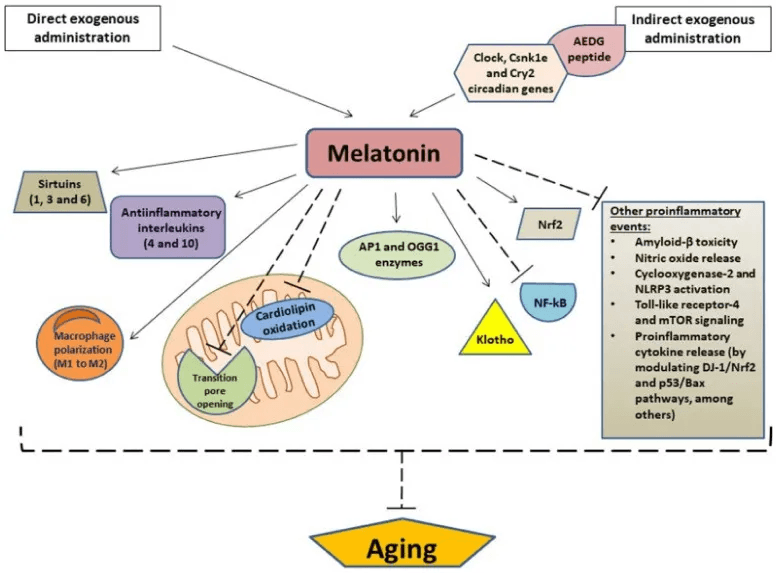

Melatonin supports sleep within a specific physiological window—your internal biological night. When taken outside that window, it can reinforce the wrong circadian phase rather than supporting continuity, contributing to fragmented sleep and 3 a.m. awakenings. Whether melatonin is even relevant to your sleep depends on your individual melatonin profile, not on the supplement formulation or dose alone.
- Melatonin only supports sleep when it matches your biological night; mistimed doses can reinforce the wrong circadian phase, producing 3 a.m. awakenings instead of continuity
- A 4-point melatonin profile—multi-sample saliva collection across the day and early evening—reveals when your melatonin rises, how long it stays elevated, and whether supplementation is relevant to your sleep at all
- When a profile shows adequate nighttime melatonin levels, adding more is unlikely to help and raises the risk of morning grogginess and impaired post-breakfast glucose control; when it shows a weak rise, the evidence favors minimal, physiologic doses
- Both circadian timing and meal timing are individual constraints, making universal dosing advice insufficient for most people
- Five structured adjustments—covering timing, dose, meals, and other factors—can reduce the chance of reinforcing an early melatonin offset and help determine whether melatonin is contributing to your sleep disruptions or whether the primary driver lies elsewhere
Why Doesn’t Melatonin Work for Many People’s Sleep?
How Do You Personalize a Melatonin Approach Based on Your Physiology?
The same 9 p.m. melatonin dose might align with one person’s biological night while falling outside the optimal biological window for another.
- From a circadian perspective, melatonin only supports sleep when it matches your internal night. When mistimed, it can reinforce the wrong phase of night, producing fragmented sleep or 3 a.m. awakenings instead of continuity. Mechanistically, supplemental melatonin interacts with the circadian pacemaker, and if shifted, it destabilizes rather than stabilizes sleep.
- From a metabolic perspective, it ideally should not overlap with active food processing.
Both constraints are individual —which means universal timing advice is insufficient.
Even with these considerations in mind, the most fundamental question remains:
Are your sleep problems caused by melatonin?
The next step is not to try a new dose or formulation.
It’s to determine whether melatonin is relevant to your sleep at all, and only then to align timing and amount with your biology.
Many of us end up experimenting—changing brands, adjusting dosage, shifting it earlier or later—only to find the results are marked by 3 a.m. awakenings or temporary.
There is a more precise approach.
What Is 4-Point Melatonin Profiling and How Does It Help?
Until recently, the ability to map melatonin rhythms was available mainly to research labs and specialized circadian medicine centers. For years, it remained impractical for most individuals outside those settings.
That landscape has shifted.
What was once exclusive in research settings is now available to consumers through multi-sample saliva profiles. Instead of a one-off blood test, these profiles capture hormone levels across the day and early night—revealing when your system initiates and maintains its night time signal — the physiological window where melatonin naturally coordinates sleep timing.
Few people know this exists, and fewer realize how it can transform decision-making: clarifying whether supplementation is relevant, identifying personal timing, and guiding dosing so melatonin enhances sleep instead of disrupting it.
Standard sleep evaluations—even those costing thousands—often measure everything except the timing of the hormone that sets the circadian night.
💡 Even advanced sleep clinics focus heavily on breathing and movement data. Yet without melatonin profiling, they miss the hormone cue that defines circadian night.
Here’s how you can use a 4-point melatonin profile test to help you determine whether melatonin is contributing to your sleep issues & how to align it with timing and dosing so it supports, rather than fragments, your rest:
How Does a Melatonin Profile Show Whether Melatonin Is Relevant to Your Sleep?
A normal melatonin profile—showing a healthy rise and sustained levels through the night—suggests melatonin is not your weak link.
In that case, supplementation is unlikely to provide benefit.
This redirection is valuable: it saves you both time and the cumulative expense of supplements that may never have been necessary in pursuit of an ineffective approach that may, in some cases, disrupt sleep.
How Does a Melatonin Profile Reveal Your Personal Timing?
A profile reveals the timing of your own biological night, so support can be matched to that window rather than a universal “take it 5-30 minutes before sleep” rule.
In my experience, when individuals report that melatonin “doesn’t work,” the issue is often a timing mismatch—taking the right substance at the wrong point in their circadian rhythm. This is one of the main reasons why melatonin doesn’t help even when someone might genuinely need it.
How Does a Melatonin Profile Guide Dosing?
- If your melatonin profile shows adequate nighttime levels, layering on high doses only raises the risk of morning grogginess and impaired post-breakfast glucose control.
- If your profile shows a weak rise, then the evidence favors minimal, physiologic replacement—below most over-the-counter products.
Either way, a single profile (this is the one I use) clarifies both relevance and dosing, replacing repeated trial and error with a straightforward path forward.
The Practical Takeaway: A profile provides closure—if melatonin isn’t the issue, you can redirect focus to other drivers of disrupted sleep.
If it is, you know when and how much to use, without exceeding what is physiologically needed.
If you’re not ready to run a melatonin profile yet
At the same time, I know not everyone wants to or can test their melatonin profile right away.
Some of you might want something practical you can use tonight rather than waiting for a kit, collection, and results.
That is where structured, evidence-backed adjustments are useful.
They are not as precise as a full 4-point profile, but they are more informed than changing dose and timing at random. When those adjustments are derived from hundreds of real melatonin patterns, they can help you:
- Reduce the chance that you are reinforcing an early melatonin offset.
- Retune timing so melatonin supports your biological night instead of fragmenting it.
- Lower the risk of unnecessary high-dose impact of taking an exogenous hormone without better sleep.
For some individuals, these adjustments are enough to stabilize sleep continuity and make melatonin predictable again.
For others, they make it clear that melatonin was never the weak link—pointing attention instead toward autonomic, metabolic, or broader hormonal systems.
In both cases, the benefit is the same: you stop cycling through blind experiments and start making ordered changes with a clear decision path.
A structured next step: 21-Day Melatonin Sleep Recovery Blueprint & Decision Matrix
You’ve tried melatonin. Maybe you’ve tried different brands, different doses, different timing. Some nights it seems to work. Others it doesn’t.
And you’re still not sure if the problem is the supplement, the dose, or whether melatonin was ever the right approach for your sleep.
Meanwhile, you keep buying it. Keep taking it. Keep hoping the next dose increase will be the one that works.
Many adults stay in this pattern for years. This produces:
- Inconsistent sleep
- The risks of prolonged high-dose use, including morning grogginess, impaired glucose handling, and potential impact on natural production
The main problem is that most people use melatonin incorrectly—so they have no way to know whether it could work for them or whether it was never the right approach.
One way to get that answer is through 4-point melatonin profiling and other hormone testing. Those tools can help map your biological night—but they require ordering a lab, coordinating sample collection, and waiting for results. For many people, that’s not realistic, not accessible, or simply not the path they want to take.
The 21-Day Melatonin Sleep Recovery Blueprint is designed for that gap: a structured, low-risk way to optimize how you use melatonin and reach a clear decision in 21 days—without pricey & time consuming lab work.
Standard advice—“take it 30 minutes before bed, try 3–5 mg”—isn’t anchored in the chronobiology of melatonin or how it functions in the body.
The 21-Day Melatonin Sleep Recovery Blueprint Is.
- You’ll identify and correct the factors that determine whether melatonin supports your sleep or undermines it.
- You’ll reduce the risks of high-dose use.
And after 21 days of structured adjustment, you’ll have the data to know:
- continue with the optimized and personalized melatonin approach, or
- stop investing in a supplement that isn’t addressing your sleep.
You can access the 21-Day Melatonin Sleep Recovery Blueprint + Decision Matrix here.
If you’re using melatonin now—and you’re not sure whether it is helping, hurting, or simply irrelevant—this is designed to give you an ordered way to answer that question and move on with confidence.
This 21-Day Melatonin Sleep Recovery Blueprint & Decision Matrix is designed for adults currently using melatonin who experience:
- Unpredictable sleep onset (some nights easy, others difficult).
- Morning grogginess or cognitive sluggishness.
- Sleep quality that varies without clear lifestyle reasons.
- Uncertainty about whether timing, dose, or context is the issue.
- Age-related changes in melatonin response (with specific considerations for adults 50+).
Inside, you will find:
- Module 1 – Why Melatonin Often Disappoints: The underappreciated factors that determine whether melatonin supports sleep or undermines it, including how prolonged high-dose use and age-related changes after 50 alter its effects.
- Module 2 – 21-Day Melatonin Reset System: A structured protocol to apply corrections week by week, so you are not changing everything at once.
- Decision Matrix: A simple framework to interpret your 21-day data—continue, refine, or recognize that melatonin is not your primary sleep issue and redirect your attention to what actually matters.
- References Library Peer-reviewed evidence base (1990–2025) with emphasis on melatonin chronobiology, high-dose exogenous use, safety signals, and sleep outcomes.
If you are using melatonin now and are tired of paying for inconsistency, this is designed to either bring it back into alignment with your biology—or help you move on with confidence instead of staying stuck in dose experiments.
One system. 21 days. A clear answer.
Product Format:
The 21-Day Melatonin Sleep Recovery Blueprint + Decision Matrix is accessed through a private link to the Dashboard you receive after purchase, so you’re getting a structured digital system—not a static PDF file.
Frequently Asked Questions
Why does melatonin wake me up at 3 a.m. instead of keeping me asleep?
Melatonin taken outside your internal biological night can reinforce the wrong circadian phase rather than supporting continuity. Mechanistically, supplemental melatonin interacts with the circadian pacemaker, and when mistimed, it destabilizes rather than stabilizes sleep — producing fragmented sleep or 3 a.m. awakenings instead of continuity. The issue is often not the supplement itself but when it lands relative to your individual dim light melatonin onset.
What is a 4-point melatonin profile and why is it more useful than a one-time blood test?
A 4-point melatonin profile measures salivary melatonin at four time points across the evening and night, revealing when your body begins producing melatonin, how high levels rise, and whether your nighttime production is adequate. A single blood test gives one snapshot; multi-sample saliva profiling captures the timing of your biological night and whether supplementation is adding to or displacing your own output. Standard sleep evaluations — even those costing thousands — often measure breathing and movement data without capturing the hormone cue that defines circadian night.
Can taking melatonin when my levels are already adequate make sleep worse?
When a melatonin profile shows adequate nighttime levels, adding high doses raises the risk of morning grogginess and impaired post-breakfast glucose control without improving sleep. When the profile shows a weak rise, the evidence favors minimal, physiologic replacement — below what you’d find in over-the-counter products. Either way, supplementing without knowing where your levels fall means you have no way to determine whether melatonin is helping, irrelevant, or contributing to the disruption.
Why do two people taking the same dose at the same time get different results from melatonin?
Melatonin effectiveness depends on five interacting variables: timing relative to your individual circadian phase, dose, meal timing, concurrent medications, and age-related changes in receptor sensitivity. Two people with the same target bedtime can have dim light melatonin onset times that differ by an hour or more — meaning the same 9 p.m. dose might align with one person’s biological night while falling outside the optimal window for another. When any of these variables are mismatched, melatonin produces little or no benefit.