

The reason sleep tips not work—even when followed consistently—is not inconsistent effort. The body needs specific raw materials, cofactors, and regulatory compounds to run its sleep machinery, and no behavioral strategy can substitute for these when they’re absent. This is why some people see initial improvement from routine changes, then plateau or regress: the biochemical foundation sets a ceiling that habits alone cannot raise.
- The turkey-sleep connection illustrates the problem: tryptophan converts to serotonin and then to melatonin, but each step requires specific cofactors—magnesium stabilizes enzymatic reactions, and iron and B vitamins are required for conversion. Without those cofactors in place, tryptophan does not reliably become melatonin.
- Sleep depends on more than melatonin. Dozens of neurotransmitters, hormones, metabolic regulators, and immune mediators each contribute to different aspects of sleep architecture—initiation, maintenance through the night, and repair and recovery.
- The body requires three categories of raw materials: base materials (amino acids and fatty acids that must come from food), cofactors (vitamins and minerals that activate enzymes), and regulatory compounds that maintain the internal biochemical environment.
- Without adequate chemistry in place, behavioral strategies—breathwork, light-blocking glasses, timing tactics—hit a hard biochemical ceiling, producing either decline or eventual fadeout after initial improvement.
- Addressing the biochemical foundation is the prerequisite for stability, depth, and resilience in sleep. No other approach reaches its potential until this is in place.
Why Don’t Sleep Tips Produce Lasting Results?
Here’s an overlooked reason sleep routines stop working or don’t work at all (& what you can do about it):
➤ A reader recently asked me this question, and it echoes what I hear from so many of you who feel you’ve already tried everything:
“I’ve tried everything—blackout curtains, no caffeine, no screens. Some nights I sleep fine, but then suddenly I’m back to waking up at 3am, exhausted the next day. Why can’t I just stay asleep through the night?”
They’d done all the right things.
But the problem wasn’t their habits.
It’s whether their body has the chemistry to actually respond to those routines.
And that’s where most explanations fall short. You’ve probably heard advice like “turkey makes you sleepy.” It points in the right direction—but it also shows how much common sleep advice oversimplifies the biology.
So what’s missing? Let’s break it down.
By the way, If you’ve been following my work on hormones and sleep, you’ll know how much depth there is beneath the surface.
If you’re ready to go deeper and take a systems-based approach to improving your sleep, Sleep OS Hormones is now available as a 60-day self-guided program with dedicated systems for estrogen, progesterone, and testosterone, or bundled together for a more complete approach.
or
Why Doesn’t the Turkey-and-Tryptophan Approach to Sleep Work?
Consider the classic example: “Eat turkey before bed to help you sleep.”
The reasoning is tidy and biochemically grounded.
Turkey contains tryptophan. Tryptophan is converted into serotonin. Serotonin is then converted into melatonin. And melatonin regulates sleep initiation.
On paper, this looks like a clear chain of cause and effect.
But, it’s incomplete.
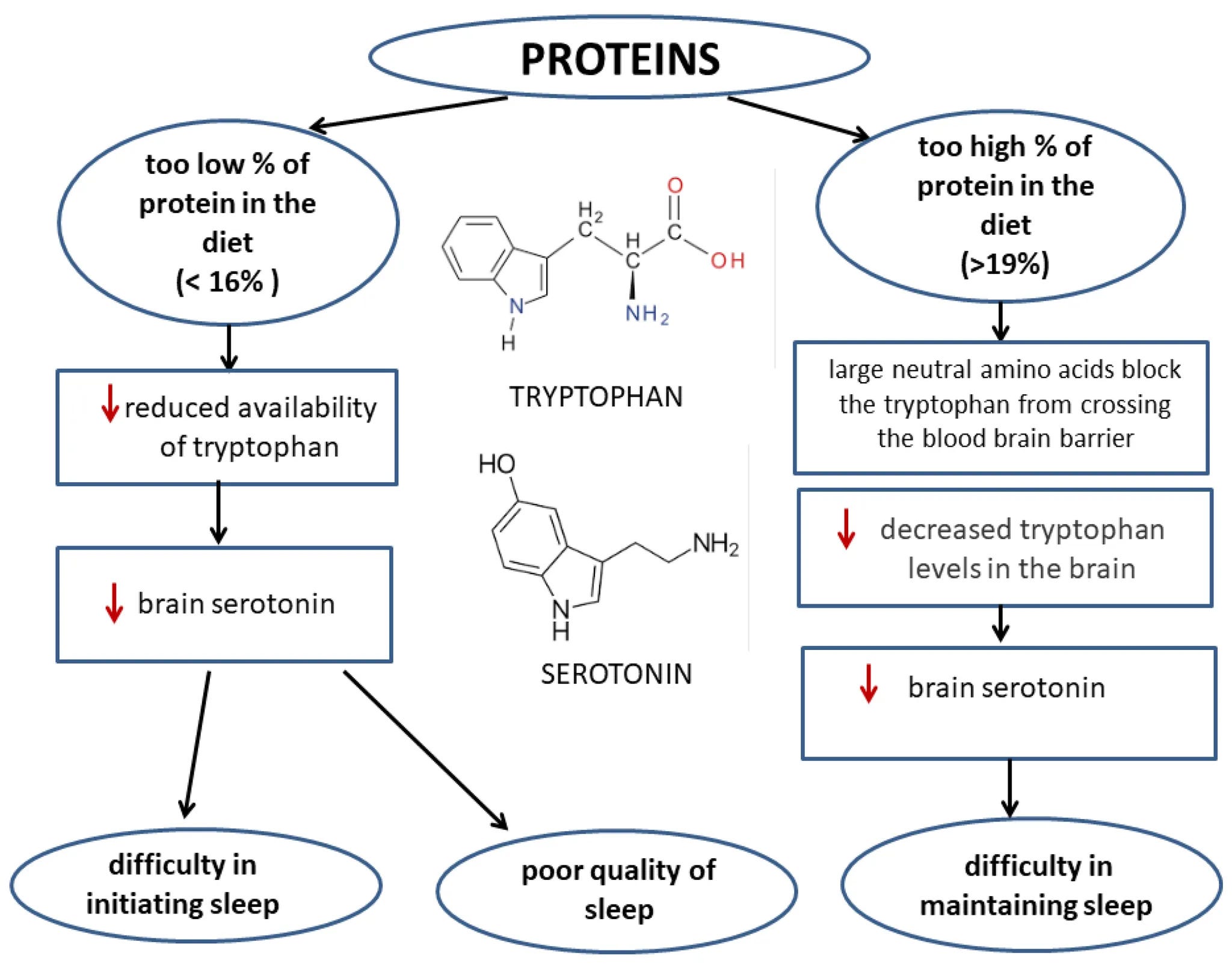
Every step in that pathway requires specific cofactors and enzymes.
- Magnesium stabilizes certain enzymatic reactions.
- Iron and B vitamins are required for conversion.
- Enzymes themselves are only fully active when metabolic conditions allow.
Without those elements in place, tryptophan does not reliably become melatonin.
And, on top of that, melatonin itself is not the only compound that governs sleep.
Dozens of other signals shape the architecture of sleep—some initiate it, others maintain stability through the night, and still others drive repair and recovery while you rest. These include neurotransmitters, hormones, metabolic regulators, and immune mediators, each contributing to a different layer of the process.
Which leads us to the next layer:
Every one of these signals has its own raw material and cofactor requirements. Just as melatonin synthesis stalls without the nutrients it depends on, other sleep-regulating pathways falter if their ingredients are absent.
A single deficiency or insufficiency is enough to weaken the entire structure of sleep, even when all other conditions seem optimal.
The turkey example is useful not because turkey itself resolves sleep, but because it illustrates the limitations of single-tip explanations when removed from the broader biochemical & neural framework of sleep.
What Biochemical Foundation Does Sleep Require?
This brings us to the broader point.
Sleep depends on an orchestrated biochemical foundation that an isolated tip cannot address.
In practical terms, the body requires 3 categories of materials to run its sleep machinery:
Base materials — the essential building blocks, often amino acids and fatty acids, that must come from food because the body cannot synthesize them.
Cofactors — vitamins and minerals that activate enzymes, enabling those building blocks to be converted into active neurotransmitters and hormones.
Regulatory compounds — signaling molecules and anti-inflammatory mediators that keep the internal environment stable enough for the system to operate.
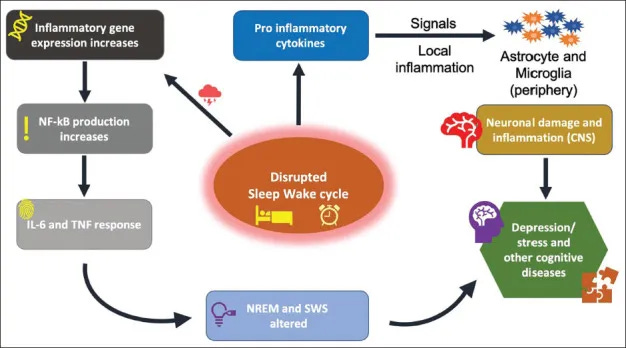
When even one of these categories is missing, the body encounters biochemical bottlenecks.
You may be able to fall asleep from exhaustion, but you will not sustain the depth or rhythm of restorative sleep.
Why Do Sleep Tips Stop Working Over Time?
Given what we’ve covered about sleep’s biochemical requirements, the limitations of popular advice become clear.
Many sleep strategies fail to produce meaningful change from the start. For those who do see initial improvement, the progress rarely sticks.
You might improve your bedtime routine, only to find yourself lying awake for 45 minutes despite feeling tired. You might manage to fall asleep, but wake multiple times during the night without a clear reason. Or you may sleep a full eight hours yet wake up unrefreshed.
This cycle repeats because behavioral strategies require the body to have adequate neurotransmitters, hormones, and regulatory compounds to respond.
Without the raw materials and cofactors in place, sleep recovery hits a hard biological ceiling—whether that’s immediate failure or eventual fadeout.
No amount of breathwork, light-blocking glasses or timing tactics can compensate if the raw chemistry is constrained.
Why Do People Often Try to Fix Sleep in the Wrong Order?
Sleep improvement typically starts with habits, environment and schedule optimization.
And while these elements do matter for sleep recovery, they cannot create results if the body’s internal chemistry is not equipped to follow through. This is why so many individuals end up frustrated.
They are addressing the wrong layer first.
Addressing the chemical foundation does not guarantee every sleep issue disappears immediately. But what it does guarantee is that no other strategy can reach its potential until this layer is addressed.
It is the prerequisite for stability, depth, and resilience.
This is the layer most people never consider.
And for many, it becomes the breakthrough element when nothing else has worked.
Sleep OS Hormones is now available as a 60-day self-guided program with dedicated systems for estrogen, progesterone, and testosterone, or bundled together for a more complete approach.
Frequently Asked Questions
Why don’t sleep tips work even when I follow them consistently?
Sleep routines require the body to have adequate neurotransmitters, hormones, and regulatory compounds to respond. Without the raw materials and cofactors in place, behavioral strategies hit a hard biochemical ceiling—whether that shows up as decline or gradual fadeout after initial improvement. Habits, environment, and timing can’t produce lasting results if the internal chemistry isn’t equipped to follow through.
Does eating turkey before bed help you sleep?
Turkey contains tryptophan, which the body converts to serotonin and then to melatonin—so the reasoning has a biochemical basis. But each step in that pathway requires specific cofactors: magnesium stabilizes certain enzymatic reactions, and iron and B vitamins are required for conversion. If those cofactors are absent or insufficient, tryptophan does not reliably become melatonin.
What does the body need to maintain sleep through the night?
Sleep maintenance depends on three categories of raw materials: base materials such as amino acids and fatty acids that must come from food, cofactors such as vitamins and minerals that activate the enzymes needed for conversion, and regulatory compounds that keep the internal biochemical environment stable. Melatonin governs sleep initiation, but dozens of other compounds—neurotransmitters, hormones, metabolic regulators, and immune mediators—determine whether sleep holds through the night.
Why do I keep waking up at 3am even with good sleep hygiene?
Sleep maintenance depends on an orchestrated biochemical foundation that behavioral routines cannot substitute for. The body requires base materials, cofactors, and regulatory compounds to sustain the depth and rhythm of restorative sleep—and a deficiency in any one category can weaken the entire structure, even when all other conditions appear optimal. Consistent habits address the outer structure of sleep; the underlying chemistry is a prerequisite that has to be in place first.
References
- Zhao M, Tuo H, Wang S, Zhao L. The Effects of Dietary Nutrition on Sleep and Sleep Disorders. Mediators Inflamm. 2020 Jun 25;2020:3142874.
- Sejbuk, M.; Mirończuk-Chodakowska, I.; Witkowska, A.M. Sleep Quality: A Narrative Review on Nutrition, Stimulants, and Physical Activity as Important Factors. Nutrients 2022, 14, 1912.
- Singh KK, Ghosh S, Bhola A, Verma P, Amist AD, Sharma H, Sachdeva P, Sinha JK. Sleep and Immune System Crosstalk: Implications for Inflammatory Homeostasis and Disease Pathogenesis. Ann Neurosci. 2024 Sep 20;32(3):196-206.
- Irwin, M., Opp, M. Sleep Health: Reciprocal Regulation of Sleep and Innate Immunity. Neuropsychopharmacol 42, 129–155 (2017).
- Yeom JW, Cho CH. Herbal and Natural Supplements for Improving Sleep: A Literature Review. Psychiatry Investig. 2024 Aug;21(8):810-821.
- Bulman, A.; D’Cunha, N.M.; Marx, W.; McKune, A.J.; Jani, R.; Naumovski, N. Nutraceuticals as Potential Targets for the Development of a Functional Beverage for Improving Sleep Quality. Beverages 2021, 7, 33.
- Tardy AL, Pouteau E, Marquez D, Yilmaz C, Scholey A. Vitamins and Minerals for Energy, Fatigue and Cognition: A Narrative Review of the Biochemical and Clinical Evidence. Nutrients. 2020 Jan 16;12(1):228.