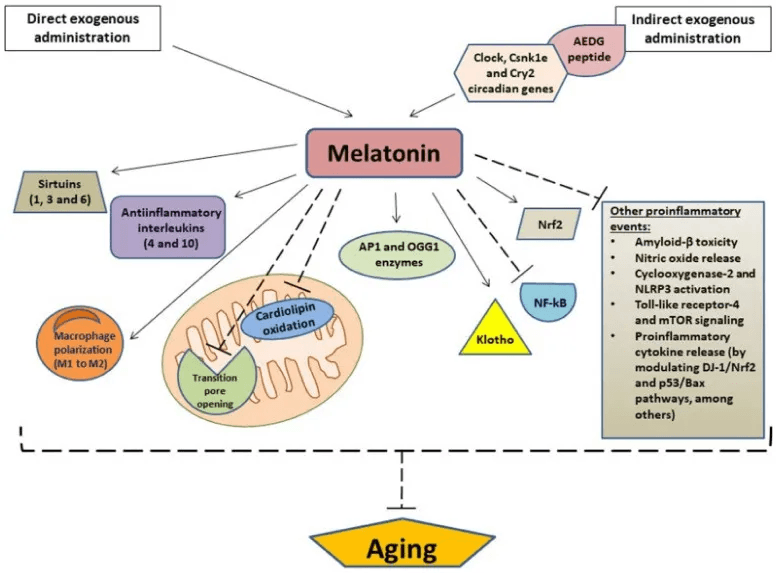

Melatonin functions as a circadian cue—it tells the brain’s internal clock when darkness has arrived and helps align sleep timing with the light-dark cycle. Its effectiveness depends on whether the underlying sleep problem involves circadian timing; when the driver is fragmented architecture, inadequate sleep drive, or hormonal dysregulation, dose adjustment will not change the outcome.
- Melatonin binds MT1 and MT2 receptors in the suprachiasmatic nucleus (SCN) and lacks the cortical suppressive activity of sedative-hypnotic drugs like benzodiazepines—it facilitates sleep onset only when timed with circadian conditions that favor it.
- A 2013 meta-analysis found melatonin reduced sleep onset latency by an average of 7 minutes; the 2004 U.S. Agency for Healthcare Research and Quality Evidence Report found a 4-minute reduction in normal sleepers, which it described as “in practice insignificant.”
- In Delayed Sleep Phase Syndrome, melatonin reduced sleep onset latency by 38.8 minutes—the strongest documented subgroup response. In insomnia, the reduction was 4.3 minutes, a statistically insignificant result.
- Melatonin has an elimination half-life of 20–50 minutes; by the second half of the night, plasma concentrations have largely declined, which limits its ability to support sleep continuity or reduce nighttime awakenings.
- Glymphatic clearance, REM architecture, and synaptic homeostasis—the sleep processes most relevant to cognitive aging—depend on sleep depth and continuity. Melatonin has not demonstrated consistent benefit in these areas for healthy adults.
Melatonin often fails because most people take it to solve sleep problems it wasn’t designed to solve. Melatonin is a circadian time-keeper—it tells your body when dusk has arrived and helps synchronize your internal rhythm to the 24-hour day. It does not inherently create sleep pressure, extend sleep duration, or maintain sleep continuity throughout the night. Melatonin’s effectiveness depends entirely on whether your primary issue is circadian misalignment; if your sleep problem stems from inadequate sleep drive, fragmented architecture, or hormonal dysregulation, melatonin will have minimal impact. Many people blame the supplement when the issue is they’re using the wrong tool for their specific sleep disruption pattern.
Key Takeaways:
- Melatonin functions as a circadian synchronizer, not a sleep pressure builder—matching its mechanism to your sleep problem is critical
- Taking melatonin doesn’t increase sleep drive, amount of deep sleep, or REM sleep; it adjusts circadian phase only
- Effectiveness requires your problem to be timing-based (shift work, jet lag, delayed sleep onset due to circadian phase)
- When melatonin “fails,” it often means the underlying driver of your sleep disruption isn’t circadian misalignment—and no dose adjustment will change that
“Why do I keep waking up at night after taking melatonin?”
It’s a common question—and a clue that this molecule may not be doing what many assume.
Melatonin is marketed as a sleep solution. But the reality is more complex—and more consequential.
In healthy adults seeking better sleep for cognitive longevity—melatonin’s role is often misunderstood. It’s not a sedative. It doesn’t deepen sleep. And it doesn’t override stress or metabolic noise.
Instead, melatonin works as a circadian signal—a nightly time-stamp that helps align internal rhythms to the light-dark cycle.
This distinction matters. If you’re using melatonin to fix sleep schedule, or thinking about supplementing melatonin for sleep in general, it’s essential to understand what this molecule actually does—and doesn’t do. Especially when sleep “quality” is tightly linked to long-term brain structure, memory consolidation, and neurodegenerative risk.
What follows is not a rejection of melatonin, but a reframe: a deeper look at how—and when—this molecule supports restorative sleep.
And when it may simply be the wrong signal to focus on—and what to optimize instead.
By the end, we’ll also answer the questions that matter most regarding the use of melatonin for sleep:
➔Why do I keep waking up at night after taking melatonin?
➔Does melatonin help you remain asleep?
Table of Contents
Does Melatonin Help With Insomnia and Fixing a Sleep Schedule?
Melatonin’s primary role in human sleep physiology is not sedative but chronobiotic—meaning it modulates the timing of biological rhythms.
When darkness falls, your pineal gland produces melatonin, telling the suprachiasmatic nucleus (SCN)—your brain’s internal clock—that it’s time to prepare for night. This signaling occurs when melatonin binds to MT1 and MT2 receptors—both of which are G-protein coupled receptors located in the SCN.
Each receptor plays a distinct role: MT1 activation suppresses neuronal firing to promote sleepiness, while MT2 controls phase-shifting—i.e., adjusting the timing of sleep-wake cycles.
Critically, melatonin does not act like traditional sleep aids. Unlike sedative-hypnotic drugs (such as benzodiazepines or Z-drugs), it lacks cortical suppressive activity. Instead, its effect is permissive—lowering the arousal threshold and facilitating sleep initiation when timed correctly.
A 2013 meta-analysis of randomized controlled trials, covering a range of primary sleep disorders, found that exogenous melatonin reduced sleep onset latency (SOL)—the time required to transition from full wakefulness to sleep—by an average of 7 minutes compared to placebo. While statistically significant, the magnitude of the benefit of melatonin for sleep was small and highly dependent on baseline circadian status, especially in considering melatonin to fix sleep schedule or melatonin for insomnia.
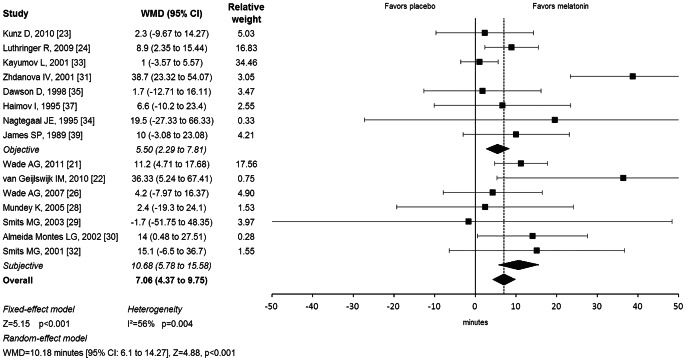
Still, statistical significance does not always translate into meaningful outcomes—especially for those focused on longevity and brain aging, where the depth and quality of sleep may matter more than small changes in how quickly one falls asleep.
A reduction of 5 to 10 minutes in SOL may be meaningful for individuals with circadian delay or sleep disorders, but it is unlikely to offer perceptible improvement for healthy sleepers or those with sleep maintenance complaints. Moreover, the heterogeneity across study designs, populations, and melatonin formulations (immediate vs. sustained release, dose range from 0.3 mg to 10 mg) complicates direct translation into day-to-day use for the healthy adult in supplementing melatonin for sleep.
For healthy adults concerned with long-term cognitive performance and sleep-dependent brain restoration, these modest reductions in SOL from supplementing melatonin for sleep may not translate into meaningful improvements in overnight recovery or downstream neuroprotection.
In scientific terms, shaving a few minutes off sleep latency likely does little to enhance the glymphatic clearance, REM architecture, or synaptic homeostasis processes most relevant to cognitive aging.
That said, melatonin is used by many different populations—some with normal sleep, others with clinical conditions.
To better understand where it may be most helpful, the 2004 Evidence Report from the U.S. Agency for Healthcare Research and Quality conducted a stratified analysis. Rather than combining results across diverse groups, it separated findings for normal sleepers and those with primary sleep disorders.
Let’s begin with the data from normal, healthy adults.
Does Melatonin Improve Sleep in Healthy Adults Without Insomnia?
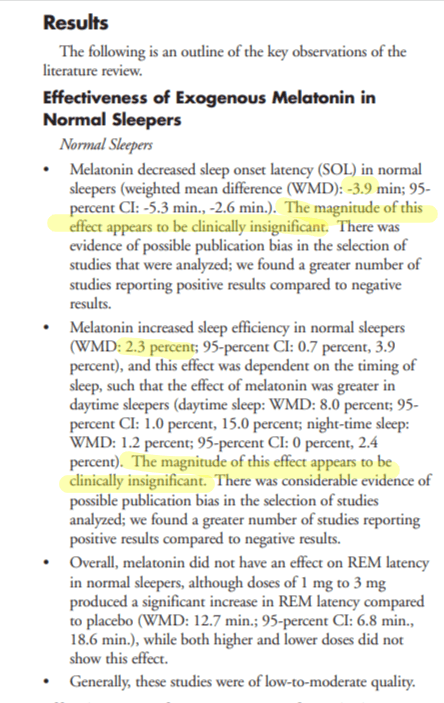
- In adults classified as normal sleepers—individuals without insomnia or circadian misalignment—exogenous melatonin decreased sleep onset latency (SOL) by approximately 4 minutes compared to placebo. However, the report concluded that “the magnitude of this effect appears to be clinically insignificant.”
- Melatonin modestly improved sleep efficiency—the proportion of time in bed spent asleep—by a weighted mean difference (WMD) of 2.3% (95% confidence interval: 0.7% to 3.9%). This metric represents the average effect size across studies, accounting for their relative statistical power. ▪️ In daytime sleep, the WMD was 8.0% (CI: 1.0%, 15.0%) ▪️ In nighttime sleep, the WMD dropped to 1.2% (CI: 0%, 2.4%)
WMD reflects the average effect across multiple studies, weighted by study size and precision. In practical terms, a 1-2% gain in sleep efficiency is small and may not be perceptible for most people.
The report emphasized that these effects were minor and potentially inflated by publication bias—noting a disproportionate number of trials reporting positive over null findings.
So far, the takeaway for healthy adults is fairly clear: melatonin offers minimal benefit when no underlying circadian misalignment or sleep disorder is present.
But what about individuals with clinical sleep disruptions?
Want the step-by-step plan I use with readers 50+ to restore sleep?
How Effective Is Melatonin for Insomnia and Delayed Sleep Phase?
In contrast, using melatonin for insomnia and other defined sleep disorders showed stronger effects:
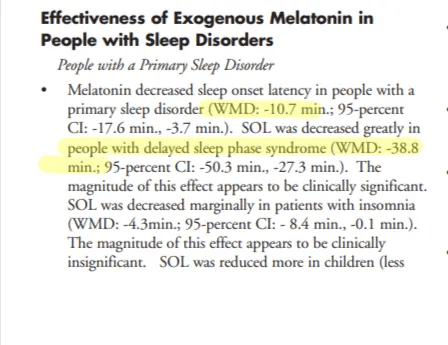
- In adults with any primary sleep disorder, melatonin reduced sleep onset latency (SOL) by 10.7 minutes (95% CI: -17.6, -3.7 min).
- In Delayed Sleep Phase Syndrome (DSPS)—a circadian rhythm disorder characterized by delayed endogenous melatonin secretion—SOL dropped by 38.8 minutes (95% CI: -50.3 to -27.3) representing the most substantial subgroup response.
- In individuals with insomnia, melatonin reduced SOL by only 4.3 minutes (95% CI: -8.4, -0.1 min)—this result was statistically insignificant and likely negligible in terms of subjective benefit.
More recent umbrella reviews (e.g., Canadian Journal of Health Technologies, 2022) reinforced these mixed findings.
Some trials showed reductions in SOL; others found no meaningful change. These inconsistencies likely reflect interindividual variability in circadian phase alignment, endogenous melatonin output, and the methodological diversity of melatonin trials.
But study design isn’t the only factor.
Age and circadian biology also influence how the body responds to melatonin.
A dose that barely registers in a 30-year-old may provide modest benefit to someone in their 60s with diminished endogenous output. To see this more clearly, it helps to compare two ends of the physiological curve: young adults with robust melatonin signaling, and older adults with declining nighttime secretion.
Does melatonin improve sleep more in older adults than in the young?
Why Doesn’t Melatonin Help Healthy Young Adults Sleep Better?
In young, healthy adults with stable circadian rhythms and intact pineal output, exogenous melatonin offers little benefit when taken at conventional bedtimes. Endogenous secretion is already robust during biological night, and supplemental dosing does not meaningfully reduce sleep latency under these conditions.
This was demonstrated in a tightly controlled 27-day forced desynchrony study involving 36 healthy adults (ages 18 to 30). Participants were placed on a 20-hour sleep-wake cycle in a time-isolated research unit and randomized to receive either a placebo, a physiologic dose (0.3 mg), or a pharmacologic dose (5.0 mg) of melatonin 30 minutes before each scheduled sleep episode.
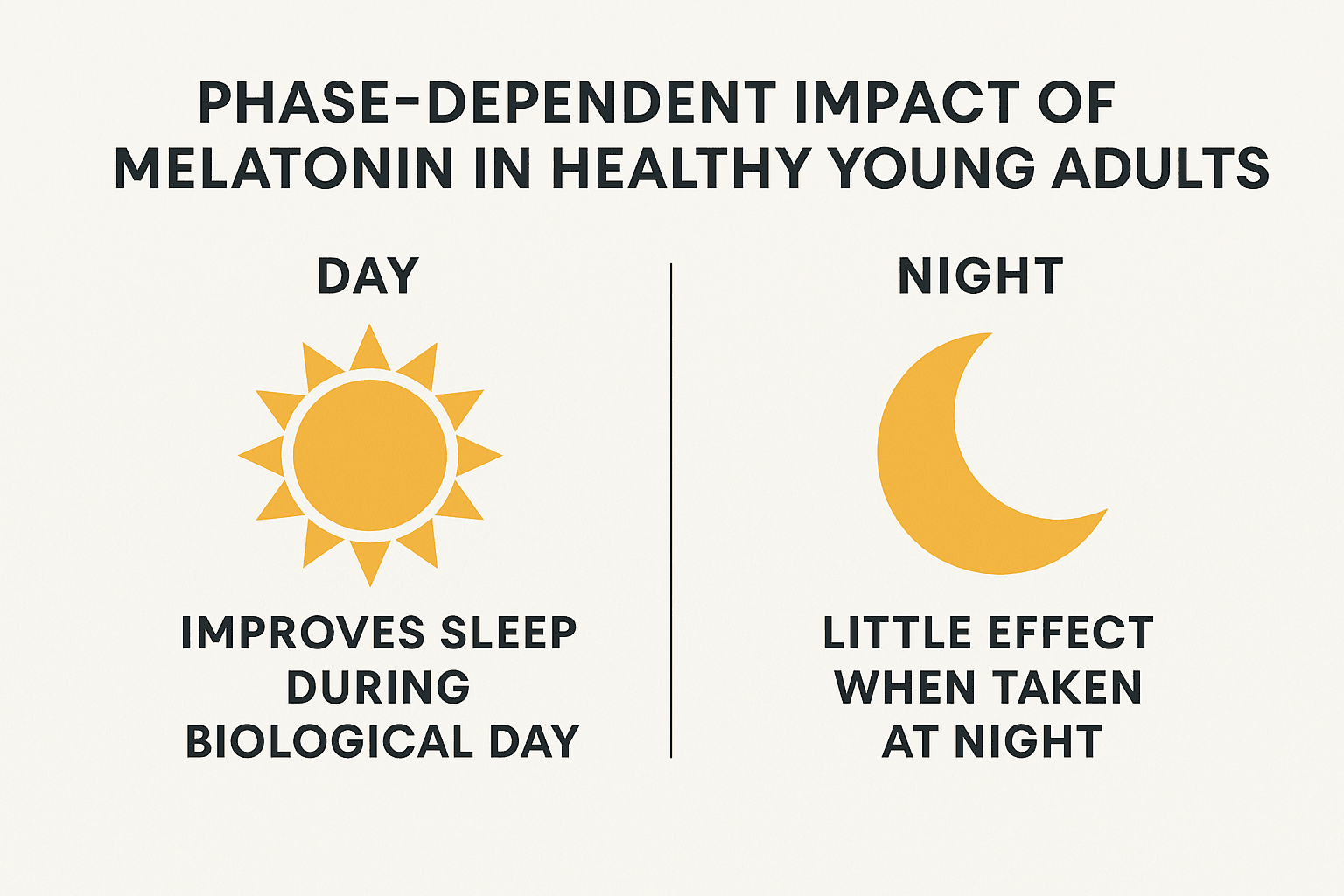
When sleep was scheduled during the biological day—circadian phases when endogenous melatonin was absent—both melatonin doses improved sleep efficiency from 77% (placebo) to 83%. However, during sleep episodes aligned with the biological night, when endogenous melatonin was naturally present, exogenous melatonin had no additional effect. Sleep efficiency in this condition already averaged 88% without supplementation, and melatonin did not significantly alter sleep latency, slow-wave sleep, REM architecture, or core body temperature.
Table: Effects of Exogenous Melatonin in Healthy Young Adults (Forced Desynchrony Study)
| Condition | Sleep Efficiency | Effect of Melatonin | Notes |
|---|---|---|---|
| Biological Day (Low endogenous melatonin) | 77% → 83% | Improved with both 0.3 mg and 5.0 mg | Sleep efficiency increased but did not reach biological night levels |
| Biological Night (High endogenous melatonin) | 88% (baseline) | No additional improvement | Melatonin had no effect on sleep latency, architecture, or temperature |
| Sleep Latency, SWS, REM | No significant change | — | Melatonin did not alter sleep stages or core body temp across conditions |
This illustrates that the effects of melatonin for sleep are phase-dependent, not broadly hypnotic.
For young adults without circadian disruption, routine use of melatonin for sleep is unlikely to improve sleep quality or deliver downstream neurocognitive benefit. But in cases of travel or schedule shifts, where circadian alignment is temporarily impaired, targeted use of melatonin to fix sleep schedule may help preserve sleep continuity—and by extension, circadian regulation of metabolic and neural processes.
Does Melatonin Help With Sleep Initiation in Older Adults?
Aging is generally associated with a decline in nocturnal melatonin amplitude, as well as shifts in circadian phase and reduced melatonin receptor sensitivity. In this context, supplementation of melatonin for sleep may help restore circadian signaling, particularly in individuals with diminished endogenous output or age-related circadian misalignment.
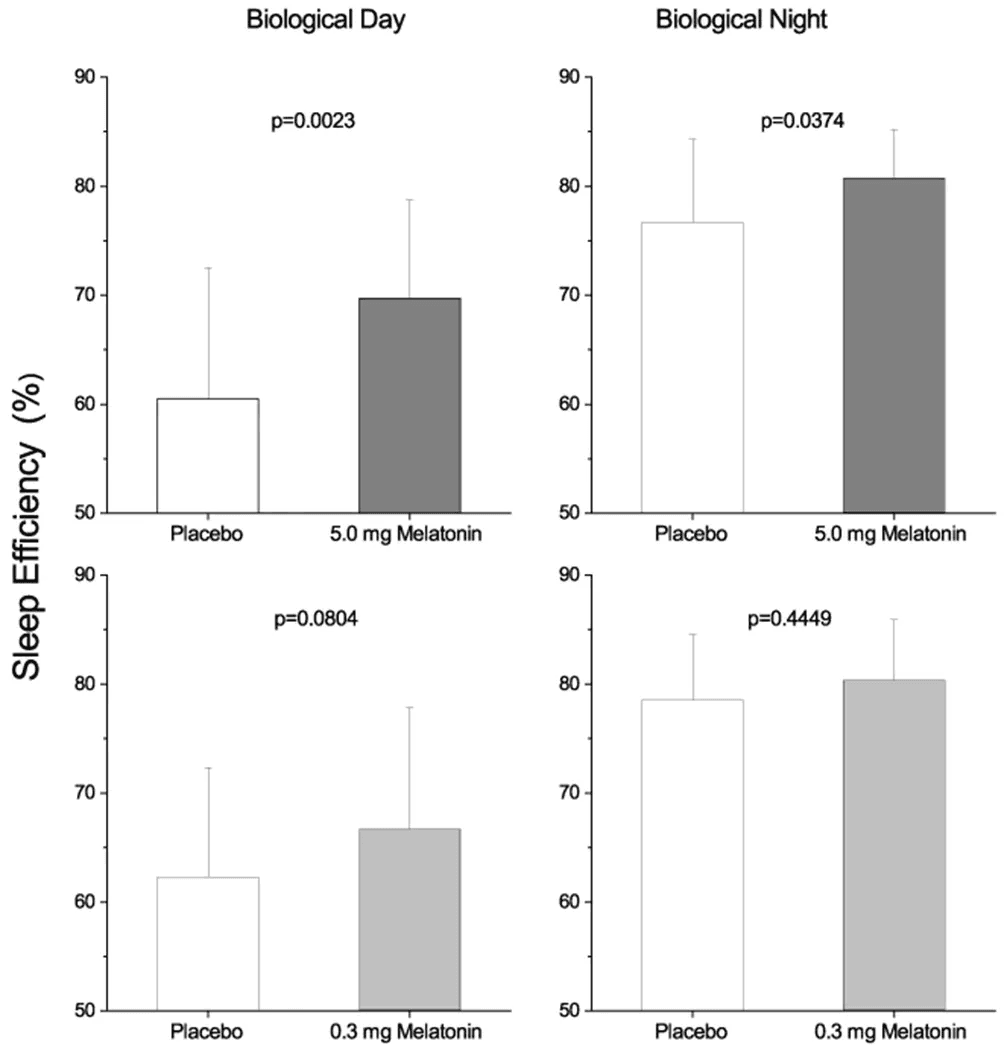
In a randomized crossover trial (n = 24, mean age 64.2), participants received placebo, 0.3 mg, or 5.0 mg melatonin under a forced desynchrony protocol. The low dose (0.3 mg) showed a trend toward improved sleep efficiency, primarily during daytime sleep windows. The higher dose (5 mg) increased sleep efficiency during both biological day and night, suggesting dose- and context-dependent efficacy.
However, these findings are not universal.
A larger four-week double blind randomised placebo controlled crossover trial in healthy older adults over 65 years of age with subjective sleep complaints—but no formal insomnia diagnosis—found no measurable benefit from 5 mg melatonin on sleep latency, duration, or efficiency, as assessed via diary, questionnaire, and actigraphy.
5 mg of fast release melatonin taken at bedtime does not improve the quality of sleep in older people with age-related sleep maintenance problems.
– Baskett, 2003
Taken together, these studies suggest that melatonin may improve sleep initiation in older adults with documented circadian dysregulation or clear melatonin deficiency. But in those with near-normal rhythms and mild sleep disturbance, melatonin appears insufficient to enhance sleep architecture in a way that would meaningfully impact cognitive aging or overnight neural restoration.
How Does Melatonin Work as a Circadian Cue Rather Than a Sleep Drug?
What Are the Conditional Benefits of Melatonin for Sleep?
Across populations, melatonin for insomnia or sleep initiation is conditional, not universal. Its strongest utility lies in situations of circadian misalignment—such as shift work, travel, or delayed sleep phase—where it can re-entrain internal rhythms and facilitate timely sleep onset.
In healthy adults with normal circadian timing, the benefit of melatonin for sleep is often negligible. Randomized trials in both young and older cohorts show minimal reductions in sleep onset latency, especially when endogenous melatonin is adequate. Even in older adults—where melatonin output declines—its effects on sleep initiation are inconsistent and often modest, with several trials showing no advantage over placebo.
From a brain aging standpoint, this has direct implications.
Sleep initiation is only one facet of sleep architecture, and not the most relevant for neuroprotection. Longevity-relevant mechanisms—such as glymphatic clearance, hippocampal replay, and REM-linked emotional regulation—depend more on sleep fragmentation, sleep depth and continuity than on how quickly one falls asleep. A 5- to 10-minute reduction in latency, absent downstream benefits, is unlikely to meaningfully affect long-term cognitive resilience.
In this context, melatonin’s role in sleep initiation appears limited in scope for generally healthy, cognitively motivated adults. Its targeted use in circadian misalignment (e.g., melatonin to fix sleep schedule) remains valid—but as a routine intervention for brain-oriented sleep improvement, the evidence does not strongly support melatonin for sleep as a reliable tool.
By the way, If you’ve been following my work on hormones and sleep, you’ll know how much depth there is beneath the surface.
If you’re ready to go deeper and take a systems-based approach to improving your sleep, Sleep OS Hormones is now available as a 60-day self-guided program with dedicated systems for estrogen, progesterone, and testosterone, or bundled together for a more complete approach.
or
Does Melatonin Help You Stay Asleep Through the Night?
While melatonin can reduce sleep onset latency (SOL) under the right conditions, its effect on maintaining sleep—the benefit to using melatonin to stay asleep—is quite limited.
From a longevity standpoint, this distinction is critical.
Initiating sleep is only the beginning of sleep-dependent neural repair; the true cognitive dividends of sleep occur in its continuity—especially during slow-wave sleep (SWS) and REM, which consolidate memory, regulate emotion, and clear neurotoxic waste.
Melatonin’s limitations here are primarily pharmacokinetic—relating to how the body processes the compound. Standard oral melatonin has a short elimination half-life (20–50 minutes), meaning plasma concentrations peak rapidly but also decline within a few hours. By the second half of the night, exogenous melatonin is largely absent from circulation. This undermines its ability to support sleep consolidation, defined as the uninterrupted progression through full sleep cycles.
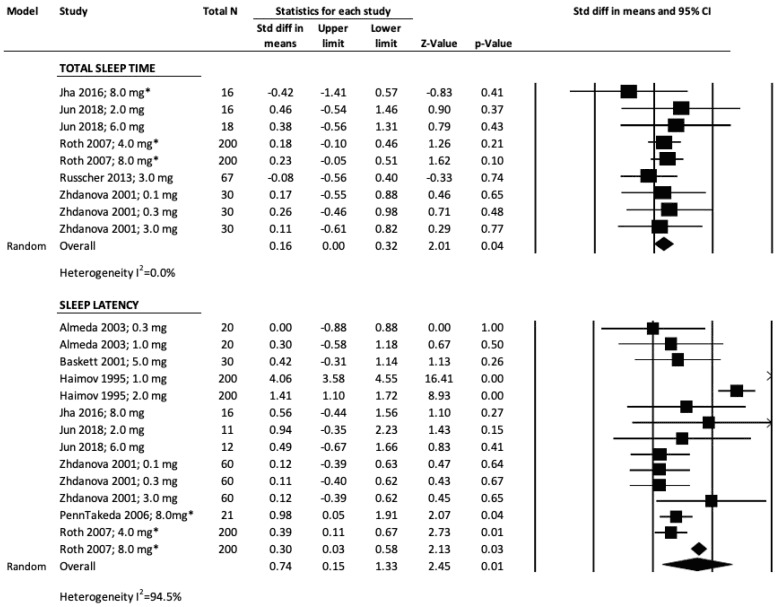
In a 2013 meta-analysis (Ferracioli-Oda et al.), total sleep time (TST) increased by just ~8 minutes versus placebo.

While statistically significant, such a marginal extension in the use of melatonin for sleep is unlikely to translate into meaningful cognitive or physiological benefit—particularly in aging adults seeking neuroprotective sleep architecture.
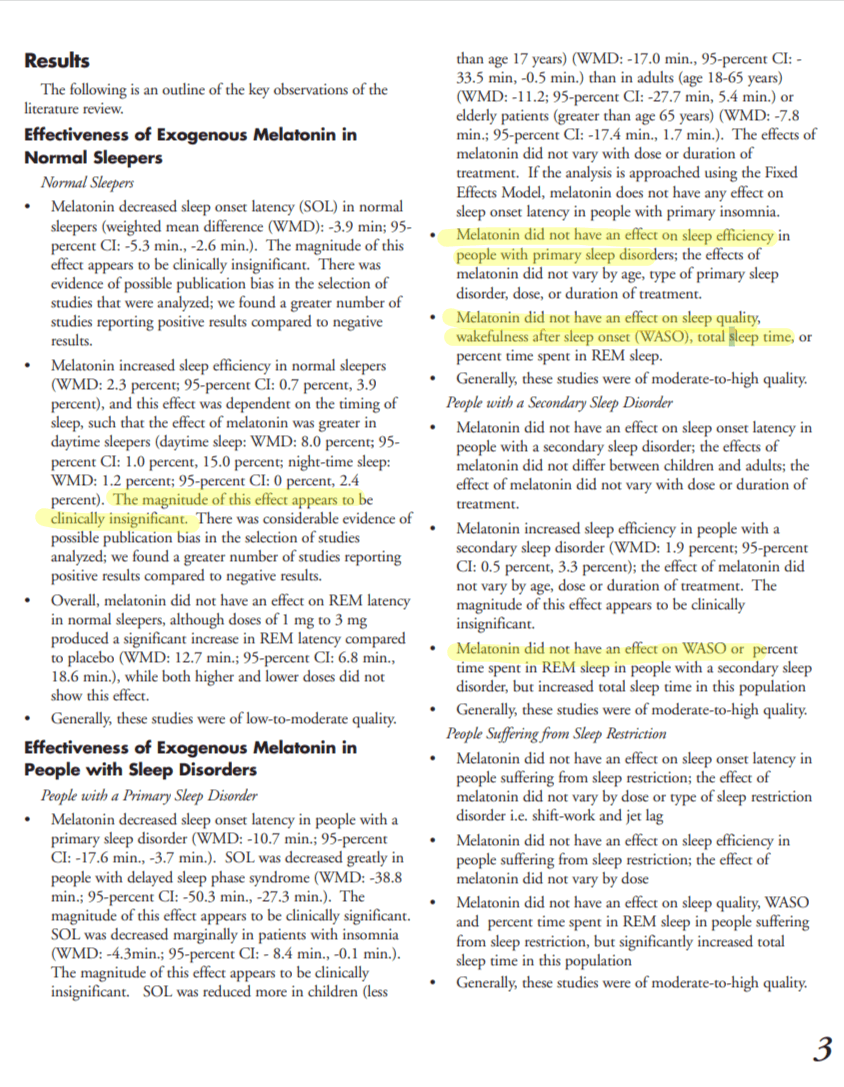
Similarly, in the 2004 AHRQ Evidence Report, melatonin demonstrated no consistent benefit for wakefulness after sleep onset (WASO), number of nighttime awakenings, or overall sleep continuity in healthy sleepers. These are the very disruptions that compromise glymphatic flow and reduce sleep’s restorative efficiency.
Even in trials where melatonin improved initial sleep timing, it failed to extend sleep duration or prevent mid-sleep arousals. This pharmacological ceiling limits its relevance for preserving sleep structure—particularly in the second half of the night, where REM predominates and synaptic plasticity processes peak.
Does Melatonin Help Older Adults With Insomnia Stay Asleep?
A partial exception may exist in older adults with chronic insomnia—a group often characterized by reduced nighttime melatonin output and altered circadian regulation.
A 2022 meta-analysis by Marupuru et al., which synthesized findings from 17 clinical trials evaluating melatonin for sleep in adults aged 55 and older with chronic insomnia, reported the following outcomes:
▪️ Objective TST (total sleep time) increased by ~21 minutes
▪️ Objective SOL (sleep onset latency) reduced by ~13.8 minutes
▪️ Subjective SOL (sleep onset latency) reduced by ~8.3 minutes
▪️ Sleep efficiency—the percentage of time spent asleep while in bed—showed no statistically significant improvement
Despite these modest benefits, the unchanged sleep efficiency suggests that melatonin does not meaningfully reduce sleep fragmentation, even in aging adults with endogenous melatonin deficiency.
From a brain aging standpoint, this narrows the potential role of melatonin for sleep: while it may support sleep initiation and modestly extend duration in older individuals with insomnia, it does not appear to enhance the sleep continuity needed to protect overnight neural repair.
Why Is Melatonin’s Usefulness for Staying Asleep Limited Beyond Circadian Timing?
Melatonin’s short half-life and narrow pharmacodynamic window (its duration of biological activity) make it ill-suited for sustaining continuous, architecture-rich sleep—a key reason why using melatonin to stay asleep often disappoints. For individuals aiming to protect long-term brain function, uninterrupted, deep-stage sleep is essential—not just faster onset. While older adults with circadian disruption may derive modest benefit from prolonged-release versions, the overall effect size remains small.
In practical terms: for individuals experiencing early morning awakenings, sleep fragmentation, or disrupted REM sleep, taking melatonin to stay asleep is not an adequate solution.
Melatonin’s utility remains confined to circadian phase correction, not the enhancement of sleep depth or structure.
As a tool for cognitive longevity, melatonin’s role in sleep maintenance is weak. For a deeper dive into how fragmented sleep accelerates brain aging—and what sleep architecture really protects your cortex—see: The 3 Forms of Sleep Disruption That Shrink Your Brain.
Why Does Melatonin Fail for the Majority of People With Sleep Problems?
What Melatonin Does NOT Do for Sleep
Melatonin is frequently mischaracterized as a broad-spectrum sleep aid, when in fact its pharmacological actions are narrow and circadian-specific. It is more accurately classified as a chronobiotic—a compound that adjusts the phase of biological rhythms—rather than a hypnotic, which directly induces or deepens sleep.
Here are key points about what melatonin does not do for sleep in healthy (non-jetlagged, non-shift-work) individuals:
Why Doesn’t Melatonin Sedate You or Reduce Overnight Stress?
Melatonin does not induce sedation in the pharmacodynamic sense. Unlike GABAergic agents (e.g., benzodiazepines, Z-drugs), melatonin does not inhibit central nervous system activity or promote widespread neuronal quiescence. Its mechanism is circadian gating—facilitating sleep readiness via MT1/MT2 receptor signaling—but it cannot override sympathetic activation, or stimulant use.
As a result, melatonin has no capacity to counteract acute arousal.
Why Doesn’t Melatonin Increase Total Sleep Duration?
Meta-analyses consistently report minimal increases in total sleep time (TST) with supplemental melatonin for sleep. As noted in Section 2, the average gain in TST is approximately 8 to 21 minutes, depending on population and formulation.
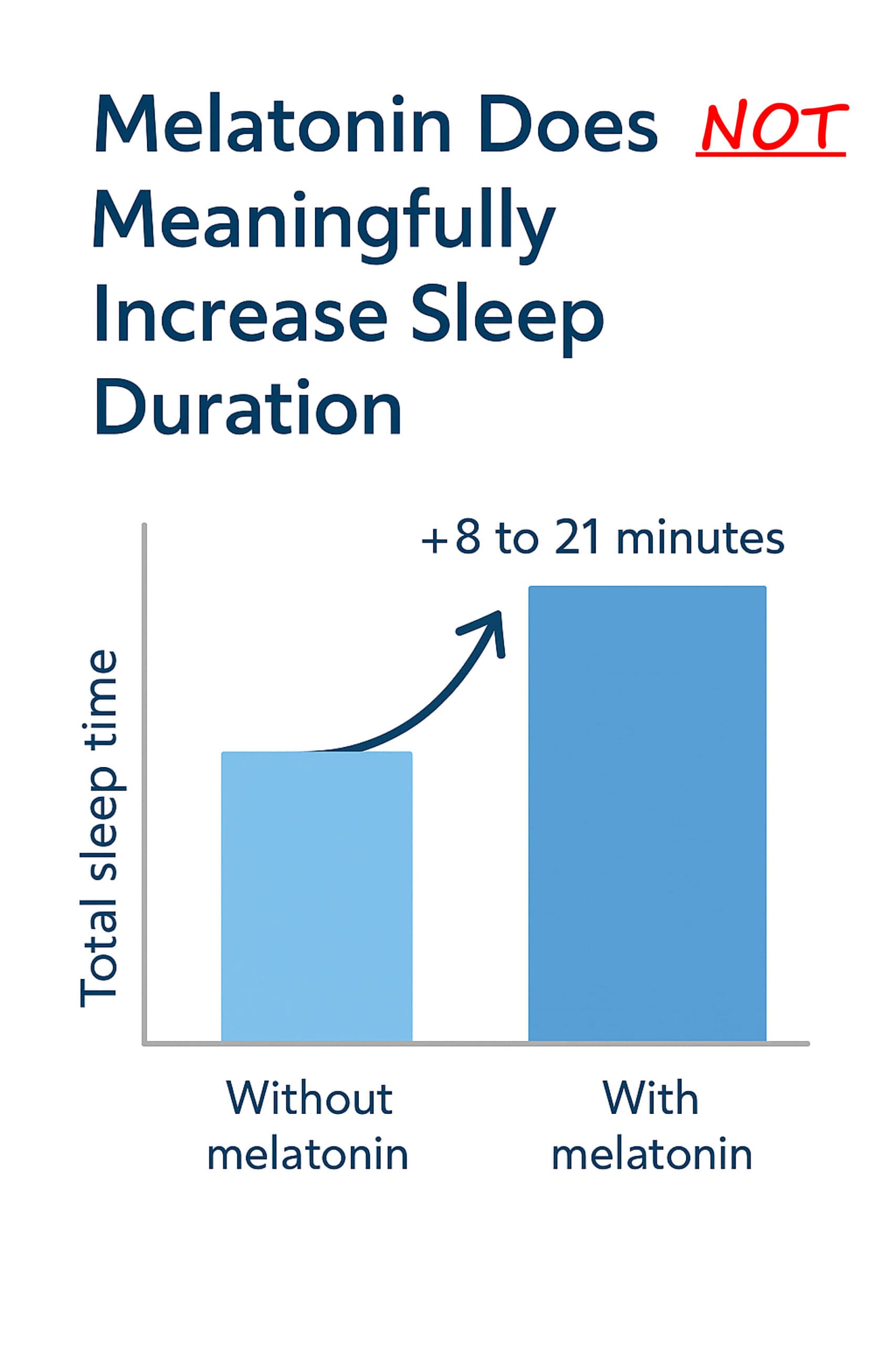
This is not sufficient to restore chronic sleep debt or extend physiologic recovery windows.
Unlike pharmacologic agents that can prolong slow wave sleep (SWS) or suppress arousals for hours, melatonin does not augment homeostatic sleep pressure—it cannot convert a 5-hour sleeper into an 8-hour sleeper, nor does it “add” hours of sleep in individuals who already achieve physiologic sleep duration.
Why Doesn’t Melatonin Prevent Sleep Fragmentation or Improve Sleep Maintenance?
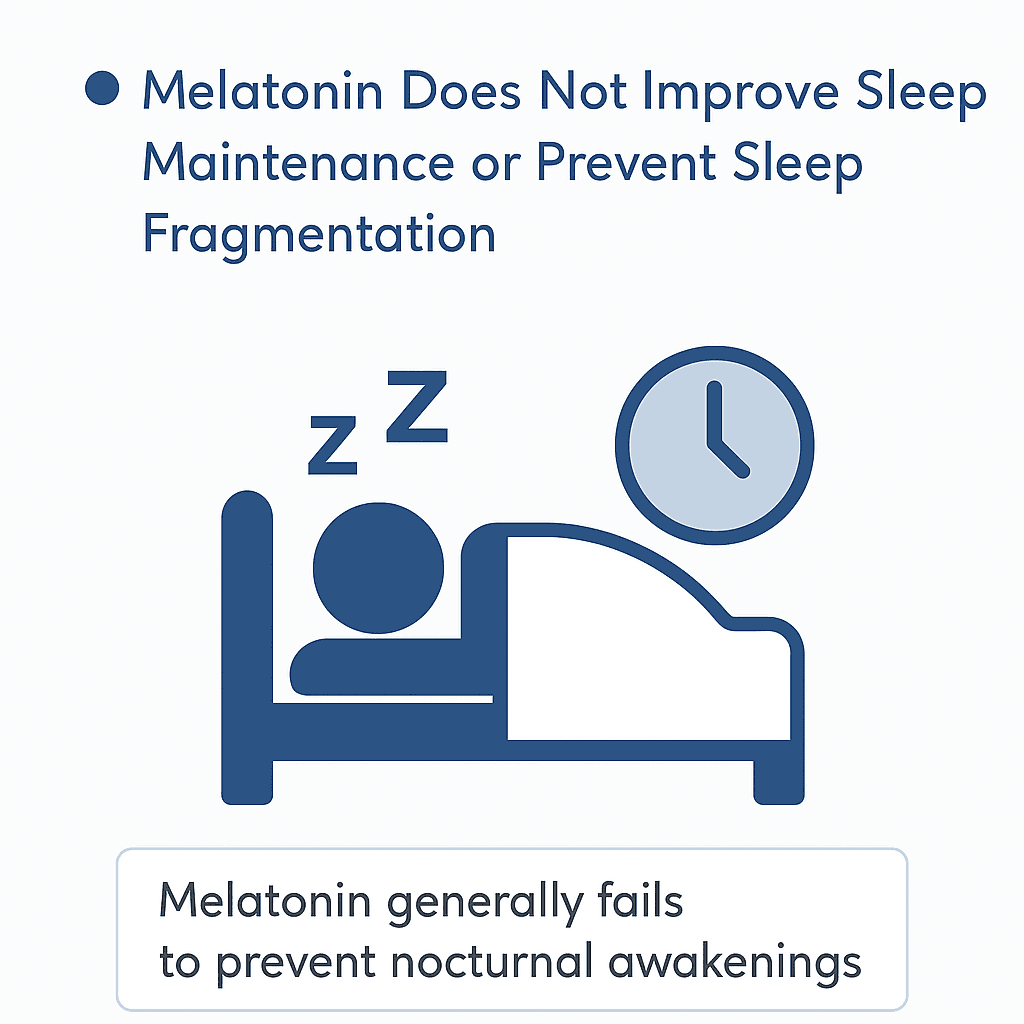
Melatonin generally fails to prevent nocturnal awakenings or reduce wakefulness after sleep onset (WASO) in controlled trials. Across multiple studies and meta-analyses, there is little evidence that melatonin improves sleep continuity, except potentially in circadian misalignment contexts or in older adults using extended-release forms.
Fragmented sleep—whether due to stress, environmental noise, sleep apnea, or autonomic instability—is largely unaffected by standard melatonin dosing.
Given that sleep fragmentation disrupts glymphatic clearance, impairs REM integrity, and accelerates cognitive decline in aging populations, this limitation is not trivial. The ability to stay asleep—especially during the second half of the night—is where most neurorestorative sleep unfolds.
Melatonin does not support this process.
Why Doesn’t Melatonin Improve Rapid Eye Movement or Deep Sleep Architecture?
Melatonin does not increase the proportion of REM or N3 (slow-wave) sleep. If anything, exogenous melatonin can delay the onset of REM sleep, especially when taken at suboptimal circadian phases.
Polysomnographic studies have shown no consistent enhancement in sleep stage depth, duration, or transitions. The widely held belief that melatonin improves “sleep quality” lacks empirical support in adults with intact circadian function.
For those aiming to preserve memory consolidation, synaptic downscaling, and emotional processing overnight, melatonin is not the mechanism to target. These processes depend on intact sleep architecture—not just timely initiation.
Get Weekly Sleep Insights In Your Inbox. Beyond Melatonin, Blue Light, and Caffeine.
What Are the Limitations of Melatonin Supplementation for Brain Longevity?
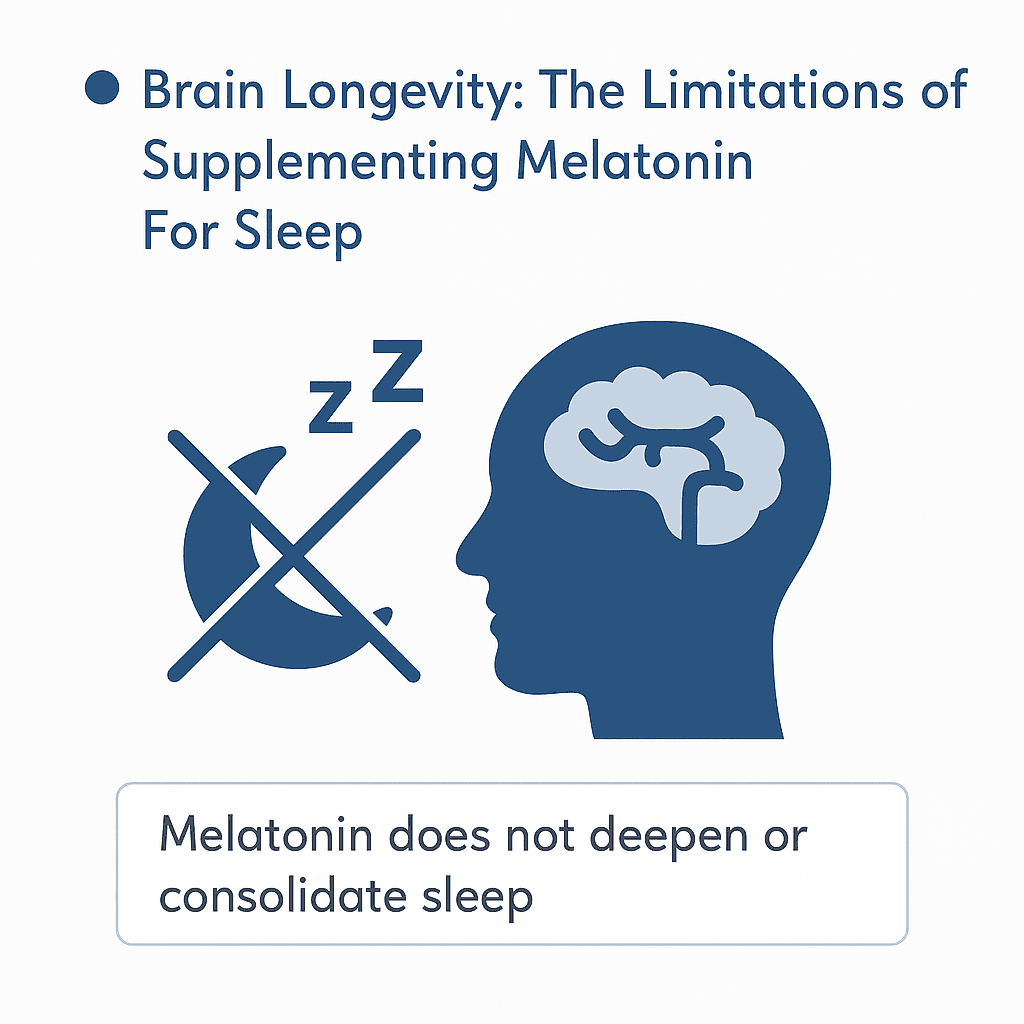
The benefit of using melatonin for sleep lies in its role as a circadian signal—not as a builder of sleep depth or continuity.
It does not sedate, does not consolidate, and does not deepen sleep in a way that supports long-term brain health. Its utility lies in correcting timing mismatches—such as jet lag or delayed sleep phase—not in remodeling sleep structure, helping you stay asleep or sustaining the stages critical to neuroprotection.
For cognitively intact adults focused on brain longevity, the case for melatonin is narrow: it helps align internal rhythms to external cues. But once alignment is achieved, the quality, depth, and stability of sleep must be supported through other pathways—behavioral, metabolic, and neurophysiologic—not through circadian signaling alone.
How Do You Determine Whether Melatonin Can Help Your Specific Sleep Problem?
Should You Take Melatonin For Sleep? Evaluate the Signal Before the Supplement
If you’re healthy, not jet-lagged, and don’t struggle to fall asleep—taking melatonin for sleep is unlikely to help you enjoy better quality sleep. It won’t deepen your sleep, extend it meaningfully, or prevent the types of awakenings that fragment rest and accelerate brain aging.
But dismissing melatonin altogether also misses something more important:
It’s not a weak sleep aid. It’s a strong signal—circadian, metabolic, mitochondrial—and strong signals, misapplied, can misfire.
What Are the Metabolic Risks of Melatonin That Go Beyond Its Sleep Effects?
Melatonin isn’t just the “sleep hormone.”
It’s a multisystem molecule, with receptor sites throughout the brain, endocrine axis, and immune system. That widespread presence explains why it’s gaining traction as a longevity candidate—but it also means supplementation can have consequences far beyond sleep.
▪️ It exerts potent antioxidant and anti-inflammatory effects, particularly in mitochondria. Melatonin scavenges reactive oxygen and nitrogen species, upregulates antioxidant enzymes, chelates transition metals, and helps preserve mitochondrial function under stress.
This profile positions melatonin as a mitochondria-targeted antioxidant—a role with real therapeutic promise for neurodegeneration and cellular aging.
But melatonin’s influence doesn’t stop there—and not all downstream effects are beneficial:
- It impairs glucose tolerance in both healthy individuals and those with type 2 diabetes.
- It modulates reproductive hormones, including LH and FSH, and may reduce sperm quality.
- Evidence suggests it inhibits hippocampal long-term potentiation, a core mechanism in memory formation.
- It produces unpredictable effects on REM sleep, altering its onset or proportion depending on dose, receptor subtype, and timing.
In other words: melatonin is not harmless. It’s powerful—biochemically, hormonally, and neurologically. And powerful tools demand precise context and intent.
Why Should You Measure Your Melatonin Levels Before Supplementing?
If melatonin exerts both protective and disruptive effects—context becomes everything.
Before supplementing, a foundational question must be asked:
Is this signal even deficient, and if so, when?
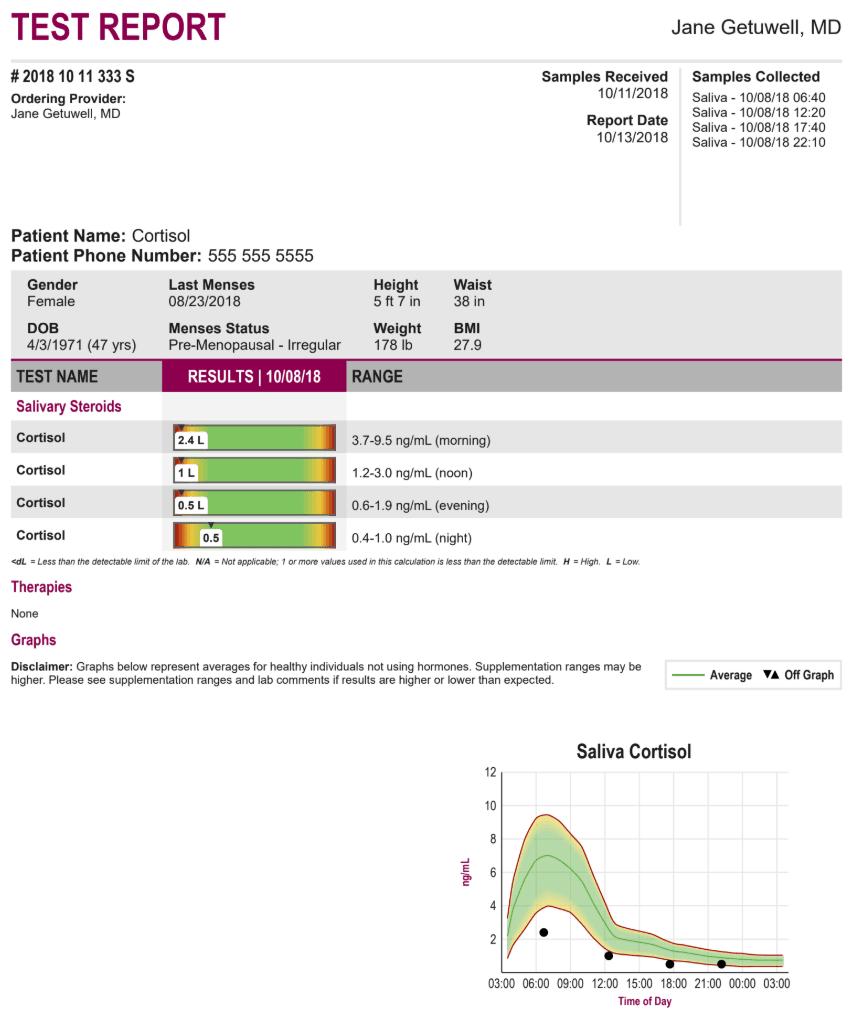
Single-timepoint melatonin tests—especially at bedtime—offer incomplete insight. Melatonin is a circadian signal, not a static hormone. To evaluate it accurately, you need to see the full curve.
A 4-point salivary melatonin profile—with samples taken in the morning, noon, evening, and night—reveals how your internal clock ramps up and down over 24 hours.
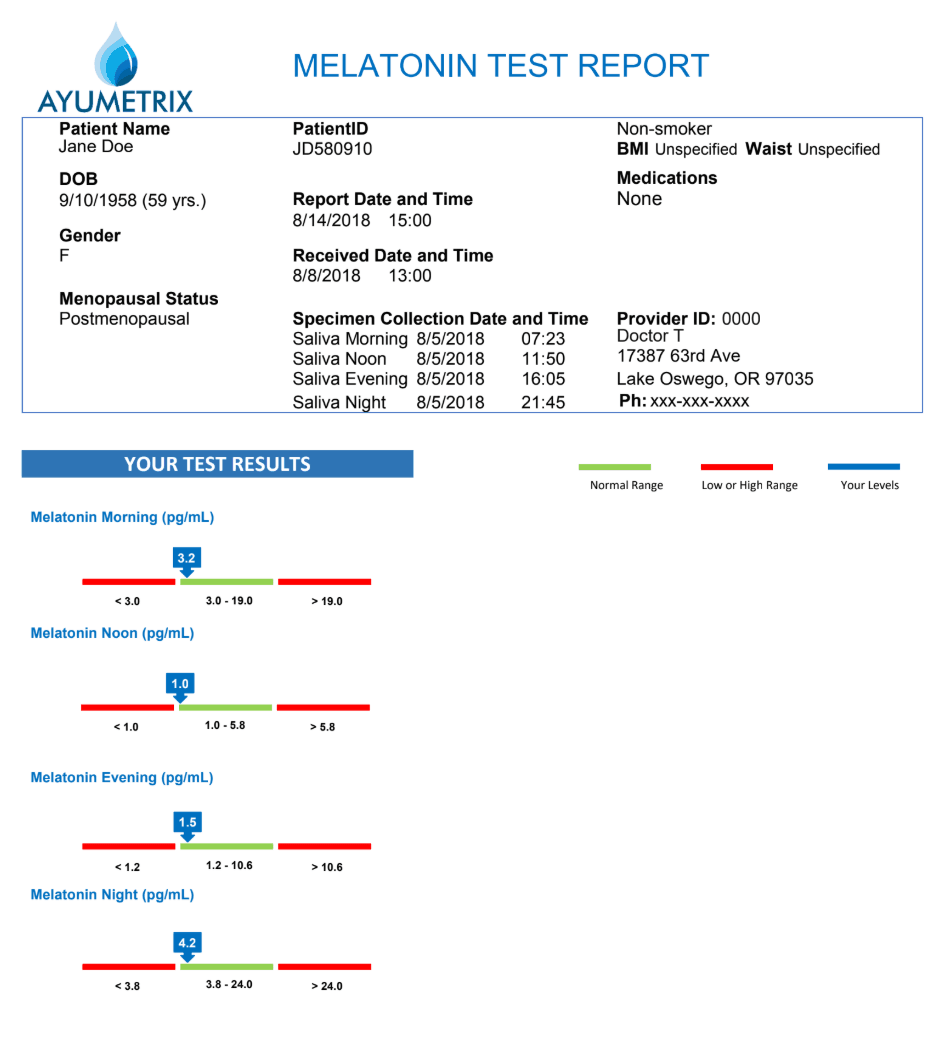
Here’s how that pattern typically appears in healthy individuals:
- Morning: Suppressed—typically <3 pg/mL by 7–9 a.m.
- Noon: Flat—usually <2 pg/mL during peak daylight hours
- Evening: Rising—beginning after sunset, ideally 10–20 pg/mL
- Night (2–4 a.m.): Peak levels of 20–70 pg/mL in adults with intact pineal output
A blunted curve—with low night levels—or a delayed rise in evening secretion may indicate circadian misalignment, pineal insufficiency, or light-at-night suppression.
In contrast, if the entire curve is intact and properly timed, then melatonin is not the problem—and adding more may distort the rhythm, not enhance it.
The Ayumetrix 4-point Melatonin Panel captures your full circadian melatonin rhythm—morning, noon, evening, and night—to reveal whether melatonin is rising at the right time, peaking overnight, or failing to signal effectively. This dynamic view is essential for determining whether supplementation is warranted—or misaligned.
When nocturnal melatonin is low—or the curve is delayed—strategic, low-dose intervention may be appropriate.
This is particularly relevant in:
- Older adults, where endogenous secretion declines with age
- Shift workers, whose light exposure desynchronizes melatonin timing
- Individuals with circadian rhythm disorders, such as DSPS (Delayed Sleep Phase Syndrome)
In some cases, timed melatonin may restore rhythm, improve sleep initiation, and provide mitochondrial antioxidant support without overwhelming the system.
However, if melatonin is already sufficient—particularly with a robust nocturnal rise and low daytime baseline—adding more introduces pharmacologic distortion. You are layering an exogenous rhythm onto an endogenous signal that is already intact.
This can dysregulate:
- Glucose tolerance, especially with daytime or high-dose evening use
- REM architecture, shifting its onset or expression
- Neuroplasticity, through suppression of hippocampal long-term potentiation
- Reproductive signaling, via effects on gonadotropins and sex hormone pathways
Melatonin is not inert. Its effects extend across metabolic, neural, and endocrine systems—and in individuals with an intact circadian profile, supplementation of melatonin for sleep may disrupt more than it stabilizes.
This is why measurement precedes intervention. Without confirming a true deficit, supplementation of melatonin for sleep is not personalized longevity roadmapping—it’s speculation.
If you’d like to go deeper, my 21-day melatonin sleep recovery blueprint
If you are already using melatonin but still getting unpredictable results—some nights it helps, others it does not—it is easy to end up increasing the dose, switching brands, and spending more without a better outcome. Over time, that pattern delivers the worst combination: inconsistent sleep, ongoing expense, and higher risk of morning grogginess and impaired glucose handling.
The 21-Day Melatonin Sleep Recovery Blueprint + Decision Matrix is designed to end that uncertainty—without requiring lab testing. In 21 days, you follow a structured sequence to:
- determine whether melatonin is actually relevant to your sleep pattern or was never the right lever in the first place
- adjust timing and dose in a physiologically aligned way, so you are not relying on guesswork or chronic high doses
At the end of the 21 days, the 21-Day Melatonin Sleep Recovery Blueprint + Decision Matrix, gives you enough data to make a clear decision: continue with an optimized melatonin plan, or stop investing in a supplement that is not meaningfully improving your sleep.
You can get it here:
In the context of cognitive longevity and sleep integrity, mapping the rhythm—before you use melatonin for sleep— is more valuable than assuming the gap.
If Melatonin Isn’t Working, What’s Driving Your Sleep Problem?
This discussion sets the stage for the next two articles:
- Melatonin’s pleiotropic impact—where we’ll unpack the balance of antioxidant, metabolic, endocrine, and neural effects, and why these consequences matter for longevity.
- What I do—how I evaluate melatonin rhythms, decide when (and whether) to supplement melatonin for sleep or longevity and support sleep architecture through non-supplemental strategies.
Sleep OS Hormones is now available as a 60-day self-guided program with dedicated systems for estrogen, progesterone, and testosterone, or bundled together for a more complete approach.
FAQ
Why is my body not responding to melatonin?
Because melatonin for sleep only works when timed to a biological need—and only if your internal rhythm is impaired. If you’re young, healthy, and already producing melatonin at night, your body doesn’t need extra. In these cases, melatonin often has no perceptible effect.
If melatonin isn’t improving your sleep, it’s worth measuring the underlying rhythms.
The 4-point Melatonin Panel measures your circadian rhythm across the day to help determine whether supplementation of melatonin for sleep is even necessary—and if so, how much and when.
Can melatonin help with sleep schedule?
Yes—but usually only in people with circadian misalignment, like delayed sleep phase, jet lag, or night-shift work. It is not effective for deepening sleep or extending sleep in healthy adults with normal rhythms.
The benefits of melatonin for sleep works by shifting your internal clock, not inducing sedation. To be effective, it must be taken at the correct timing, which is usually not just before your preferred bedtime.
How much melatonin to stay asleep?
This question assumes it is effective to supplement melatonin to stay asleep—but it’s not.
Melatonin’s half-life is short (20–50 minutes), so it’s mostly gone by the second half of the night. If you’re waking mid-sleep, increasing melatonin for sleep won’t help—and may misalign your internal rhythm.
Instead, evaluate what’s disrupting sleep continuity.
How many grams of melatonin to sleep?
You almost never need “grams” of melatonin for sleep.
Most clinical effects occur at 0.3–1 mg, especially when timed correctly. Higher doses can actually suppress your body’s natural rhythm, shift REM sleep, and impair glucose tolerance.
The right dose depends on your endogenous melatonin levels—which you should test before supplementing.
The 4-point Melatonin Panel measures your circadian rhythm across the day to help determine whether supplementation of melatonin for sleep is even necessary—and if so, how much and when.
References
- Rubio-Sastre P, Scheer FA, Gómez-Abellán P, Madrid JA, Garaulet M. Acute melatonin administration in humans impairs glucose tolerance in both the morning and evening. Sleep. 2014 Oct 1;37(10):1715-9. doi: 10.5665/sleep.4088. PMID: 25197811; PMCID: PMC4173928.
- Candyce Hamel, Jennifer Horton, CADTH Health Technology Review, Melatonin for the Treatment of Insomnia: A 2022 Update 3
- Givler D, Givler A, Luther PM, Wenger DM, Ahmadzadeh S, Shekoohi S, Edinoff AN, Dorius BK, Jean Baptiste C, Cornett EM, Kaye AM, Kaye AD. Chronic Administration of Melatonin: Physiological and Clinical Considerations. Neurol Int. 2023 Mar 15;15(1):518-533. doi: 10.3390/neurolint15010031. PMID: 36976674; PMCID: PMC10053496.
- Tuft C, Matar E, Menczel Schrire Z, Grunstein RR, Yee BJ, Hoyos CM. Current Insights into the Risks of Using Melatonin as a Treatment for Sleep Disorders in Older Adults. Clin Interv Aging. 2023 Jan 12;18:49-59. doi: 10.2147/CIA.S361519. PMID: 36660543; PMCID: PMC9842516.
- Gobbi G, Comai S. Differential Function of Melatonin MT1 and MT2 Receptors in REM and NREM Sleep. Front Endocrinol (Lausanne). 2019 Mar 1;10:87. doi: 10.3389/fendo.2019.00087. PMID: 30881340; PMCID: PMC6407453.
- Baskett JJ, Broad JB, Wood PC, Duncan JR, Pledger MJ, English J, Arendt J. Does melatonin improve sleep in older people? A randomised crossover trial. Age Ageing. 2003 Mar;32(2):164-70. doi: 10.1093/ageing/32.2.164. PMID: 12615559.
- SMYTHE, G., LAZARUS, L. Growth Hormone Regulation by Melatonin and Serotonin. Nature 244, 230–231 (1973). https://doi.org/10.1038/244230a0
- Duffy JF, Wang W, Ronda JM, Czeisler CA. High dose melatonin increases sleep duration during nighttime and daytime sleep episodes in older adults. J Pineal Res. 2022 Aug;73(1):e12801. doi: 10.1111/jpi.12801. Epub 2022 May 13. PMID: 35436355; PMCID: PMC9288519.
- Luboshitzky R, Shen-Orr Z, Nave R, Lavi S, Lavie P. Melatonin administration alters semen quality in healthy men. J Androl. 2002 Jul-Aug;23(4):572-8. PMID: 12065466.
- Buscemi N, Vandermeer B, Pandya R, Hooton N, Tjosvold L, Hartling L, Baker G, Vohra S, Klassen T. Melatonin for Treatment of Sleep Disorders. Evidence Report/Technology Assessment No. 108. (Prepared by the University of Alberta Evidence-based Practice Center, under Contract No. 290-02-0023.) AHRQ Publication No. 05-E002-2. Rockville, MD: Agency for Healthcare Research and Quality. November 2004.
- Wang LM, Suthana NA, Chaudhury D, Weaver DR, Colwell CS. Melatonin inhibits hippocampal long-term potentiation. Eur J Neurosci. 2005 Nov;22(9):2231-7. doi: 10.1111/j.1460-9568.2005.04408.x. PMID: 16262661; PMCID: PMC2581482.
- Valcavi R, Zini M, Maestroni GJ, Conti A, Portioli I. Melatonin stimulates growth hormone secretion through pathways other than the growth hormone-releasing hormone. Clin Endocrinol (Oxf). 1993 Aug;39(2):193-9. doi: 10.1111/j.1365-2265.1993.tb01773.x. PMID: 8370132.
- Comai S, Gobbi G. Melatonin, Melatonin Receptors and Sleep: Moving Beyond Traditional Views. J Pineal Res. 2024 Oct;76(7):e13011. doi: 10.1111/jpi.13011. PMID: 39400423.
- Ferracioli-Oda E, Qawasmi A, Bloch MH. Meta-analysis: melatonin for the treatment of primary sleep disorders. PLoS One. 2013 May 17;8(5):e63773. doi: 10.1371/journal.pone.0063773. PMID: 23691095; PMCID: PMC3656905.
- Lelak K, Vohra V, Neuman MI, Toce MS, Sethuraman U. Pediatric Melatonin Ingestions – United States, 2012-2021. MMWR Morb Mortal Wkly Rep. 2022 Jun 3;71(22):725-729. doi: 10.15585/mmwr.mm7122a1. Erratum in: MMWR Morb Mortal Wkly Rep. 2022 Jul 08;71(27):885. doi: 10.15585/mmwr.mm7127a4. PMID: 35653284; PMCID: PMC9169525.
- Menczel Schrire Z, Phillips CL, Chapman JL, Duffy SL, Wong G, D’Rozario AL, Comas M, Raisin I, Saini B, Gordon CJ, McKinnon AC, Naismith SL, Marshall NS, Grunstein RR, Hoyos CM. Safety of higher doses of melatonin in adults: A systematic review and meta-analysis. J Pineal Res. 2022 Mar;72(2):e12782. doi: 10.1111/jpi.12782. Epub 2021 Dec 30. PMID: 34923676.
- Wyatt JK, Dijk DJ, Ritz-de Cecco A, Ronda JM, Czeisler CA. Sleep-facilitating effect of exogenous melatonin in healthy young men and women is circadian-phase dependent. Sleep. 2006 May;29(5):609-18. doi: 10.1093/sleep/29.5.609. PMID: 16774150.
- Lauritzen ES, Kampmann U, Pedersen MGB, Christensen LL, Jessen N, Møller N, Støy J. Three months of melatonin treatment reduces insulin sensitivity in patients with type 2 diabetes-A randomized placebo-controlled crossover trial. J Pineal Res. 2022 Aug;73(1):e12809. doi: 10.1111/jpi.12809. Epub 2022 Jun 9. PMID: 35619221; PMCID: PMC9540532.
- Marupuru S, Arku D, Campbell AM, Slack MK, Lee JK. Use of Melatonin and/on Ramelteon for the Treatment of Insomnia in Older Adults: A Systematic Review and Meta-Analysis. J Clin Med. 2022 Aug 31;11(17):5138. doi: 10.3390/jcm11175138. PMID: 36079069; PMCID: PMC9456584.